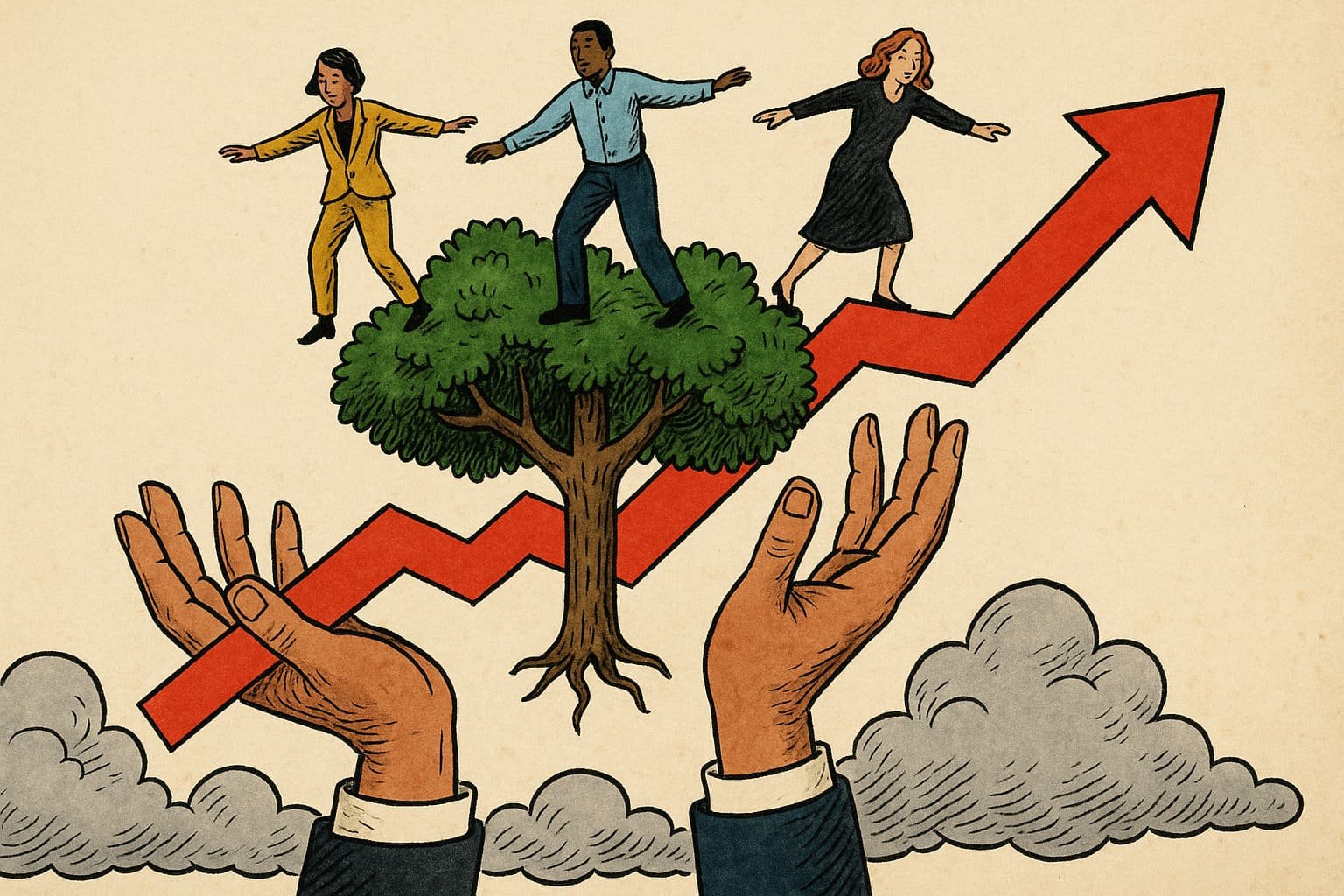
Growth is intoxicating. Sales climb, new offices appear on the map, hiring accelerates, and investors applaud every milestone. Success feels inevitable. Yet somewhere between the first breakthrough and the next expansion, many companies begin losing the very qualities that made customers fall in love with them. Familiar faces disappear behind automated systems, thoughtful service becomes standardized, and purpose quietly gives way to process. Businesses often assume scaling means becoming bigger. The greatest organizations prove it means becoming stronger without forgetting who they were when nobody was watching.
Every company dreams of expansion, but sustainable growth demands far more than increasing revenue. It requires preserving culture while introducing structure, maintaining quality while serving more customers, and empowering new leaders without weakening accountability. Rapid scaling exposes every weakness hidden during smaller operations. Poor communication becomes confusion. Small inefficiencies become expensive habits. Leadership that once relied on instinct must evolve into systems capable of supporting an increasingly complex organization. Growth magnifies both strengths and flaws with remarkable honesty.
The remarkable journey of Costco illustrates how disciplined expansion creates lasting value. While competitors often chased short-term profits, Costco remained committed to treating employees well, maintaining customer trust, and resisting unnecessary price increases. That consistency strengthened its culture even as the company expanded internationally. Customers continued returning because the experience remained recognizable. Growth never replaced the company’s identity. Instead, identity became the foundation upon which growth confidently stood.
Another powerful example comes from Patagonia. Despite becoming a globally respected outdoor brand, Patagonia consistently aligned business decisions with its environmental mission. Leadership understood that scaling should amplify purpose rather than dilute it. Customers sensed that authenticity through product quality, responsible practices, and transparent communication. Expansion became an extension of deeply held values instead of a departure from them. The business proved that commercial success and meaningful purpose can reinforce one another when guided by disciplined leadership.
Leah founded a specialty coffee company that quickly expanded from one neighborhood café into several thriving locations. Revenue surged, but regular customers began noticing subtle changes. Staff no longer remembered names, conversations became rushed, and the warmth that once defined the brand slowly faded. Rather than opening another location, Leah paused expansion and invested in leadership training, employee development, and customer experience. Growth temporarily slowed, yet loyalty strengthened. The business rediscovered its personality before continuing its journey, proving that scaling wisely often means slowing down at the right moment.
Strong organizations recognize that culture cannot be delegated entirely to employee handbooks or motivational speeches. It lives inside daily decisions, hiring practices, customer interactions, and leadership behavior. As companies expand, preserving those habits requires deliberate effort. Values must be demonstrated rather than announced. Employees watch what leaders reward far more closely than what they say during meetings. Sustainable growth depends upon creating systems that protect culture while allowing innovation to flourish naturally.
Financial discipline also separates lasting growth from temporary expansion. Healthy businesses balance ambition with resilience, investing carefully while maintaining flexibility for unexpected challenges. They resist the temptation to pursue every market, every acquisition, or every opportunity simply because resources have increased. Strategic focus becomes even more valuable as organizations become larger. Complexity grows automatically. Clarity must be intentionally preserved. Companies that scale successfully understand that disciplined restraint often creates greater long-term wealth than aggressive overextension.
The marketplace rarely remembers which company expanded the fastest. It remembers those that continued earning trust decade after decade while competitors lost themselves chasing endless growth. Sustainable success is not measured only by larger buildings, bigger revenues, or broader global reach. It is measured by whether customers still recognize the character that inspired their loyalty in the beginning. Every organization eventually faces the same defining question. Will growth strengthen its soul, or quietly replace it with something easier to scale but impossible to love?
