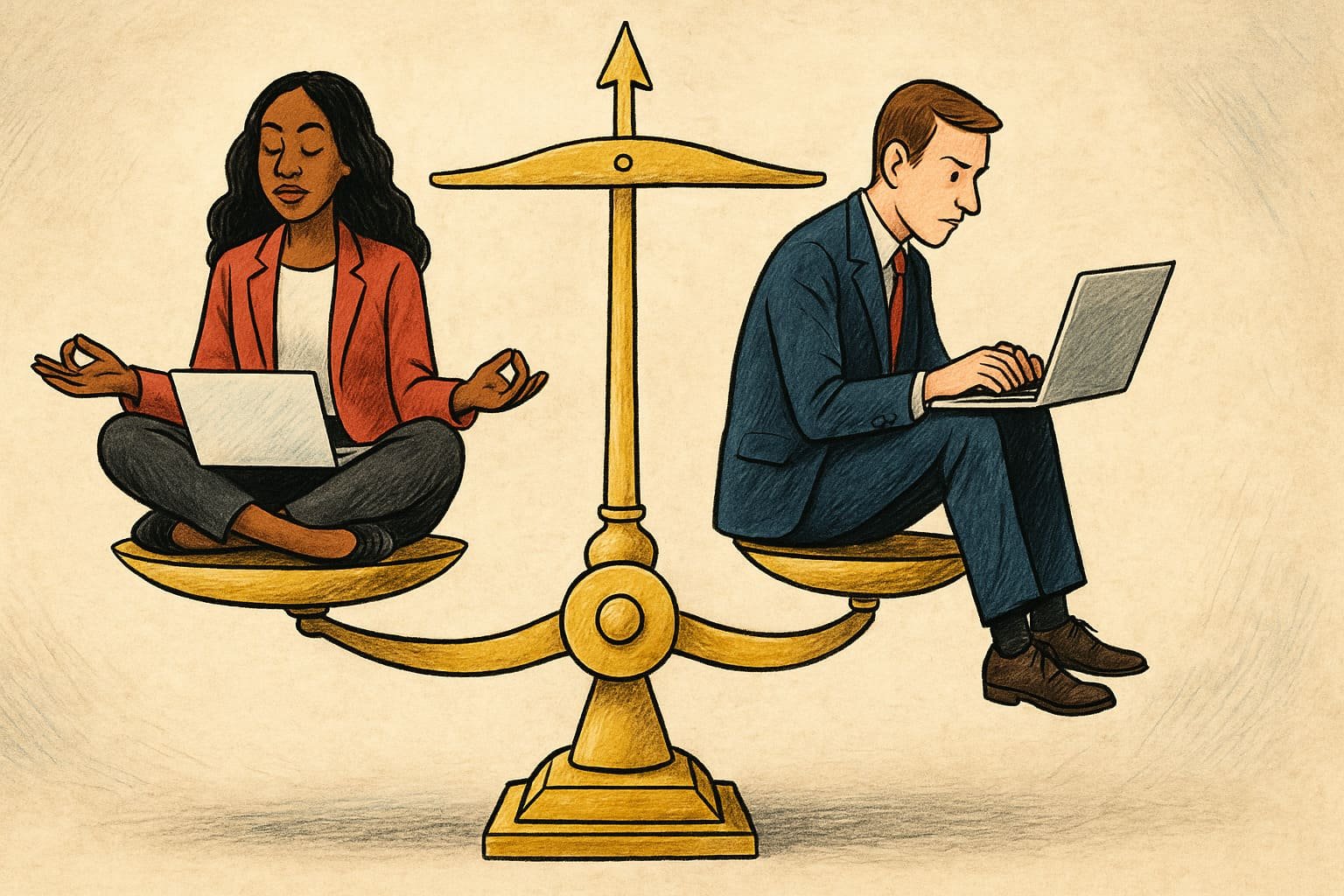
The meeting began with confidence, but confidence was not evenly distributed around the table. One founder spoke almost continuously while the other quietly rearranged notes that contained ideas nobody would hear. Investors nodded politely, employees exchanged cautious glances, and the startup appeared united from the outside. Hidden beneath the polished presentation, imbalance had already taken root. It was subtle. It always is. Businesses rarely fracture because people lack intelligence. They fracture because power slowly gathers in one place while perspective quietly disappears somewhere else.
Many startup founders believe decisive leadership requires concentrated authority. During the earliest stages that approach can certainly accelerate progress. Decisions happen quickly, momentum builds, and uncertainty feels manageable. Trouble begins when speed becomes an excuse for excluding diverse viewpoints. Balanced leadership is not slower leadership. It is stronger leadership because assumptions receive healthy scrutiny before expensive mistakes become permanent. Great companies rarely emerge from perfect agreement. They grow because respectful disagreement sharpens thinking instead of threatening fragile egos or personal status.
Power inside a startup extends far beyond ownership percentages or executive titles. It appears through who speaks first, whose concerns receive attention, and whose expertise quietly shapes strategic direction. Employees observe these signals every day. When only a handful of voices consistently influence outcomes, creativity gradually retreats. Talented professionals stop challenging assumptions because silence feels safer than contribution. Innovation weakens long before financial performance reveals deeper problems. Healthy organizations protect balanced participation because fresh thinking often arrives from unexpected corners of the business.
Priya and Mateo launched a financial technology startup after years of working together as consultants. Priya led product strategy while Mateo managed operations and investor relations. As the company expanded, outside advisers increasingly directed questions only toward Mateo during important meetings. Instead of accepting the imbalance, he deliberately redirected discussions toward Priya whenever product decisions arose. Employees quickly noticed the mutual respect. Confidence spread throughout the organization because leadership demonstrated that influence should follow expertise rather than personality. Trust became one of the company’s strongest competitive advantages.
Several respected businesses illustrate the value of shared leadership. Google’s early success benefited from the complementary partnership between Larry Page and Sergey Brin, while experienced guidance from Eric Schmidt helped balance visionary ambition with operational discipline during critical growth years. Different perspectives strengthened strategic decisions instead of competing for attention. Balanced authority does not eliminate conflict. It transforms conflict into constructive debate where better ideas consistently defeat louder opinions. That distinction separates resilient organizations from startups built around individual personalities alone.
Popular culture often celebrates founders portrayed as lone geniuses changing the world through unstoppable determination. The myth feels exciting because it simplifies complexity into a single heroic story. Real entrepreneurship looks remarkably different. Exceptional businesses usually emerge through partnerships where contrasting strengths create better decisions. One leader sees opportunity while another recognizes operational risk. One imagines bold expansion while another protects sustainable execution. Those differences create healthy tension that prevents ambition from drifting too far away from practical reality.
Leadership thinker Patrick Lencioni argues that trust forms the foundation of every successful team. Balanced power strengthens that foundation because people feel respected rather than managed. Employees become more willing to contribute difficult truths when leadership consistently welcomes diverse perspectives. Customers also benefit because thoughtful collaboration produces products reflecting broader understanding instead of individual assumptions. Sustainable growth rarely depends upon finding the smartest person in the room. It depends upon creating rooms where collective intelligence consistently outperforms individual brilliance.
The conference room eventually grows quiet after another day filled with ambitious plans and spirited conversations. Presentation slides disappear, laptops close, and tomorrow’s challenges patiently wait beyond the office doors. Long after funding rounds fade from memory, people remember how leadership made them feel. Startups built upon balanced influence leave behind stronger cultures, wiser decisions, and relationships capable of surviving uncertainty. Power becomes most valuable the moment it is willingly shared. That simple choice often determines whether a startup merely grows, or truly endures.
