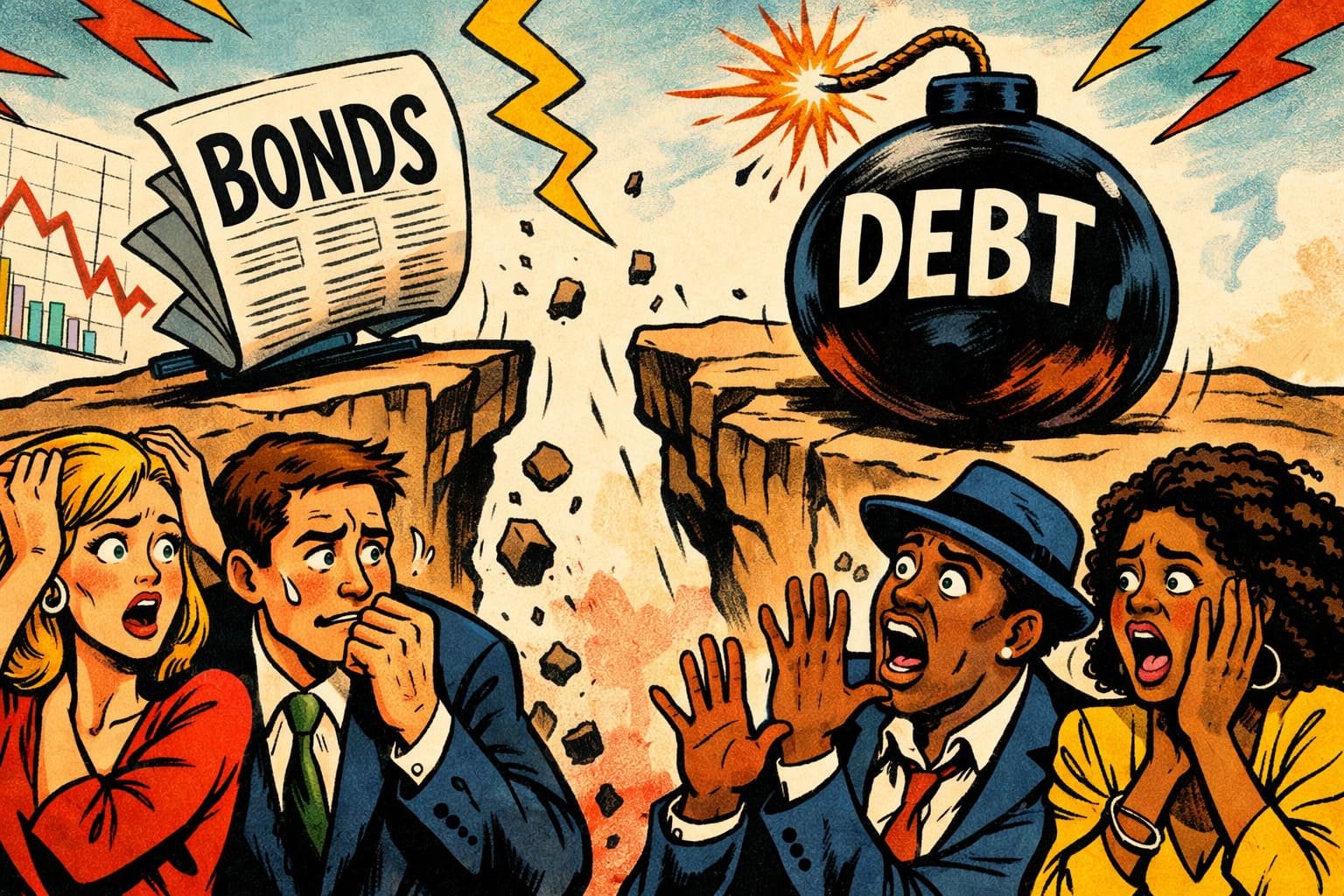
Velvet calm vanished inside a government bond auction where familiar faces suddenly stopped joking. Bids still arrived, yet hesitation hung across every terminal like invisible static. Nobody rang an alarm. Nobody needed to. Bond markets rarely announce danger with dramatic headlines because anxiety appears first through tiny shifts in yields, cautious pricing, and investors quietly demanding greater compensation before lending another dollar to governments or corporations.
Many people treat bonds as boring investments, yet they quietly determine borrowing costs across the entire economy. Mortgage rates, corporate financing, infrastructure spending, and government budgets all absorb signals from bond markets long before ordinary households notice changes. Confidence matters enormously. When investors begin questioning inflation, fiscal discipline, or economic stability, higher yields emerge not from panic alone but from a reassessment of risk that ripples through every financial decision.
Britain offered a striking lesson when government borrowing plans unsettled investors and gilt yields surged, forcing rapid policy reversals and exposing vulnerabilities inside pension funds. Another example appeared in the United States as Treasury yields climbed alongside expectations that interest rates would remain elevated for longer. Neither episode reflected permanent collapse. Both demonstrated how quickly confidence can weaken once markets suspect debt is expanding faster than future economic capacity can comfortably support.
Victor ran a family-owned logistics company and barely noticed movements in sovereign bond markets until renewing warehouse financing became unexpectedly expensive. His lender explained that benchmark yields had shifted, raising borrowing costs despite steady business performance. Overnight, expansion plans required reconsideration. Economist Hyman Minsky argued that stability often encourages greater risk-taking until financial structures become fragile, an observation that feels remarkably relevant whenever calm bond markets suddenly rediscover skepticism.
Accounting provides clues before headlines become dramatic. Rising interest expenses consume larger portions of corporate earnings. Governments allocate increasing tax revenues toward debt servicing instead of productive investment. Credit analysts scrutinize refinancing schedules with fresh urgency because liabilities that once looked manageable become heavier under higher yields. None of these developments happen instantly. They accumulate quietly until balance sheets reveal pressures that optimistic forecasts had politely ignored during more forgiving monetary conditions.
Faint echoes linger after an orchestra pauses between movements. Bond markets create a similar silence, inviting observers to mistake restraint for safety while profound adjustments unfold beneath polished financial commentary. Debt itself is rarely the villain because economies require borrowing to grow, innovate, and recover. Trouble begins when confidence evaporates faster than repayment capacity strengthens. Before celebrating another ambitious spending plan or leveraged acquisition, ask whether today’s borrowing still makes sense if tomorrow’s bond buyers hesitate.
