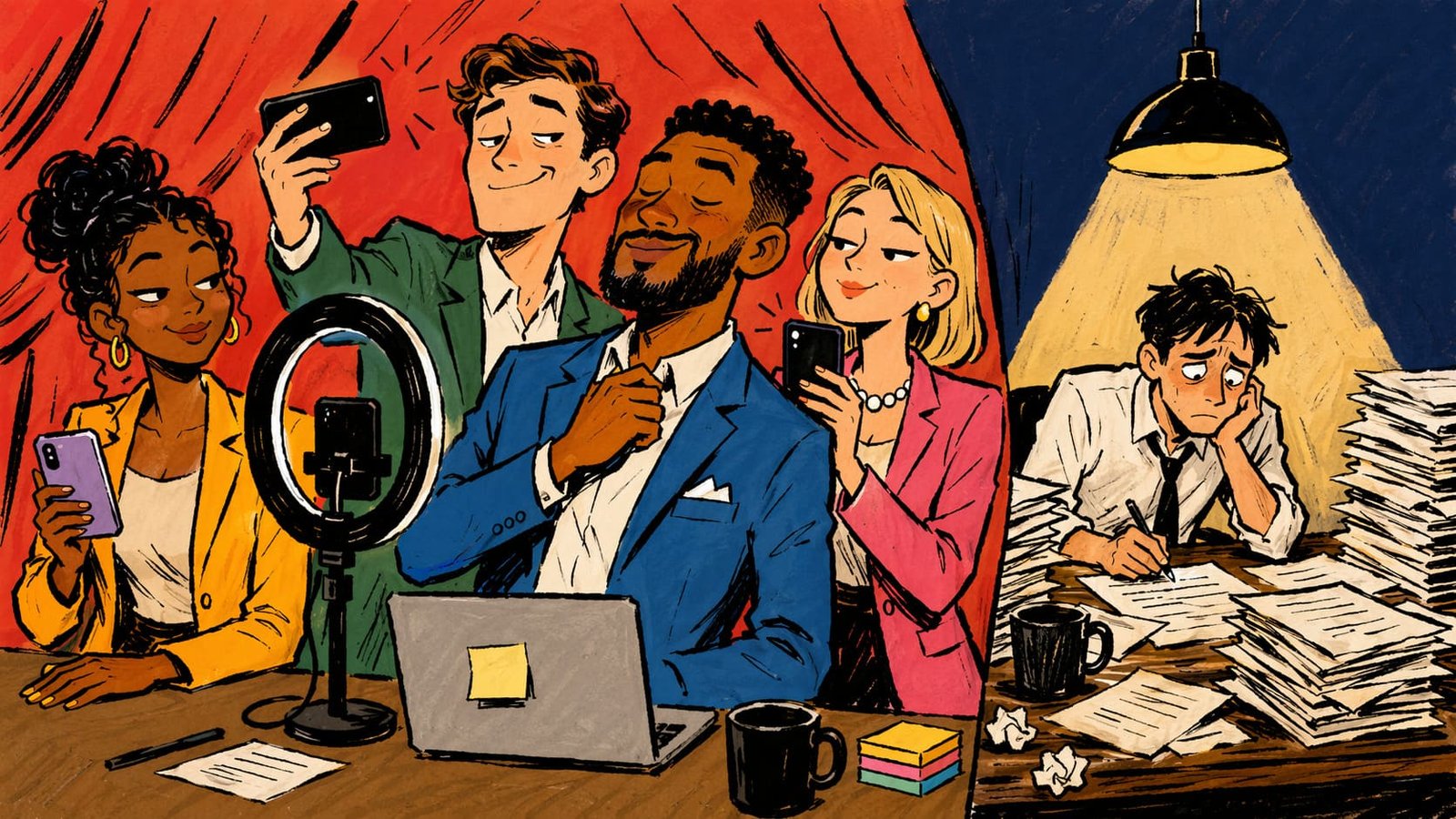
The office is no longer a place. It is a stage. Screens glow with carefully arranged windows, calendars filled with visible motion, messages sent not just to communicate but to signal presence. Work happens, but what matters more is that it can be seen happening. Visibility has become a form of currency, and everyone is quietly competing for it.
The shift did not announce itself. It crept in through small habits. Status updates that became more frequent. Meetings that multiplied without clear purpose. Documents that grew longer, not because they needed to, but because length suggested effort. Over time, performance began to eclipse substance.
A manager named Victor noticed the change during a quarterly review. One employee delivered exceptional results with minimal noise. Another maintained constant visibility with moderate output. The second was perceived as more valuable. Not because of what was achieved, but because of what was observed. Victor later admitted that even he struggled to separate the two.
The language of productivity has adapted to this new reality. Words like “alignment,” “collaboration,” and “engagement” fill conversations, yet they often mask something simpler. The need to be witnessed. Work that happens quietly feels suspicious. Work that generates activity feels safe.
Technology amplifies the effect. Platforms track presence, responsiveness, participation. Indicators blink, notifications pulse, dashboards update in real time. Each signal reinforces the idea that work must be continuously demonstrated. Absence, even brief, begins to feel like risk.
There is a cost to this performance. Attention fragments. Deep thinking becomes harder to sustain. People optimize for visibility rather than impact. The result is a strange paradox. Everyone appears busy, yet meaningful progress feels slower. The system rewards motion, not direction.
A product designer named Aisha once experimented with reducing her visible activity while maintaining output. She delivered strong results, but her absence from constant communication created unease. Colleagues questioned her engagement. The lesson was clear. In this environment, invisibility can undermine even the most effective work.
Cultural signals reinforce the pattern. Leaders praise responsiveness, celebrate long hours, highlight visible effort. Rarely do they reward quiet efficiency. The message becomes implicit but powerful. To succeed, one must be seen succeeding.
Yet beneath the performance, a quieter desire persists. The desire to do meaningful work without constant exhibition. To focus deeply, to create without interruption, to measure success by outcome rather than activity. That desire exists, but it struggles to compete with the incentives of visibility.
Late at night, after the notifications fade and the digital stage dims, someone reviews a day filled with activity that feels strangely hollow. Tasks were completed, messages were sent, meetings were attended. Still, something essential seems untouched.
And the thought arrives, quiet but sharp: if work needs an audience to feel real, what happens to the part of you that creates best when no one is watching?
