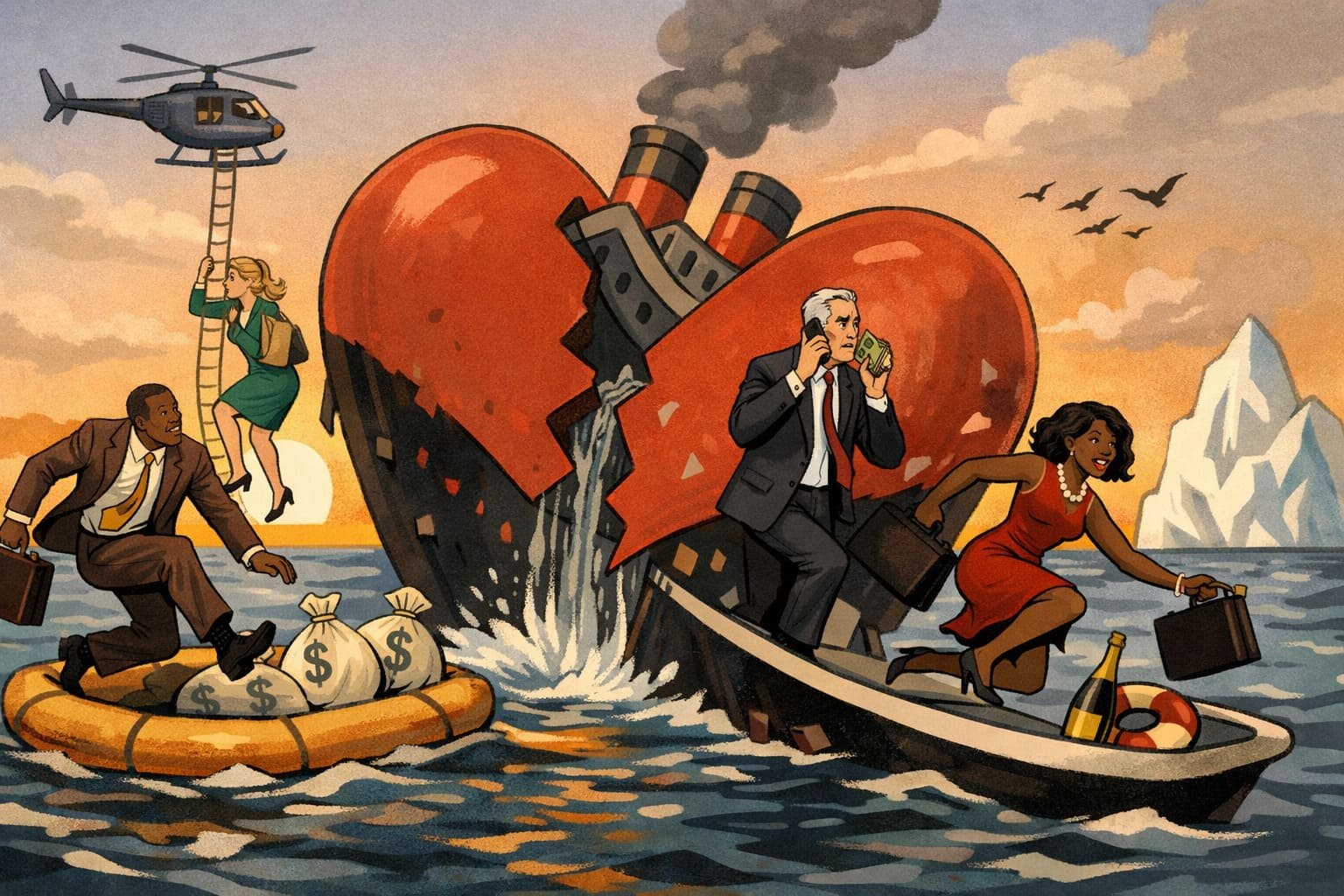
At the far end of ambition, there is always a strange room. The lights are warm, the applause is still polite, the founder is smiling for photos, and somewhere beneath the polished shoes and clean investor decks, something has already started cracking. Not loudly. Not theatrically. More like the sound a ship makes when water enters where no guest can see it. That is the problem with business decline. It rarely arrives dressed like disaster. It often walks in wearing success.
The market loves romance, and founders do too. They fall in love with the first logo, the first customer email, the first mention in the press, the first sleepless night that turns into a decent quarter. Soon the company stops being a business and becomes a personal myth. That is when danger slips in. A business should be managed like an asset, judged like a machine, and questioned like a suspect. The moment it becomes sacred, it becomes hard to sell, even when selling is the smartest move left on the table.
That blind spot has swallowed more value than bad products ever did. BlackBerry had loyal users, global reach, and the sort of corporate cool that once felt untouchable. Kodak invented the digital camera and still lost the future because it loved the old one too much. Yahoo had reach, relevance, and a front-row seat to the internet revolution, yet drifted through missed deals and fading focus like a giant sleepwalking through a fire drill. The lesson is not that these companies lacked talent. The lesson is that attachment can make intelligent people behave like gamblers at a slot machine that has already gone cold.
You already know the modern version of this story. A founder delays the sale because next year might be bigger. A family business keeps pushing through losses because pride says quitting would look weak. A manager refuses a strong acquisition offer because the identity of the business matters more than its actual condition. Then the tone changes. Revenue softens. Competitors sharpen. Buyers grow picky. The room goes quiet. Suddenly the deal that once felt insulting begins to look like mercy.
This piece is about that uncomfortable truth. It is about why selling a business is not betrayal, why timing matters more than emotion, why ego can burn down what hard work built, and why the most disciplined leaders know when to leave the table while the music is still sweet. You are not here for soft slogans. You are here for the harder wisdom, the kind that saves value before sentiment turns it into smoke.
Quick Notes
1. A business is not a wedding vow. It is a strategic asset, and assets must be judged by future value, not past effort. The smell of nostalgia in the boardroom is often the first warning sign.
2. Great exits rarely happen when things look terrible. They happen when things still look attractive, because buyers pay for momentum, not rescue missions. The cold coffee on the conference table tastes different when the market still wants you.
3. Founders lose money when they confuse identity with ownership. Loving the mission is noble. Clinging to the vehicle can be ruinous.
4. Weak businesses do not usually collapse in one dramatic blast. They fade through small excuses, delayed decisions, and the false comfort of one more quarter. That is how value leaks out, quiet as a ceiling stain.
5. The sharpest leaders know that selling well is not an act of surrender. It is often the final proof that they understood the game better than the people who stayed too long.
The Dangerous Romance Between Founders and Their Companies
A business can begin like a hunger and end like a habit. At first, you are solving a problem, chasing freedom, proving the doubters wrong. Somewhere along the way, the company starts feeling like a child, a flag, a diary, and a public confession all at once. That emotional charge can be powerful during the climb. It becomes dangerous when the time comes to judge the company with clear eyes.
This is where many leaders trip over their own origin story. They believe selling means abandoning the dream, even when the dream has already changed shape. Instagram sold to Meta while its growth story still had electricity in the air, and that sale remains one of the clearest examples of founders recognizing both scale and risk. The mythology around entrepreneurship loves endurance, but business history keeps rewarding timing.
A director at a mid-sized logistics software firm learned that the hard way. Her company had become the darling of a niche market, and buyers circled after a stretch of strong growth. She kept saying no because the business had become her proof of worth, the polished answer to every person who once underestimated her. By the time she agreed to talk seriously, a larger rival had copied the product playbook, pricing pressure had spread, and the offers had lost their heat. She did not lose the company in one day. She lost leverage one sentimental month at a time.
There is a scene in succession dramas and founder movies that keeps repeating for a reason. The leader stares at the building, not the numbers. The office smells like late-night pizza and printer heat, and memory clouds judgment. That scene is not fiction in any meaningful sense. It is business reality in costume. Emotional attachment often arrives disguised as loyalty, when it is really fear of becoming ordinary after the sale.
The contrarian truth is sharp enough to sting. Selling can be an act of respect toward the thing you built. It can protect employees, preserve momentum, and move the product into stronger hands. A founder who refuses every exit offer is not always brave. Sometimes that founder is simply addicted to being needed.
Buyers Pay for Heat, Not for Heroic Recovery
The market is not a therapist. It does not reward effort, sacrifice, or sleepless loyalty. Buyers pay for growth, position, momentum, talent, category excitement, and believable upside. That means the best time to sell is often before you feel emotionally ready. By the time you feel fully prepared, the premium may already be gone.
That logic offends the part of the business world that treats pain like a badge of honor. People love the myth of holding on, grinding harder, and surviving one more storm. Yet acquirers are not buying your biography. They are buying future cash flow, strategic fit, market access, and the chance to own tomorrow before someone else does. That is why strong businesses get courted while shaky ones get inspected.
Think of WhatsApp. Its acquisition was not driven by collapse. It was driven by relevance, user growth, and strategic urgency in a platform war. Buyers move fastest when they fear missing a train, not when they are invited to fix a wreck. Scarcity creates heat. Heat creates urgency. Urgency lifts price.
A retail founder in Nairobi learned this during a brutal holiday season. Her direct-to-consumer beauty brand had finally built a devoted customer base, repeat purchases were climbing, and larger distributors had started making friendly calls. She ignored them because she wanted one more year of growth and one more victory lap. Then supply costs rose, copycats flooded the feed, and customer acquisition stopped behaving. The same firms returned later with colder faces and thinner offers. She had mistaken applause for a permanent condition.
This is why smart selling feels emotionally backward. You exit when the room still likes you, when the pitch still lands, when the graph still climbs, when the category still feels hot enough to make buyers imagine a bigger future. You do not wait for the roof to cave in. By then, buyers are no longer bidding for treasure. They are negotiating over salvage.
Ego Is Expensive, and It Sends a Terrible Invoice
A founder’s ego is useful in the early days. It helps someone ignore skepticism, survive rejection, and keep building while saner people suggest applying for a stable job. That same force becomes dangerous later. The story shifts from “this company deserves to win” to “this company proves that I deserve to matter.” Once that happens, every acquisition offer sounds like an insult, even when it is rationally generous.
That is why some exits fail in silence. The spreadsheets look fine, the advisors are aligned, the strategic logic holds up, and then one private wound enters the room and ruins the deal. A founder hears, “sell,” and secretly translates it as, “your chapter is ending.” For a person whose identity has fused with the company, that message lands like an existential threat. Numbers lose to vanity more often than business schools like to admit.
Yahoo’s long arc offers a familiar cautionary tale. It was not short on reach, intelligence, or opportunity. It was short on strategic clarity and disciplined choices when they mattered most. Many aging companies do not fail because they never had options. They fail because they keep treating optionality as proof they can wait forever.
A manufacturing owner once described a rejected acquisition offer as “too small for what the business means.” That sentence is a museum piece of executive self-deception. Meaning matters to the owner. Price reflects what the market sees, what the buyer can do, and what the future seems worth. Those are not the same thing. The market has never agreed to pay extra because your memories are vivid.
So the mature question is not whether the business feels precious. The real question is whether your continued ownership creates more value than a sale would create. That requires humility, which is much rarer than confidence at the top. Many leaders want the market to validate their personal legend. The wiser ones ask a simpler thing: what outcome protects value best from here?
Sell the Asset, Not the Fantasy
The cleanest strategic decision usually comes from a brutal distinction. There is the business as it exists, and there is the fantasy of what it could become if everything breaks perfectly. Most leaders sell too late because they keep pricing the fantasy. Buyers, on the other hand, price the asset. They examine customers, churn, margins, dependence, concentration, team depth, and category risk. The fantasy rarely survives that level of light.
That gap between fantasy and asset value explains why founders are often shocked by fair offers. They are selling a story with heroic music playing in their heads. Buyers are buying a structure with operational risks, execution gaps, and a long list of questions hidden in legal documents. This does not make buyers cruel. It makes them professional.
Look at the history of media companies that mistook cultural relevance for durable business strength. Plenty of brands owned attention for a season and then discovered that attention without structure is just applause renting a room. Buzz can bring a better deal, but only if it is converted into strategic terms before it fades. Otherwise, the company becomes another beautiful thing that could not monetize its own myth.
A founder running a boutique food brand saw this distinction up close. Her products had a cult following, gorgeous packaging, and viral visibility that made the brand feel larger than it was. She believed that meant she should hold out for a blockbuster outcome. An advisor pushed her to review the fundamentals, supplier fragility, channel dependence, and the thin line between desirability and operational strain. She sold to a larger consumer group while the brand still looked magnetic. A year later, shipping disruptions and retailer pushback rattled similar brands across the category. Her timing looked cold to outsiders. It was actually tender toward the value she had created.
This is the part few founders enjoy hearing. Hope is not a strategy, and narrative is not protection. You owe your business a cleaner lens than affection can provide. If the fantasy is doing all the heavy lifting, then you are not holding a strong asset. You are holding a mood.
The Best Exit Is Sometimes the Final Great Act of Leadership
Business culture worships builders, but it often misunderstands exits. People talk as if selling is an admission that the mission ran out of oxygen. That view is shallow. In many cases, the sale is the final and most responsible act of leadership because it matches the company’s next chapter with the capital, infrastructure, and scale it actually needs.
You can see this in industries where distribution, regulation, or platform economics become too punishing for smaller players. A founder may still have vision, grit, and a beloved product, yet the terrain changes. At that point, refusing a sale can be less noble than reckless. Leadership is not about dying on the hill you once climbed. Leadership is about protecting the mission when the terrain stops favoring solo heroics.
There is something almost theatrical about a good exit. The founder does not leave because the lights failed. The founder leaves because the story needs a bigger stage. Pixar’s relationship with Disney, despite all its tensions and complexity, showed how creative value can move into a larger machine without instantly losing its soul. The right deal is not just a payout. It is a handoff.
A health-tech operator once sold her company after years of building trust with clinics that larger firms had ignored. She had every emotional reason to keep going. Her team loved the mission, customers admired the service, and her name was stitched into the brand’s identity. Still, she knew the next level required regulatory muscle, enterprise distribution, and a balance sheet she did not have. She sold, stayed long enough to protect the transition, and watched the product reach places her original company could never have reached alone. Some people called it cashing out. It looked more like strategic maturity.
That is the deeper lesson hiding under all the noise. Selling is not the opposite of building. Sometimes it is the completion of building. The founder who exits well has not betrayed the company. The founder has simply refused to let personal attachment sabotage the value, people, and possibility already earned.
The Exit Door Glows Red
In a glass tower after dark, the conference room reflects faces back like questions nobody wants to answer. The city outside glitters with the false confidence of distant windows, and on the polished table sits a familiar arrangement, cold coffee, legal pads, a muted phone, the last clean copy of a business story that once felt immortal. Somewhere in that room, a founder realizes the company was never asking to be loved forever. It was asking to be led without illusion.
Across the wider map of commerce, the pattern repeats with painful elegance. Companies do not usually drown because they lacked passion. They drown because passion refused to let go of the wheel after the weather changed. The entrepreneur becomes an archetype at that moment, part captain, part parent, part prisoner of old victories. The tragedy is not failure. The tragedy is staying long enough to turn value into memory.
A good sale does not feel loud in retrospect. It feels precise, almost eerie, like a door opening before the smoke reaches the ceiling. Employees keep their momentum. Customers keep their trust. The product keeps breathing. The founder, stripped of the company’s costume, has to face a harder truth, that worth was never supposed to depend on ownership.
That is why the last lesson is more human than financial. Business asks people to build with love and decide with distance, and those are not natural companions. One hand shapes the dream. The other must know when to release it. Most people can do only one of those jobs well. The rare leaders do both.
So ask yourself this, while the music still sounds good and the room still claps: will you sell the business while it has a future, or will you stay long enough to become the ghost haunting it?