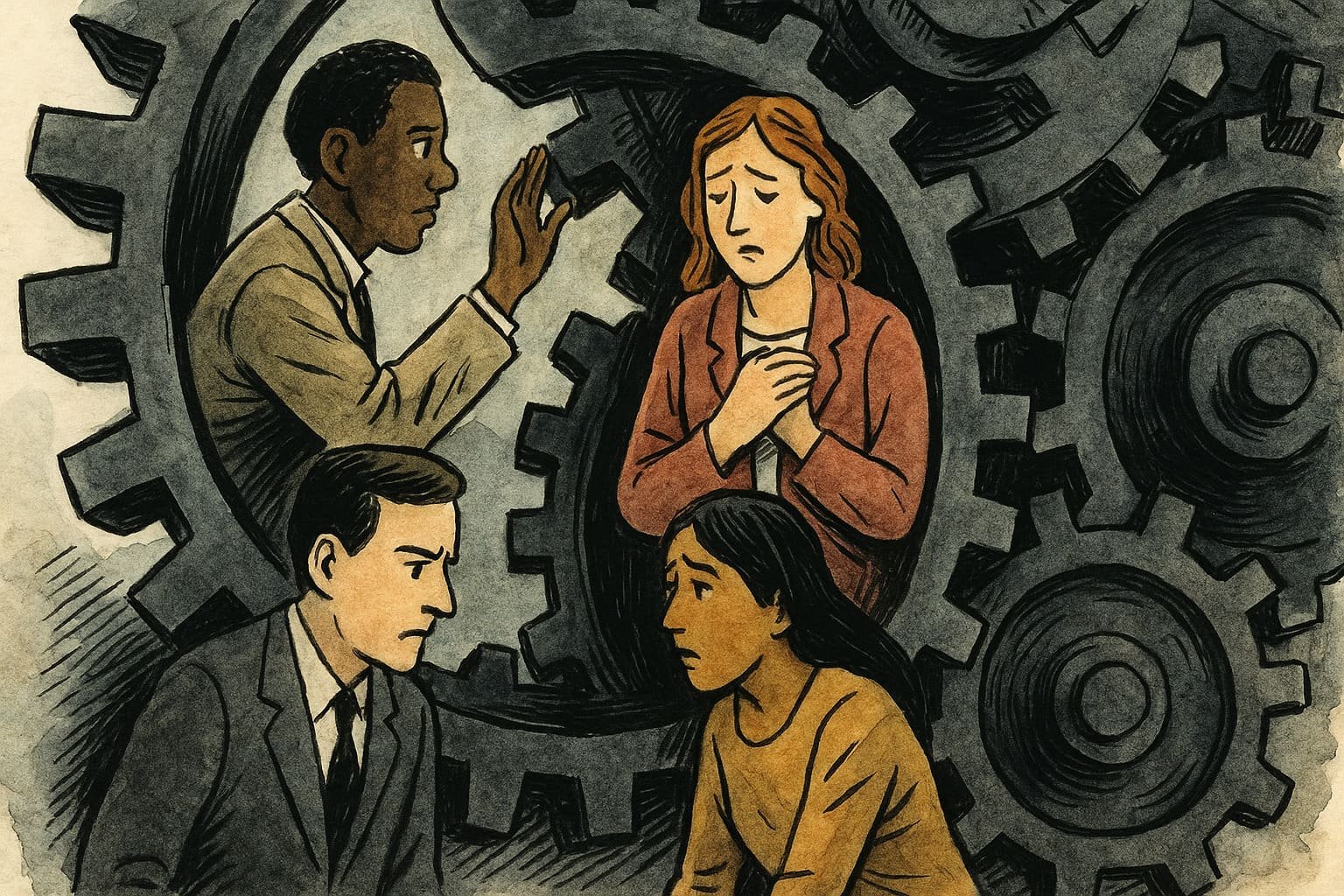
The warehouse moved with breathtaking precision. Conveyor belts glided without hesitation, scanners flashed relentlessly, and digital dashboards measured every second as though time itself had become another employee. Everything appeared optimized. Productivity climbed. Costs fell. Investors celebrated. Yet somewhere beneath the rhythm of flawless automation, something deeply human began slipping away almost unnoticed. No software alert announced its disappearance. No performance report captured its value. Empathy quietly exited through the back door while efficiency proudly occupied the spotlight, convincing everyone that faster always meant better.
Efficiency has become the modern business religion. Organizations pursue leaner operations, smarter algorithms, and automated workflows because competition rewards speed and consistency. Those goals are entirely reasonable. The danger emerges when people become treated like replaceable variables instead of creative contributors. Every process can be optimized, but not every human experience should be. An exhausted employee cannot be restored with a software update. A disappointed customer rarely remembers rapid delivery if every interaction feels cold, mechanical, and emotionally distant.
Technology itself is not the problem. Artificial intelligence, robotics, and automation have transformed industries for the better by eliminating repetitive tasks and improving safety. The real challenge appears when leaders mistake measurable outputs for complete organizational health. Empathy rarely fits neatly inside dashboards. Compassion cannot be reduced to a performance metric. Listening patiently during difficult conversations seldom boosts immediate productivity. Even so, those invisible moments often determine whether talented employees remain committed or quietly begin searching for opportunities elsewhere.
Leila managed a fast-growing customer support center where response times became the company’s proudest achievement. Every representative worked against countdown timers displayed above their desks. Calls became shorter. Satisfaction scores initially improved. Then unexpected resignations began. During exit interviews, employees described feeling like extensions of software rather than trusted professionals. Leila removed the visible timers, encouraged thoughtful conversations with customers, and gave supervisors freedom to coach instead of constantly measuring. Productivity stabilized. Customer loyalty strengthened because authentic care returned to every interaction.
Many admired companies have reached similar conclusions. Costco consistently earns praise for treating employees as long-term partners rather than disposable labor costs. That philosophy often surprises analysts focused solely on operational efficiency. Better wages, stronger engagement, and lower turnover create organizational stability that competitors struggle to replicate. The lesson extends well beyond retail. Businesses investing in human dignity frequently discover that empathy generates remarkable economic value. Trust reduces friction. Loyalty lowers recruitment costs. Collaboration accelerates innovation in ways automation alone cannot achieve.
Popular culture often imagines futuristic workplaces where machines outperform humans in every meaningful task. Reality paints a richer picture. Algorithms analyze enormous datasets with astonishing speed, yet they cannot comfort anxious employees after unexpected layoffs or rebuild confidence following painful mistakes. Emotional intelligence remains stubbornly human. The organizations thriving through technological disruption usually combine digital excellence with compassionate leadership. They automate repetitive work while protecting meaningful relationships. That balance transforms technology into an amplifier of humanity rather than its replacement.
Leadership researcher Simon Sinek frequently argues that people perform their best when they feel safe, respected, and valued. Those ideas sound simple because they are. Their execution becomes difficult when organizations chase efficiency without asking what kind of culture they are creating. Every strategic decision sends emotional signals throughout a business. Employees quickly recognize whether leaders value people as partners or merely as resources. Culture forms quietly through those repeated signals, shaping long-term performance far beyond quarterly productivity reports.
The machines eventually fall silent after another demanding shift. Screens dim. Automated systems continue calculating tomorrow’s schedules with flawless precision. Yet the lasting memory belongs to something no algorithm can fully understand. It lives inside the manager who paused to listen before solving, the colleague who chose kindness over convenience, and the leader who remembered that every business ultimately serves people before processes. Technology will continue becoming smarter with every passing year. The real question is whether leadership will remain human enough to deserve it.
