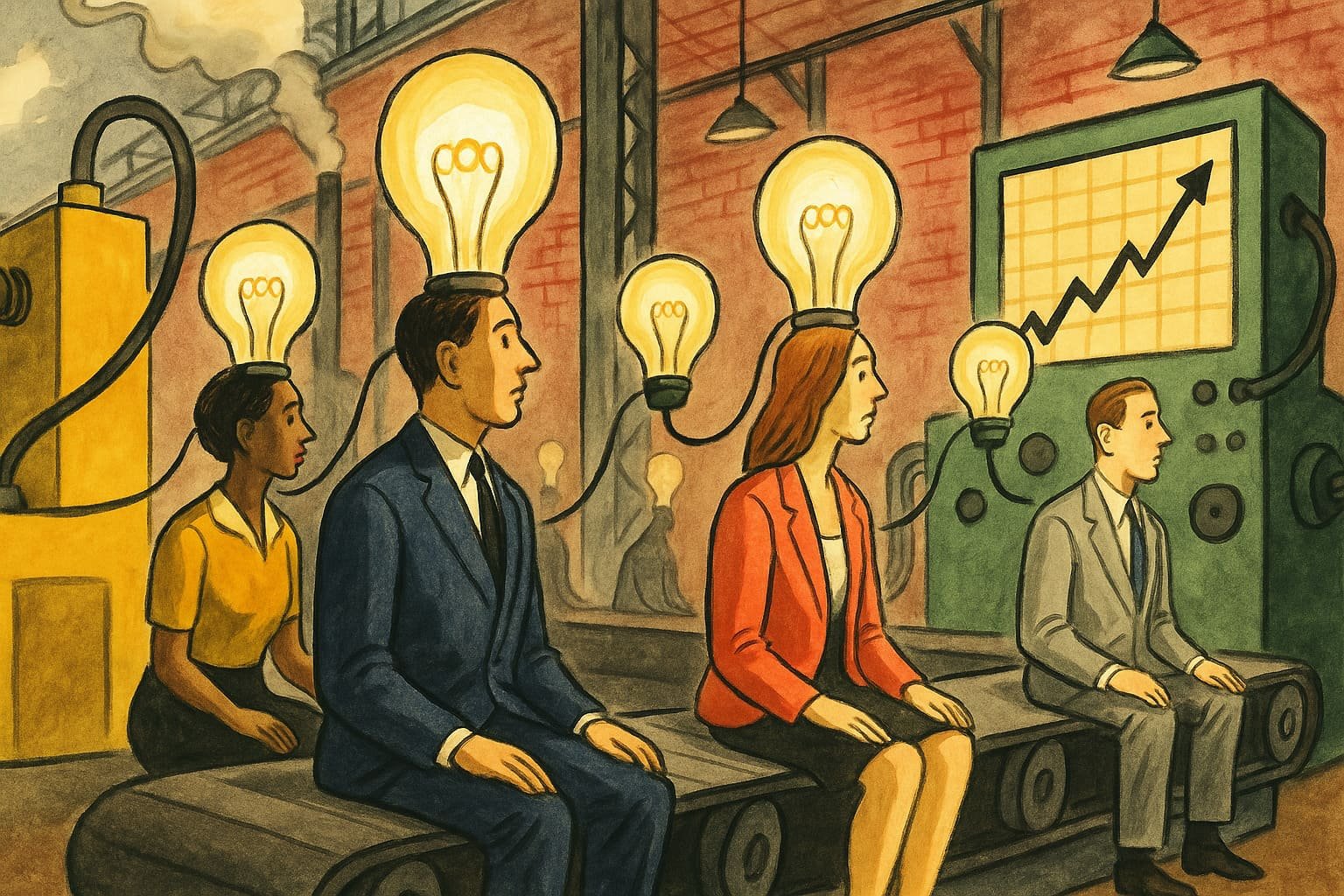
A century ago, factories transformed raw materials into wealth. Today, another kind of factory dominates the global economy. It produces neither steel nor automobiles. It manufactures attention. Every notification, headline, recommendation, and endless scroll competes for a limited resource that grows more valuable each day. Businesses once fought for shelf space in stores. Now they battle for a few precious seconds inside a crowded human mind. In this new economy, attention has quietly become the world’s most profitable currency.
The irony is striking. Technology promised to save time, yet many professionals have never felt more distracted. Meetings interrupt focused work. Notifications fracture concentration. Endless streams of information create the illusion of productivity while meaningful progress slows. Employees finish the day feeling exhausted without remembering what truly mattered. Businesses lose far more than time. They lose clarity, creativity, and the ability to solve difficult problems that require uninterrupted thought.
The most successful organizations recognize that focus is not a personal talent but a strategic resource. They design environments where important work can happen without constant interruption. Leaders simplify priorities instead of adding more initiatives. Teams communicate with greater intention rather than greater frequency. Every unnecessary distraction removed creates space for deeper thinking. That discipline becomes a competitive advantage because concentrated minds consistently outperform scattered ones.
Nvidia offers a powerful illustration of focused execution. While competitors pursued numerous technology markets simultaneously, the company spent years refining expertise in graphics processing before artificial intelligence transformed those capabilities into extraordinary business value. Its success was not driven by chasing every opportunity. It emerged from sustained concentration on a field many underestimated. Strategic focus allowed years of patient investment to become an industry-defining advantage.
A growing software company faced a different challenge. Its founder, Daniel, noticed developers constantly switching between customer requests, internal meetings, and urgent messages. Projects moved forward, yet deadlines kept slipping. Leadership introduced dedicated focus blocks during which meetings and notifications stopped entirely. The first few weeks felt uncomfortable. Soon, product quality improved, releases became more predictable, and employees ended each day with greater satisfaction because they completed meaningful work instead of merely reacting to interruptions.
Neuroscience reinforces this lesson. Human attention is remarkably limited, and frequent task switching carries measurable cognitive costs. Every interruption forces the brain to rebuild context before returning to meaningful work. Organizations protecting focused time gain an invisible advantage because employees devote more mental energy to solving complex problems rather than repeatedly recovering from distraction. Attention is not simply another workplace resource. It is the foundation upon which judgment, creativity, and innovation quietly depend.
The same principle shapes customer relationships. Brands constantly competing for clicks through sensational headlines and endless notifications may capture curiosity for a moment, yet trust belongs to those delivering genuine value. Consumers increasingly reward businesses that respect their time instead of exploiting it. The companies remembered most fondly are rarely the loudest. They become the most useful, arriving with relevance instead of relentless interruption.
The future economy will reward organizations capable of protecting attention rather than endlessly consuming it. Technology will continue accelerating, information will continue multiplying, and distractions will become even more sophisticated. Amid that noise, focused thinking will become increasingly rare and increasingly valuable. Businesses that cultivate concentration inside their teams and respect it within their customers will possess a resource competitors cannot easily copy. In a world addicted to distraction, focus quietly becomes the greatest fortune of all.
