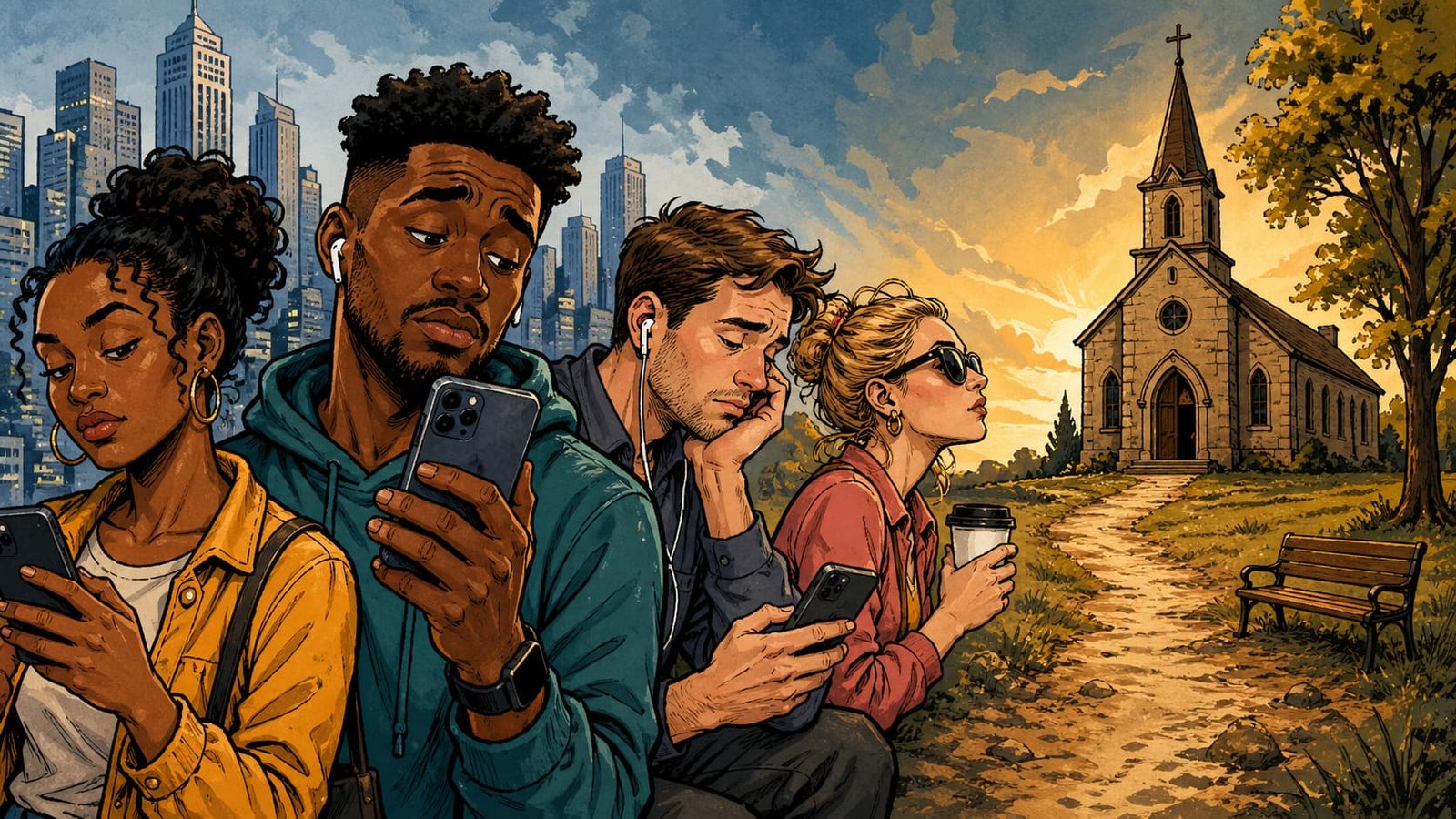
A phone vibrates on a bedside table before sunrise, its glow slicing through the dark like a quiet command. Notifications stack, calendars tighten, messages demand reply. The day begins not with intention, but with reaction. It feels efficient, almost heroic, this constant motion. Yet beneath the urgency sits a subtle absence, a sense that something essential has been postponed again. Modern life prides itself on speed, on productivity, on filling every available moment. It creates the impression that meaning can be scheduled, optimized, squeezed between tasks. Still, there is a quiet presence that does not compete for attention. It waits. Not loudly, not urgently, but persistently.
Distraction has become the default state. Attention is fragmented across screens, responsibilities, and endless streams of information. The mind jumps from one task to another, rarely settling long enough to reflect. This environment leaves little room for deeper questions, the kind that require stillness to even surface. A consultant named Dario once described his schedule as a perfectly engineered machine. Every hour accounted for, every gap filled. He achieved more than he ever had, yet he felt increasingly detached from his own life. It was not burnout in the traditional sense. It was something quieter, a sense of disconnection that no amount of productivity could resolve.
The structure of modern work reinforces this pattern. Performance is measured, output is tracked, and success is often defined by visible achievement. These metrics create clarity, but they also narrow focus. They emphasize what can be counted, leaving less space for what cannot. Questions of meaning, purpose, and direction become secondary, sometimes invisible. A product manager named Elise built her career on delivering results, moving quickly, adapting constantly. Over time, she noticed that each success felt shorter-lived than the last. The satisfaction faded faster, replaced by the next objective. The system rewarded progress, but it did not provide a sense of arrival.
Religion, in its traditional sense, operates on a different rhythm. It does not demand constant attention. It does not compete with notifications or deadlines. It offers pauses, moments of reflection, practices that slow time rather than accelerate it. In a culture that values speed, this can feel almost out of place. Yet it is precisely this contrast that gives it strength. It creates space where modern life compresses it. It invites stillness where everything else pushes for movement. This is not about rejecting progress. It is about balancing it with something that addresses a different dimension of experience.
Pop culture often captures the tension between distraction and meaning in subtle ways. Characters who appear to have everything, success, recognition, influence, often find themselves searching for something undefined. Their journeys resonate because they reflect a familiar pattern. Achievement without orientation leads to a kind of quiet restlessness. The audience recognizes this not as failure, but as an incomplete story. It suggests that something essential has been overlooked, something that cannot be replaced by more of the same.
The persistence of religion in this context is not about resisting modern life. It is about offering an alternative mode of engagement. It provides frameworks that encourage reflection, connection, and continuity. These frameworks may take different forms across cultures and traditions, but their function remains consistent. They create moments where individuals step out of the constant flow of activity and consider what it all means. Without these moments, life risks becoming a sequence of actions without a clear narrative.
There is also a psychological dimension to this dynamic. Constant distraction can create a sense of control, a feeling of being engaged and productive. At the same time, it can mask deeper questions that remain unresolved. When the noise quiets, even briefly, those questions tend to re-emerge. A software engineer named Tomas experienced this during a rare period of downtime. Without the usual stream of tasks, he found himself reflecting on choices he had not examined in years. The experience was uncomfortable, but also clarifying. It revealed that the absence of distraction created space for something more substantial.
Religion, in this sense, does not need to compete with modern life to remain relevant. It simply needs to remain available. Its strength lies in its patience. It does not force itself into every moment. It waits for the moments when distraction fades, when individuals begin to sense that something is missing. In those moments, it offers a language, a set of practices, a way of making sense of experiences that otherwise feel fragmented.
At the edge of a long day, a figure sits in a quiet room, the noise of the outside world reduced to a distant hum. The phone rests face down, the screen dark for once. Time feels different here, slower, less urgent. The questions that were postponed begin to surface, not as demands, but as invitations. The world outside continues its relentless pace, rewarding those who keep moving, who keep producing, who keep responding. Inside, a different rhythm takes hold. It does not promise immediate answers. It offers something else, a chance to reconnect with what has been waiting all along. And in that stillness, a realization begins to form. Distraction may dominate the day, but it cannot erase the quiet pull toward meaning that waits patiently for attention.
