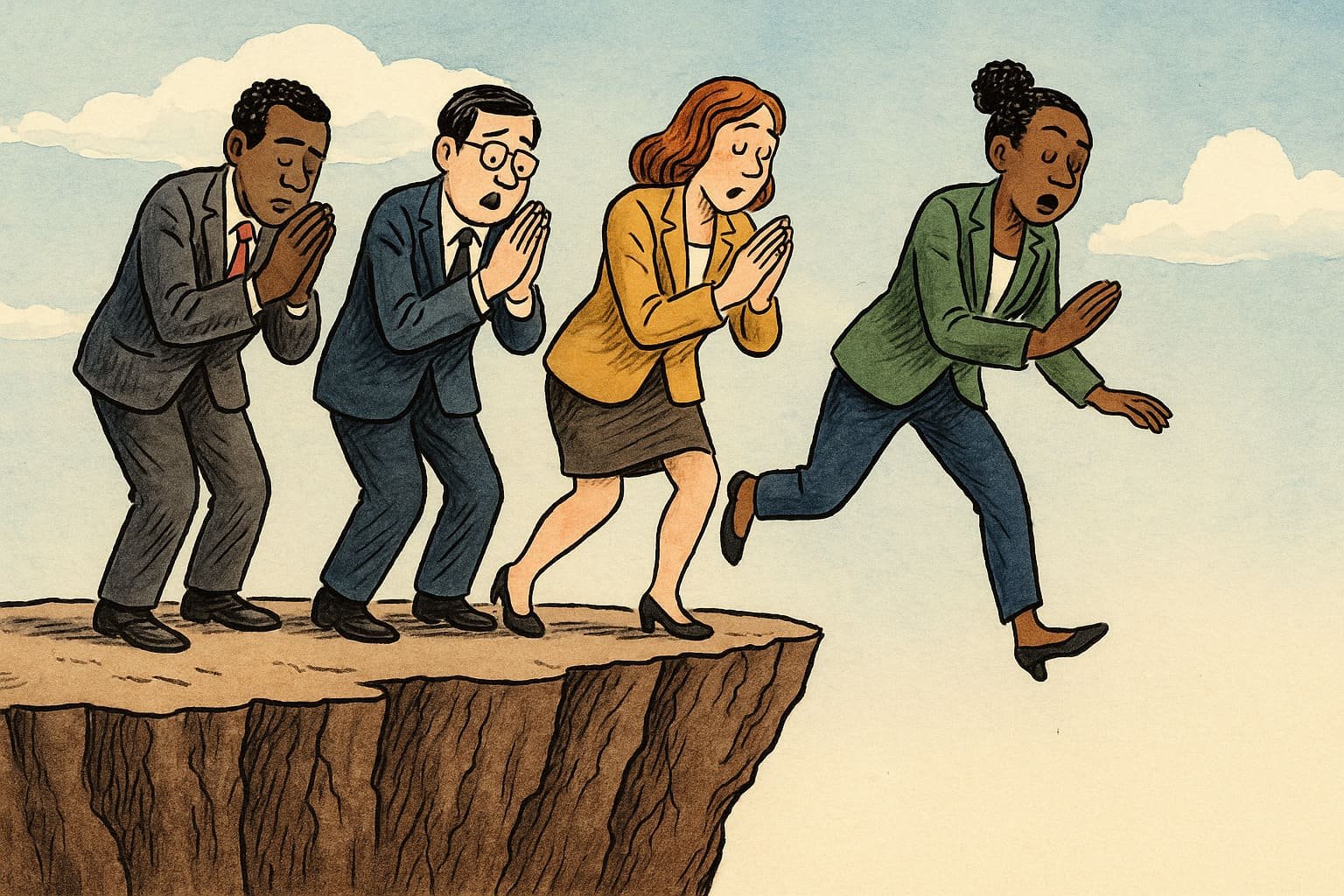
The factory floor hummed with mechanical precision, yet the loudest force inside the building made no sound at all. Engineers adjusted machines, analysts refreshed dashboards, and executives studied forecasts glowing across enormous screens. Everything appeared grounded in facts. Still, every major decision leaned on something impossible to measure with absolute certainty. Tomorrow had not happened. Every investment, acquisition, product launch, and hiring decision rested on belief more than proof. Business has always presented itself as a science, but beneath every calculation lies an extraordinary act of faith.
Markets reward evidence, yet they cannot escape uncertainty. Every entrepreneur who launches a company believes customers will appear before they actually do. Investors commit capital because they trust a future that remains invisible. Employees accept job offers hoping promises become reality. Consumers purchase unfamiliar products believing they will improve daily life. These ordinary actions reveal an overlooked truth. Commerce depends upon confidence flowing between strangers. When that confidence weakens, even outstanding business models struggle because uncertainty spreads faster than opportunity across every industry.
Modern technology creates the comforting illusion that prediction has become perfect. Artificial intelligence analyzes trends. Algorithms forecast demand. Sophisticated software models economic scenarios with remarkable speed. Even so, unexpected events continue rewriting carefully designed strategies. Supply chains break without warning. Consumer preferences shift overnight. New competitors emerge from unlikely places. The future stubbornly refuses complete control. Successful organizations acknowledge this reality instead of pretending certainty exists. They build resilience rather than chasing impossible precision, recognizing that adaptability consistently outperforms overconfidence when conditions unexpectedly change.
A renewable energy startup led by Amara spent years developing affordable battery technology. Investors questioned the timing because market demand appeared uncertain and larger competitors possessed deeper resources. Several board members urged abandoning the vision altogether. Amara listened carefully, refined the strategy, strengthened partnerships, and continued investing despite repeated skepticism. Public attitudes toward clean energy gradually accelerated. The company eventually secured contracts that transformed its trajectory. The turning point did not arrive because anyone predicted the future perfectly. It arrived because disciplined belief survived long enough to meet opportunity.
History celebrates similar moments where conviction shaped extraordinary outcomes. When Reed Hastings introduced Netflix’s streaming strategy, many observers doubted consumers would abandon physical media so quickly. Amazon invested heavily in cloud computing before most businesses understood its potential. Those decisions certainly relied upon analysis. They also required imagination strong enough to move beyond existing evidence. Strategic vision often begins where historical data reaches its limits. The most influential leaders combine rigorous thinking with the courage to embrace uncertainty before consensus eventually catches up.
Management expert Peter Senge described organizations as learning systems rather than fixed machines. That perspective explains why enduring businesses rarely treat forecasts as promises. They treat them as evolving conversations. Teams experiment. They observe results. They adjust without allowing pride to interfere. Faith becomes practical rather than mystical. It appears through disciplined optimism supported by continuous learning. Organizations that cling rigidly to outdated assumptions often mistake consistency for strength. Flexible belief, grounded in evidence yet open to change, proves remarkably more durable during turbulent periods.
There is another layer beneath strategic planning that rarely appears in annual reports. Employees must believe leadership deserves trust before ambitious visions gain momentum. Customers must believe brands will honor their commitments before loyalty develops. Partners must believe agreements will survive difficult seasons. Every meaningful commercial relationship rests upon invisible confidence accumulated through countless ordinary interactions. Once trust fractures, rebuilding it demands far more effort than maintaining it ever required. The strongest organizations understand that credibility compounds just as powerfully as financial capital.
The skyline eventually fades into evening while office lights blink out one floor at a time. Forecasts remain unfinished, opportunities remain uncertain, and tomorrow continues hiding behind an unopened door. That uncertainty is not business’s greatest weakness. It is its greatest invitation. Every remarkable company was once little more than an improbable belief shared by determined people willing to act before certainty arrived. The future never belongs to those who predict it perfectly. It belongs to those courageous enough to earn belief before everyone else can see what is coming.
