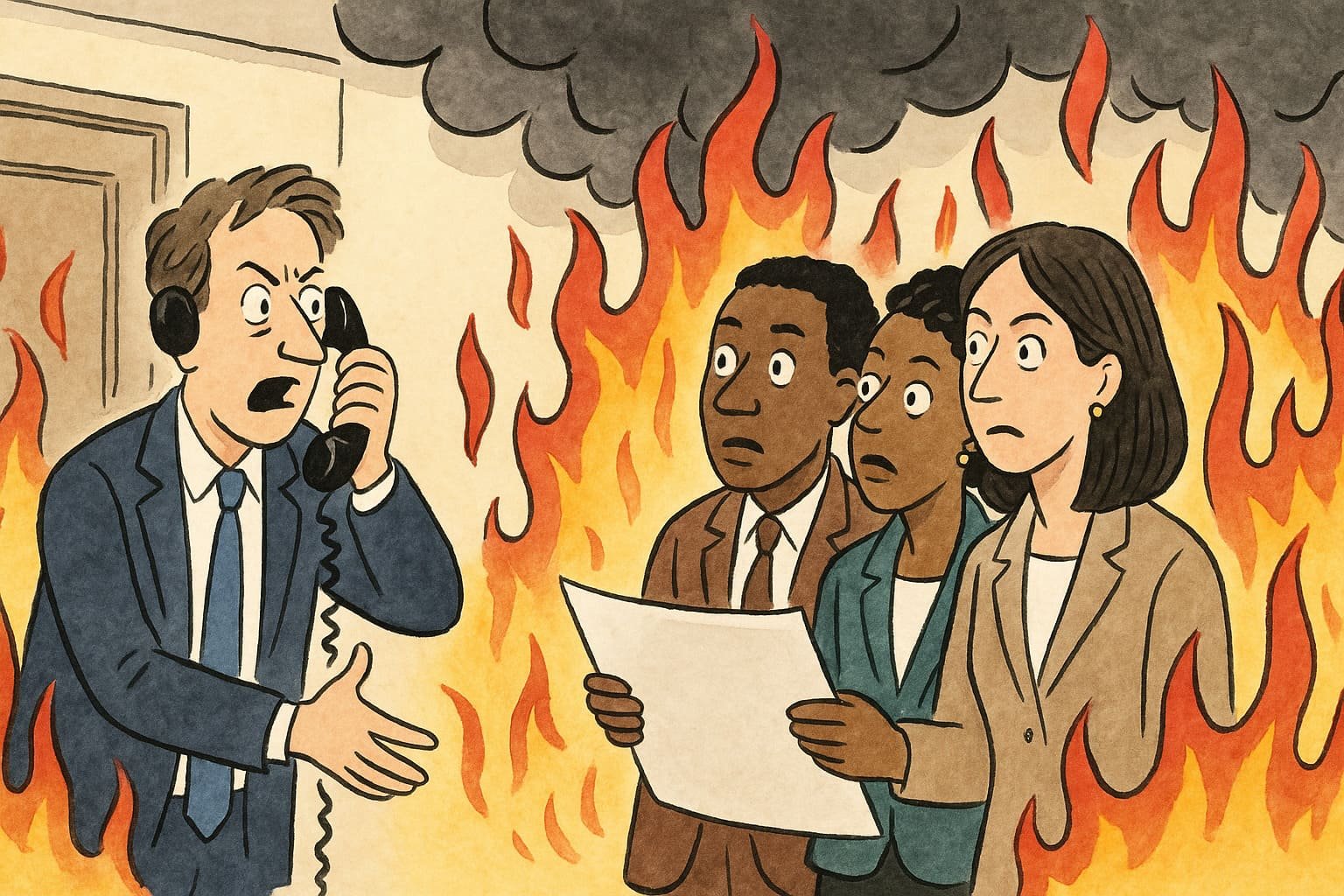
The alarm did not begin with flashing lights or dramatic headlines. It started with a single unanswered message buried inside an overflowing inbox. Hours later, customers were demanding explanations, employees were exchanging rumors, and executives were scrambling for facts they should have shared much earlier. Crises rarely explode without warning. They gather quietly, feeding on uncertainty until silence becomes louder than the truth. When communication fails, even small problems learn how to wear the mask of catastrophe.
Every organization will eventually face disruption. A product recall, cybersecurity breach, supply chain interruption, public criticism, or internal conflict can arrive without invitation. The businesses that recover fastest are rarely those with the fewest problems. They are the ones that communicate with speed, honesty, and consistency. Clear communication calms fear before speculation takes control. People may forgive mistakes. They rarely forgive being ignored while those mistakes unfold in plain sight.
A regional food producer experienced this reality after discovering a quality issue affecting one product line. Leadership had two choices. Delay communication until every answer was available or speak immediately with transparency. The company informed retailers, explained what was known, admitted what remained uncertain, and provided regular updates throughout the investigation. Customers appreciated the honesty despite the inconvenience. Trust survived because people felt respected instead of manipulated. Openness became the company’s strongest form of damage control.
Some of the world’s most respected brands have demonstrated that reputation depends less on perfection than on response. During moments of public scrutiny, companies that acknowledge responsibility, communicate clearly, and act decisively often recover faster than organizations that deny obvious problems. Leadership scholar John Kotter has long argued that urgency creates momentum only when people understand the situation honestly. Communication transforms confusion into coordinated action. Without it, even talented teams become disconnected islands reacting independently.
Strong crisis communication follows a simple principle. Tell people what happened, what is being done, and when they can expect another update. That rhythm reduces anxiety because uncertainty shrinks with every honest conversation. Employees should hear important news before social media does. Customers deserve direct answers instead of carefully crafted evasions. Investors appreciate realistic expectations more than polished optimism. Credibility grows when consistency replaces improvisation.
Emotion matters just as much as information. During stressful moments, people remember how leaders made them feel long after they forget specific details. A calm voice, visible empathy, and genuine accountability often carry more influence than complicated explanations. Managers who remain accessible encourage confidence throughout the organization. Those who disappear behind closed doors unintentionally fuel fear. In every crisis, silence becomes its own message, and it is rarely interpreted kindly.
Communication also determines what happens after the immediate danger passes. Organizations that review their responses openly uncover valuable lessons for the future. Teams discuss what worked, what failed, and how procedures can improve before another emergency appears. Every crisis becomes a classroom instead of a permanent scar. Businesses that learn publicly often strengthen trust because people witness resilience rather than denial. Recovery begins with reflection, not celebration.
Long after headlines fade and operations return to normal, one memory usually remains. People remember whether leadership chose courage or concealment when pressure reached its highest point. Reputation is not built during comfortable seasons. It is forged when uncertainty demands uncomfortable honesty. Every difficult conversation offers an opportunity to prove character before competence. When the next crisis inevitably knocks, the strongest organizations will not search for the perfect words. They will already have earned the right to be believed.
