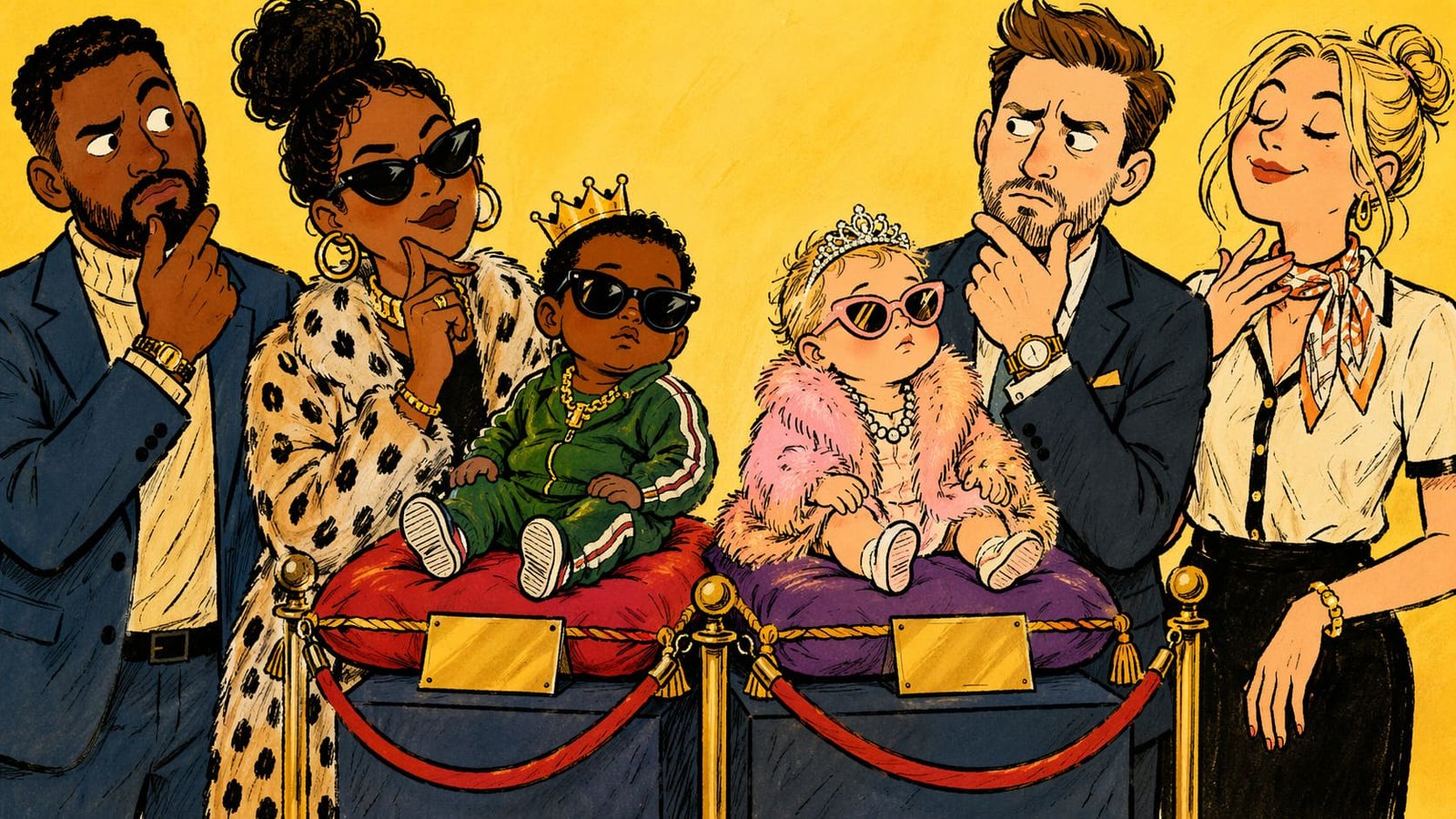
The name is chosen long before the child understands what a name carries. It is whispered, tested, searched, checked for availability across domains and handles, weighed not just for meaning but for uniqueness. A couple sits at a kitchen table, scrolling through lists that feel less like heritage and more like strategy. They are not only naming a person. They are positioning an identity. The shift is subtle, almost invisible, yet unmistakable. A name used to be a beginning. Now it feels like a launch.
This evolution did not emerge from nowhere. Names have always carried social signals. They reflect culture, lineage, aspiration. What has changed is the intensity of those signals in a world shaped by visibility. A name is no longer confined to a classroom register or a family tree. It lives online, searchable, shareable, subject to interpretation by strangers. The awareness of that exposure influences decisions in ways that previous generations did not have to consider. The private act of naming becomes a public calculation.
You can see the pattern in how parents discuss options. Conversations drift toward distinctiveness, memorability, how a name might “stand out.” The criteria resemble branding more than tradition. Short, sharp, globally pronounceable. Unique enough to avoid confusion, familiar enough to feel acceptable. The logic mirrors product naming in a crowded market. It is not just about what the name means. It is about how it performs when introduced to the world.
A consultant named Amara once helped a friend choose a name for their child. The process resembled a creative brief. They mapped associations, considered cultural references, even checked how the name appeared in search results. The final choice felt elegant, modern, distinctive. Months later, Amara noticed something unexpected. The child’s name attracted comments, questions, attention. It became a conversation starter, a small signal that shaped how people approached the family. The name was doing work before the child had spoken a single word.
This is where the deeper tension emerges. A name is both a gift and a frame. It offers identity, but it also sets expectations. When names become more distinctive, more intentional, they can carry a weight that is difficult to articulate. The child grows into a label that was crafted with care, yet shaped by external considerations. The line between self and signal becomes blurred. Identity begins to feel less like discovery and more like alignment.
There is also a cultural feedback loop at play. As more unique names appear, the baseline shifts. What once felt distinctive becomes common. Parents push further, searching for combinations that feel untouched, unclaimed. The escalation continues. The result is a landscape where names are increasingly varied, sometimes inventive, occasionally polarizing. The diversity can be beautiful. It can also reflect a quiet competition, a desire to stand out in a world that rewards visibility.
A teacher named Daniel shared an observation that stayed with him. In his classroom, names no longer followed predictable patterns. Each one carried a story, a choice, a deliberate decision. He found himself pausing before calling attendance, not out of confusion, but out of curiosity. The names felt like introductions before the students spoke. Some children embraced that distinctiveness. Others seemed to shrink from it, aware that their name drew attention before their personality could shape perception.
The influence of digital culture amplifies this dynamic. Social media platforms reward uniqueness. They surface what stands out, what can be remembered quickly, what can travel across networks. A distinctive name fits neatly into that system. It becomes a handle, a tag, a marker that can be easily recognized. Parents, consciously or not, anticipate that environment. They choose names that will function well within it, that will not be lost in the noise.
At the same time, something quieter persists. Many names still carry deep personal meaning, rooted in family history, cultural tradition, or simple affection. These choices resist the pull of branding, grounding identity in something more stable. The coexistence of these approaches creates a complex landscape. Some names are chosen for how they sound in a room. Others for how they appear on a screen. Most exist somewhere in between, balancing heritage and visibility.
In a softly lit hospital room, a newborn rests beside a name that has already begun its journey through the world. It will be spoken, written, searched, remembered. It will gather associations, some intended, others not. The child will grow into it, reshape it, perhaps even resist it. The name will remain, a constant that carries both the hopes of those who chose it and the interpretations of those who encounter it.
Somewhere between intention and expectation, a simple act has transformed into something more complex, and the question lingers quietly, waiting to be felt over time: when identity begins as something carefully designed, will it still have the freedom to become something entirely its own, or will it spend a lifetime living up to a story it never chose?
