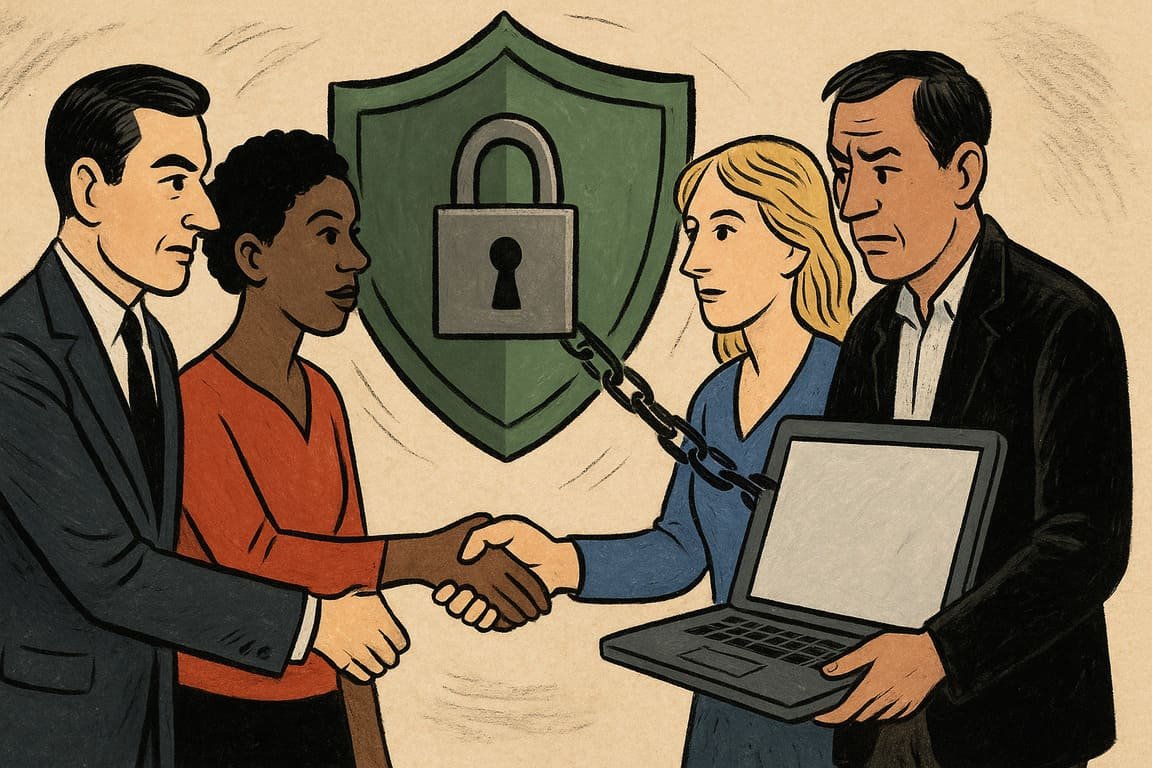
In a steel-and-glass tower veiled by midnight drizzle, a boardroom hums with nervous anticipation. Digital contracts pulse across tablets as two companies sit down to seal the kind of partnership that could tilt markets. A handshake would have been enough in an earlier age, but now every face flickers with wariness behind the glow of screens. Each team wonders if the digital vaults guarding their secrets will hold or if trust will shatter with one wrong click.
Every deal brokered in this age of code rides on unseen security. Brand empires crumble when hackers slip past sleepy passwords. A single data breach can snatch years of goodwill, turning partners into enemies overnight. Security no longer lives in a locked drawer. Now, it is an invisible shield woven through every fiber of the digital handshake.
A finance CEO named Reuben Otieno once lost a multi-million dollar partnership when his company’s internal chat got compromised. His rival didn’t outbid him, didn’t offer better tech, didn’t have more charm—he simply proved his system could keep secrets. Trust became the dealmaker, security the lifeline. In a world where every message, invoice, or promise can be forged, only real digital safeguards separate heroes from casualties.
Every founder, leader, and team member now walks into negotiations as both dreamer and gatekeeper. When the lights flicker, and doubts creep in, it’s the armor of real security that protects the future. The battle for trust is not just about promises. It is fought line by line, password by password, every second, everywhere.
Quick Notes
- Digital Trust Is Survival: In today’s world, brands live or die by digital trust, not by charm or tradition.
- Breaches Break Bonds: Partnerships collapse the moment security cracks—no second chances, no easy repair.
- Real Stories Expose the Stakes: From billionaire empires to scrappy startups, those who secure their digital house win lasting partnerships.
- Human Error Is the Real Enemy: Security is a culture, not just a software patch. Neglecting it invites disaster.
- Building the Unbreakable: Only those who invest in genuine, visible, and relentless safeguards turn trust into their brand’s superpower.
When Trust Breaks—Real-World Meltdowns and the True Price of Digital Failure
A single text leaked from a boardroom chat can flip an entire industry. In the high-voltage world of modern business, real stories echo louder than warnings from any analyst. When Sony Pictures faced a cyberattack, its confidential negotiations spilled out, scattering partners like leaves in a storm. Competitors circled as trust vaporized, while years of creative work burned in the digital bonfire.
In Nairobi, a fintech app called BrightWallet exploded onto the scene, promising seamless transfers and financial inclusion. But one summer, a hacker took advantage of a weak server, draining thousands from customer accounts in a weekend. Within days, trusted alliances with banks evaporated, and the CEO, Njeri Kamau, went from media darling to cautionary tale.
Breaches don’t only empty vaults. They stain reputations for years, causing founders to watch investors vanish in silence. It’s never just the stolen data that hurts—it’s the lost belief that secrets were safe. At a Zurich tech conference, a panelist named Henrik Lutz summed it up: “Trust is the currency, security the vault. Break either, and you are broke.”
Even personal relationships crumble under the weight of digital betrayal. A young startup founder, Rajesh, found his co-founder leaking investor emails to competitors. The fallout was swift. Staff quit. Partners retreated. The startup closed, not because the product failed, but because trust had bled away.
Broken trust spreads faster than any hack. It lives in rumor, Twitter storms, and legal filings. What takes years to build can vanish in an hour if digital safeguards fail.
Building Digital Fortresses—How Security Earns Loyalty and Growth
The brands that thrive understand security is their real moat, not just a box to check. Security isn’t about creating paranoia; it’s about promising every partner, customer, and employee that their secrets and stories are safe. Real digital safeguards do more than stop thieves. They inspire devotion and spark bold collaborations.
Picture a global supply chain stretched across continents. Each transaction depends on digital locks—secure emails, encrypted chats, ironclad contracts. When Tesla rolled out its electric fleet, it chose partners based not on price, but on proven cybersecurity records. That choice fueled rapid growth and kept rivals guessing.
Even small teams can punch above their weight. A Nairobi-based design studio called PixelBlock landed a Fortune 500 client after demonstrating their bulletproof data practices. Their founder, Laila Hassan, built an open culture where every staffer, from the janitor to the CTO, understood the basics of digital hygiene. Clients noticed the difference and stuck around for the long run.
Real-world proof comes in the survival of companies during global attacks. When ransomware hit entire cities, only those with rigorous, rehearsed protocols kept moving. Those who scrambled or panicked lost years of deals in a single week.
Security’s value multiplies in silence. The best-run companies have “boring” security meetings, run endless drills, and reward whistleblowers. They make security as routine as payroll. Only when the storm comes do outsiders realize the walls are stronger than anyone imagined.
The future belongs to brands that treat security as sacred. Their partners don’t just hope. They believe.
Human Error: The Weakest Link in Every Digital Chain
You can have the world’s best software, but one careless click can let the wolf in. Real security starts in the mind, not the machine. Hackers don’t always break codes. Sometimes they break people, persuading an employee to open the wrong file, share the wrong password, or ignore a warning out of convenience.
A shipping company in Rotterdam lost millions when a junior clerk, exhausted after an all-nighter, clicked a phishing email disguised as a birthday card. The breach spiraled, locking critical systems for days and leaving global partners stranded. Later, the company overhauled its entire training program, making “Think Before You Click” the motto etched on every screen.
Tech giants know this truth all too well. Facebook’s infamous data leak started not with a super-hacker, but with casual developer shortcuts. Their response: build security into every team, not just the IT bunker. Now, designers, marketers, and even the janitorial staff join monthly training. Small habits, like locking screens and using password managers, make all the difference.
Stories of redemption emerge too. A Kenyan non-profit, EduBridge, avoided catastrophe after a near-miss when a staffer reported a suspicious request for donor details. The leadership responded with gratitude, not blame. That shift made every team member feel responsible, turning potential weaknesses into a web of vigilance.
The real transformation happens when security becomes culture. Not fear, not finger-pointing, but pride in guarding what matters. When everyone in the chain acts as a gatekeeper, trust grows unbreakable.
Invisible Shields—The Art and Science of Digital Safeguards
Some of the best security is almost invisible, felt in the seamless way platforms operate. Two companies can use the same software, but only one becomes known as the “trusted partner.” Why? Because they obsess over layers—multi-factor authentication, regular updates, and plain old human intuition.
Amazon’s global dominance isn’t just about fast shipping. It’s about making buyers and sellers believe their every transaction, rating, and address is wrapped in digital armor. When fraudsters try to exploit loopholes, Amazon’s systems spot, block, and even predict trouble before it hurts real users. This obsessive focus earns the kind of loyalty no ad campaign can buy.
At a Lagos hackathon, developer Chinedu Ekene stunned judges by building an AI-powered login system that shut out impersonators while letting real users glide through. His company landed a massive banking contract, not for the tech alone, but because he explained the risks in simple terms every partner understood. “The best shield,” he said, “is the one everyone can trust, not just the engineers.”
Partnerships now live or die on these invisible protocols. Startup founders know that a single security lapse, even if it never makes the news, can kill a deal or end a career. Real safeguards are both art and science: balancing top tech with street smarts and relentless curiosity.
A reputation for safety is the sharpest competitive edge. It’s invisible, but it makes all the difference in every handshake.
Turning Security Into a Trust Engine—Brand Stories That Win Partnerships
Brands that rise above the noise treat trust as a living thing. They nurture it with transparency, honesty, and a relentless focus on real protection. Every story of survival in the digital age starts with a commitment to guard the future, not just patch the past.
After a breach nearly destroyed its reputation, a Johannesburg fintech called HaloPay re-emerged stronger. The founder, Vuyo Zulu, launched a campaign sharing every lesson learned and every fix made. By inviting partners to audit their new protocols, he turned past weakness into an unshakable badge of honor.
Microsoft’s journey offers a global lesson. Once the butt of security jokes, the company transformed by making security the core of its culture, not just a product feature. They started inviting hackers to find bugs, celebrated each report, and turned public scrutiny into public trust. Microsoft’s best partnerships now spring from its reputation for relentless, open improvement.
Partnerships that last begin with proof, not promises. Real digital safeguards work quietly in the background, letting partners focus on growth, innovation, and creativity. Stories spread quickly in the tech world—brands that walk the talk find themselves surrounded by new allies, unexpected collaborators, and loyal fans.
The lesson is simple: trust is built, broken, and rebuilt every day. Only those who make security their rallying cry become legends.
The Last Firewall—Guardians of Tomorrow
An old server room hums in the back of a downtown building, blue lights blinking through the haze of a long night. A founder named Samira paces the polished floor, listening for the hum that means every safeguard still holds. Shadows ripple across cables as silent partners—bankers, engineers, volunteers—wait for the morning’s deal. Every click, every signed contract, every whispered promise stands protected by layers unseen.
Somewhere, a hospital’s lights flicker back on after a cyberattack fails to breach the defenses. Families breathe easier, and lives continue unchanged, thanks to unseen hands that guarded the gates. An artist in Cape Town launches her online gallery, smiling as buyers pay without fear, knowing her team’s relentless dedication keeps every transaction pure.
Reputation and survival now flow through invisible wires, every trust built on the unseen labor of those who refuse to cut corners. Legends are forged in the quiet moments when disaster never happens.
You hold the next line of defense, the final firewall between hope and havoc. The future waits for those who protect trust as their most sacred gift.
Partnered. Provocative. Worth Your Scroll.
This is a Promoted Post by ESYRITE—yes, it’s paid, but never filtered. Our voice stays raw, real, and razor-sharp. We team up with bold ideas, game-changers, and stories that spark something real. If it’s here, it earned its place—no fluff, just impact. We don’t just promote—we provoke. Stay sharp. Dive deeper.
