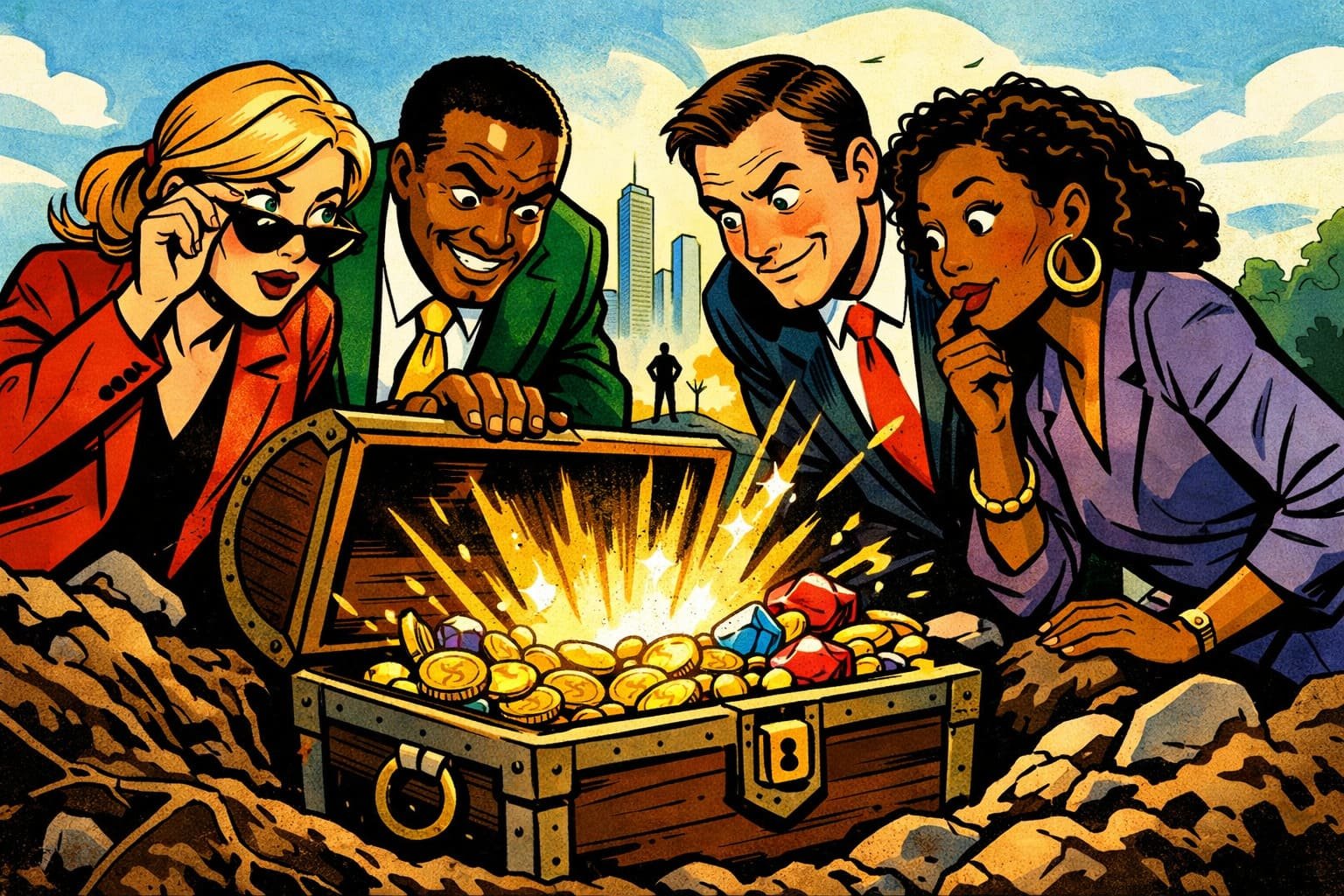
The loudest businesses are not always the richest. That feels almost offensive in an era where attention behaves like currency and founders are encouraged to perform ambition as though silence were a strategic defect. Yet some of the most valuable enterprises in the world would bore a dinner party into a coma if described honestly. Industrial adhesives. Waste logistics. Payment infrastructure. Niche maintenance contracts. Repeat procurement systems no one would ever turn into a Netflix drama. Wealth has an odd habit of hiding in places vanity overlooks. Many owners spend years chasing glamorous growth while sitting inside businesses with extraordinary hidden value they have emotionally discounted simply because familiarity made excellence feel ordinary.
Anouk Mensah ran a commercial sanitation supply business that never inspired much excitement outside accounting circles. Friends admired fashionable startups with charismatic founders and aggressive branding. Her company sold practical products to organizations that valued reliability more than storytelling. She privately wondered whether she had built something too dull to matter. Then acquisition interest arrived. The prospective buyer saw patterns she had normalized into background noise: sticky contracts, disciplined purchasing habits, predictable reorder behavior, resilient margins, low client churn, and operational consistency that survived staff absences without panic. Anouk had mistaken emotional boredom for economic mediocrity. Markets often reward dependable invisibility more generously than theatrical innovation.
Owners routinely overlook hidden value because they become nose-blind to their own strengths. A chef stops noticing the smell of the kitchen. A founder stops noticing institutional discipline that has become habit. Repeatability looks boring from inside the machine. Buyers see something else entirely. Predictability. Transferability. Operational hygiene. Customer trust. Pricing power. Buffett and Munger built philosophies around economic durability rather than market excitement for good reason. The businesses that quietly solve recurring problems well often generate sturdier wealth than flashier ventures burning investor romance for fuel. Glamour attracts headlines. Systems attract serious capital.
A founder named Emiliano Kestrel spent years running a regional equipment servicing business that looked unremarkable to anyone addicted to startup mythology. No viral moments. No product launches with cinematic music. Just technicians showing up, problems getting solved, invoices being paid, and customers quietly staying put. During succession planning, an external adviser reframed the enterprise in language Emiliano had never applied to himself. Customer dependence had become a moat. Staff retention reduced execution risk. Documentation supported scalable delegation. Service consistency created defensibility. The business had not become more valuable overnight. His eyesight had changed. Hidden wealth often requires an outsider to describe what familiarity rendered emotionally invisible.
Modern business culture has developed a mild obsession with disruption. Everyone wants to reinvent categories, overturn industries, or become the next case study in entrepreneurial mythology. Disruption can absolutely create wealth. It is not the only route. Costco built devotion through relentless consistency. Enterprise software firms built empires by becoming operationally indispensable rather than culturally glamorous. Luxury brands often monetize trust and continuity more than novelty. Even fictional antiheroes from prestige television frequently reveal the same strategic truth: control of dependable systems beats emotional improvisation. Hidden value thrives where businesses become difficult to replace, even if nobody outside the sector finds the story particularly sexy.
Founder independence is another hidden fortune owners misread. Businesses that continue functioning well without constant founder intervention are dramatically more valuable because resilience has been institutionalized. Sorin Delacroix discovered this during an unexpected medical leave from his manufacturing company. He expected operational wobble, delayed approvals, maybe a minor crisis or two. Instead, the business carried on competently because years of delegation, documentation, and management discipline had quietly done their work. The experience bruised his ego and delighted his financial adviser. Founder indispensability may feel flattering. Buyers usually interpret it as concentration risk. Replaceability can be emotionally uncomfortable and economically magnificent.
Culture hides wealth too, though executives often discuss it in decorative language that drains seriousness from the concept. Trust is economically useful. Teams that communicate honestly prevent expensive surprises. Managers who surface problems early preserve strategic agility. Employees who feel psychologically safe challenge weak assumptions before they become costly errors. These are not sentimental management slogans. They are operational assets. Buyers increasingly probe for these signals because dysfunctional cultures destroy acquisition value with remarkable efficiency. Fortune sometimes lives inside boring Tuesday meetings where people tell the truth instead of performing confidence. Hidden wealth does not always appear on financial statements in emotionally satisfying ways.
Somewhere, an owner is envying a louder competitor while quietly sitting atop a business with stronger economic foundations. Somewhere else, a founder is dismantling durable advantages because boredom has been mistaken for stagnation. Wealth rarely waits where ego expects applause. It accumulates in trust, repeatability, resilient margins, disciplined teams, customer habits, and systems that continue breathing when the founder leaves the room. The sharpest operators eventually recognize a strange commercial truth: what feels painfully ordinary from inside a well-run business can look astonishingly precious to anyone trained to understand how enduring value is actually built.
