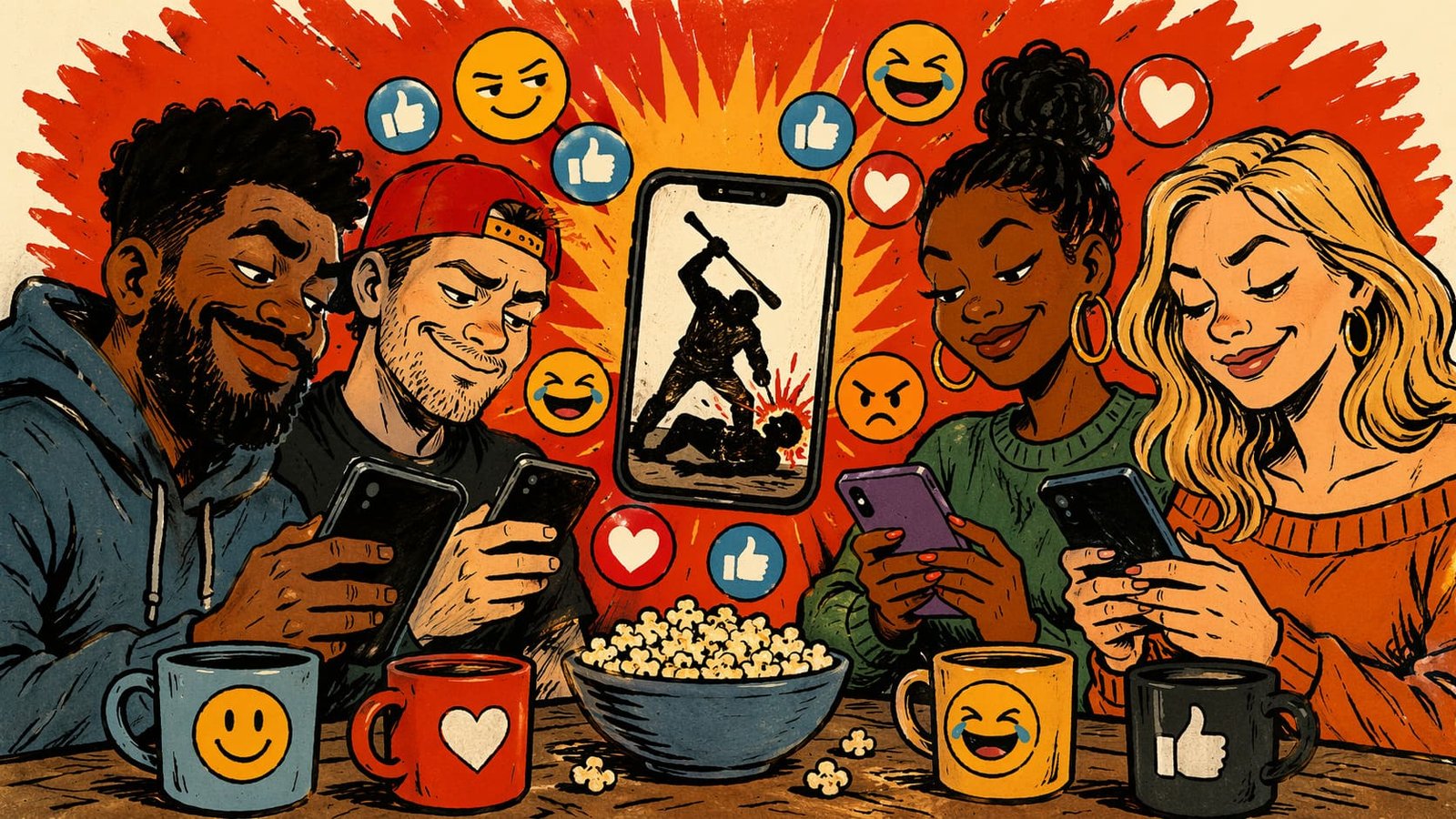
The image flashes for a second, maybe less. A caption lands, sharp, compressed, designed to hit before thought has time to organize itself. Someone laughs, someone shares, someone scrolls. It feels light, disposable, almost harmless. Yet beneath that speed sits something heavier. A tone has shifted. The joke carries an edge that lingers a little longer than it should. What used to feel like play now feels like pressure. Memes have not just evolved. They have hardened.
They began as fragments of humor, strange and unpredictable. Early internet culture treated memes like inside jokes stretched across distance. They were messy, often absurd, rarely polished. Their power came from recognition, that quick spark of “this feels familiar,” even when the content itself was chaotic. There was a looseness to them, a sense that they belonged to everyone and no one at the same time. They were not trying to persuade. They were trying to amuse.
Then politics entered the frame, not all at once, but steadily. Memes proved effective at carrying ideas in a form that bypassed resistance. A complex argument could be reduced to a single image and a line of text. It did not require patience. It did not ask for context. It simply arrived, delivered its point, and moved on. The format rewarded clarity and impact, which in political terms often meant exaggeration, simplification, and emotional charge. What worked spread. What spread shaped perception.
A student named Karim once shared a meme in a group chat, something he found amusing, a quick jab at a political figure. The response was immediate. Some laughed. Others pushed back, reading the image differently, attaching meanings Karim had not considered. The conversation escalated, not because the meme was detailed, but because it was open to interpretation. Karim realized something uncomfortable. The image carried more weight than he intended. It traveled further than his understanding of it.
This is where the tension deepens. Memes compress ideas, but they do not control how those ideas are received. They operate in a space where humor and message overlap, where irony can mask intention, and where ambiguity allows multiple readings to coexist. That ambiguity can be playful. It can also be strategic. Messages can be delivered in ways that are easy to deny, easy to reframe, yet effective in shaping attitudes. The meme becomes a vehicle that can carry meaning without fully owning it.
There is also a structural advantage to this form. Platforms reward content that is engaging, shareable, easy to process. Memes fit that environment perfectly. They require minimal effort to consume and even less to distribute. A single image can reach thousands, sometimes millions, without the friction that longer forms of communication face. In that environment, ideas that are sharp, provocative, or emotionally charged tend to travel further. Nuance struggles to keep up.
A political strategist named Elena described the shift in blunt terms. “It’s not about convincing,” she said. “It’s about repeating.” The goal is not to present a comprehensive argument, but to reinforce a feeling, an association, a quick judgment that becomes familiar over time. Memes excel at this. They create patterns of recognition. A symbol, a phrase, a visual cue appears repeatedly until it feels natural, almost obvious. The repetition does the work that explanation once did.
The darker edge emerges when these patterns begin to normalize more extreme ideas. What starts as humor can gradually shift into something more serious, more pointed. The distance created by irony makes it easier to introduce content that might otherwise be rejected. The audience is left to decide how seriously to take it, and in that space, boundaries can move. What once felt unacceptable can begin to feel less so, not through direct argument, but through repeated exposure.
A community moderator named Daniel noticed this progression in an online forum he managed. Early posts were playful, irreverent, loosely connected to current events. Over time, the tone sharpened. Images became more aggressive, captions more pointed. Members who pushed back found themselves outnumbered or dismissed. The humor remained, but it carried a different energy. It was less about shared amusement and more about signaling alignment. The space changed, not abruptly, but steadily.
The broader cultural impact is difficult to measure, yet hard to ignore. Memes shape how people interpret events, how they frame discussions, how they respond to information. They do not replace traditional forms of communication, but they influence the environment in which those forms operate. They set the tone. They establish shortcuts that can guide perception before deeper analysis occurs. In a landscape where attention is limited, those shortcuts matter.
In a dim glow of a phone screen, an image appears, familiar in format, unfamiliar in feeling. It invites a reaction, quick and instinctive. The finger hovers, then moves, sharing it forward, adding it to the stream. The moment passes almost instantly, yet the impression lingers, subtle but persistent. The line between humor and message blurs again, just enough to leave a trace.
Somewhere inside that endless exchange, meaning continues to shift, shaped not by long arguments but by small, repeated signals, and the question remains, quiet yet difficult to ignore: when the things that make you laugh also shape what you believe, will you notice where the joke ends and the influence begins, or will the two become indistinguishable before you realize it?
