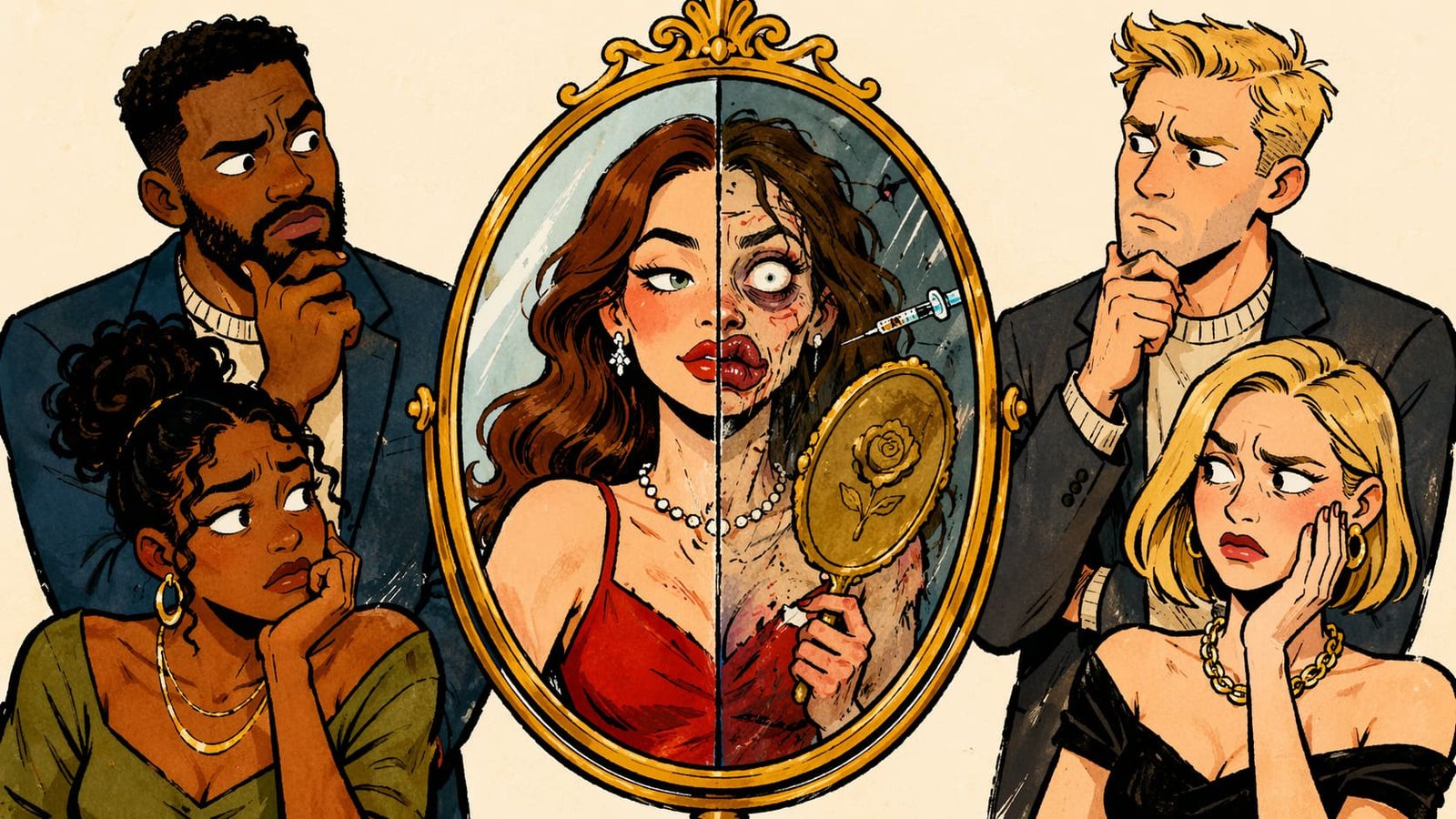
A face appears on a screen, flawless to the point of discomfort. Skin without texture. Eyes too symmetrical. Features sharpened just enough to feel engineered. At first glance, it impresses. At second glance, it unsettles. Something about it resists recognition, like a memory that looks correct but feels wrong. The reaction is subtle, almost instinctive. Beauty has crossed a line it cannot easily return from.
The pursuit of beauty has always carried tension. It lives between admiration and insecurity, aspiration and distortion. Standards evolve with culture, shaped by art, media, and collective imagination. What feels new today is the speed and precision with which those standards are now constructed. Technology has not just influenced beauty. It has begun to redesign it in real time.
Filters, editing tools, and cosmetic enhancements have created a version of appearance that no longer needs to correspond to reality. The face becomes a project, adjustable, optimizable, endlessly refined. Each adjustment feels small, almost harmless. Over time, those adjustments accumulate into something else entirely. The result is not an improved version of a person, but a departure from what once felt human.
Consider Hana, a young photographer who built her career capturing natural portraits. She noticed a shift in her clients. Requests began to change. Small edits became larger ones. Features were adjusted beyond recognition. One client paused during a session and asked to see a version of herself with “just a little more symmetry.” Hana complied, but the result felt strange. The image was technically perfect, yet it lacked presence. The client smiled at the screen. Hana felt a quiet discomfort she could not easily explain.
The phenomenon often described as the “uncanny valley” captures this tension. As representations of human faces become more precise, there is a point where they become unsettling rather than appealing. Perfection, in this sense, disrupts familiarity. It removes the subtle imperfections that signal authenticity. What remains is something that looks human but feels artificial. The emotional connection weakens.
Public figures have become central to this shift. Celebrities and influencers operate within systems that reward visual perfection. Images are curated, edited, and presented as aspirational benchmarks. Over time, these benchmarks influence how people perceive themselves. The gap between reality and representation widens. The pursuit of closing that gap becomes a continuous process, rarely satisfying, often exhausting.
A figure like Kim Kardashian has played a significant role in shaping modern beauty standards. Her image, carefully constructed and widely circulated, has influenced aesthetics across industries. The impact is not limited to admiration. It extends to imitation. Features once considered unique become templates. Individuality gives way to replication.
A dermatologist named Dr. Adebayo once described a growing trend among patients. They arrived not with general concerns, but with specific reference images, often filtered or digitally altered. The requests were precise. The expectations were exacting. Dr. Adebayo noted that the challenge was no longer just medical. It was psychological. Patients were comparing themselves to versions of reality that did not exist outside a screen.
The business of beauty has adapted quickly. Entire industries have formed around enhancement, offering solutions that promise transformation. Products, procedures, and services are marketed with the language of improvement. Yet improvement, in this context, becomes a moving target. As standards evolve, satisfaction remains elusive. The pursuit continues, driven by an ideal that constantly shifts.
A small but telling story comes from Lila, a content creator who built a following around lifestyle content. Her early posts were candid, lightly edited, grounded in everyday moments. As her audience grew, so did the pressure to refine her image. Filters became standard. Edits became more precise. Engagement increased, but something changed. Comments shifted from connection to comparison. Lila eventually posted an unedited photo, a rare moment of reversal. The response was immediate and intense, a mix of relief and surprise. It revealed how rare authenticity had become.
The cultural impact extends beyond individual experiences. It shapes how beauty is understood collectively. Imperfection, once accepted as part of human variation, begins to feel like a flaw to be corrected. Diversity narrows as certain features are elevated and repeated. The visual landscape becomes more uniform, less reflective of the range that exists naturally.
In a quiet dressing room, a mirror reflects a face that feels familiar yet scrutinized. Adjustments are made, small at first, then more deliberate. The reflection shifts subtly, aligning closer to an imagined ideal. The process feels controlled, almost empowering. Yet beneath that control sits a question that is harder to ignore. What is being pursued, and at what cost?
The screen lights up again, offering another image, another version of beauty refined to near perfection. It invites admiration, but also comparison. The cycle continues, each iteration pushing the boundary further, each adjustment moving slightly away from what once felt natural.
In that quiet space between admiration and unease, a thought lingers, steady and difficult to dismiss: if perfection begins to look unnatural, what does that say about the standard being chased?
