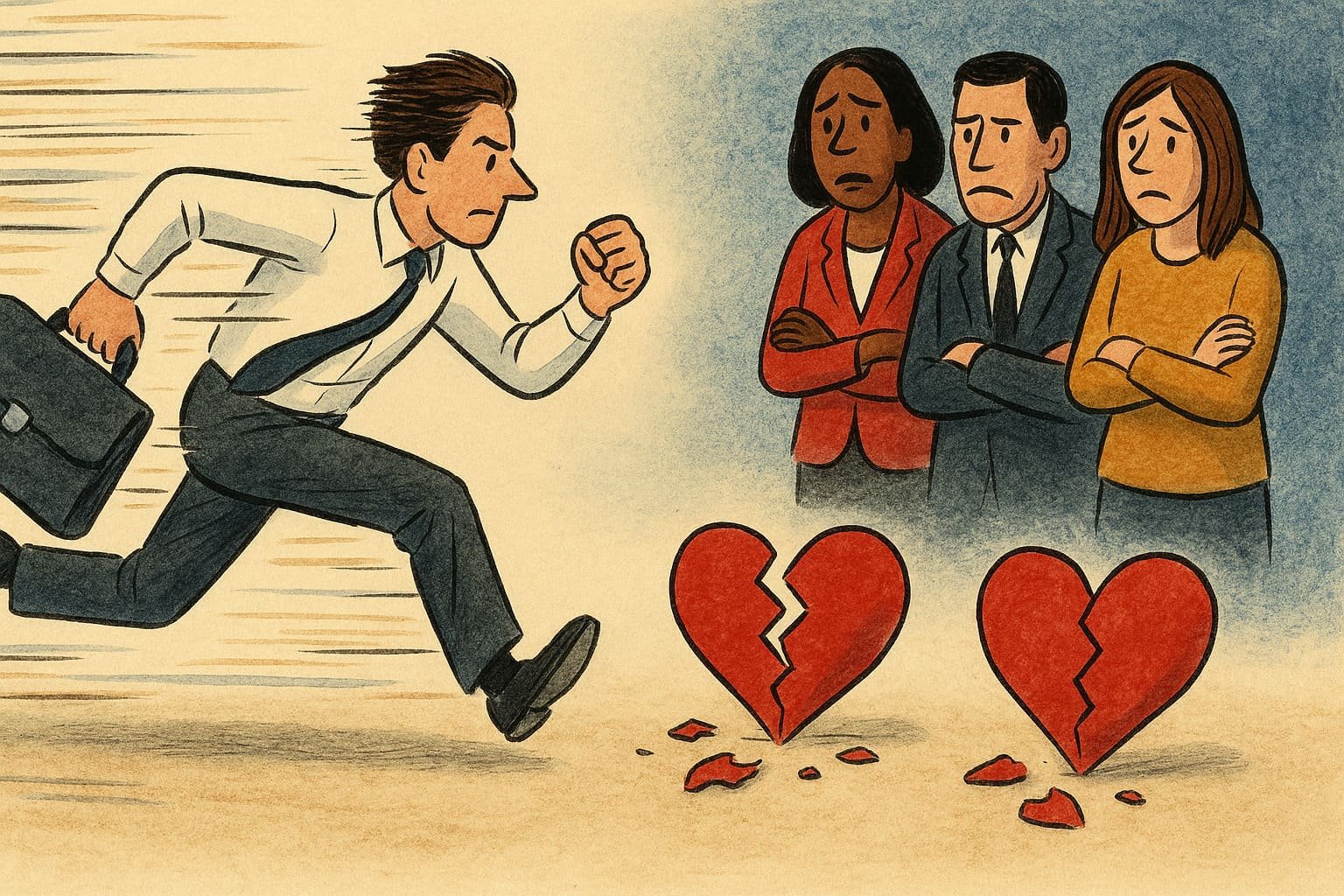
The office lights never seemed to switch off. Coffee cups gathered like trophies, keyboards rattled long after midnight, and founders proudly compared how little sleep they managed to survive on. Hustle had become a badge of honor. Exhaustion was celebrated as proof of commitment. Somewhere beneath the motivational slogans and endless productivity hacks, something far more valuable was quietly disappearing. Businesses were growing. People were not. The modern obsession with building fast has convinced countless entrepreneurs that burnout is simply another investment, when in reality it is often the first warning that success is becoming unsustainable.
Speed has undeniable advantages in business. Markets move quickly, competitors emerge overnight, and customer expectations rarely wait for perfection. Companies that hesitate too long often miss valuable opportunities. Yet there is a crucial difference between moving with urgency and living in permanent crisis mode. Organizations that mistake chaos for momentum eventually discover that rushed decisions create expensive mistakes, while exhausted teams struggle to produce creative thinking. Sustainable growth demands energy, not endless adrenaline.
The culture surrounding many technology startups during the previous decade highlighted this tension. Rapid expansion became the ultimate goal, with hiring, fundraising, and product launches happening at breathtaking speed. Some businesses achieved remarkable success. Others collapsed under the weight of their own ambition because operational systems never matured alongside growth. Fast scaling magnified weaknesses instead of solving them. The market rewarded disciplined execution far more consistently than relentless acceleration.
The journey of Basecamp offered a striking alternative. Rather than glorifying constant hustle, the company built its reputation around calm management, thoughtful productivity, and sustainable work practices. Leadership argued that rested employees consistently make better decisions than exhausted heroes working through endless nights. This philosophy challenged startup orthodoxy, yet it demonstrated that long-term performance often depends more on clarity than intensity. A healthy culture became a strategic advantage instead of an employee benefit.
Elias founded a digital marketing agency that doubled its client list within a single year. Revenue climbed, but so did stress. Designers missed birthdays, account managers answered emails before sunrise, and talented employees quietly resigned despite generous salaries. One afternoon, Elias noticed something unsettling. The office was full, yet laughter had disappeared. He slowed recruitment, restructured workloads, and encouraged genuine recovery time. Growth became steadier rather than explosive, but creativity returned, customer satisfaction improved, and employee loyalty strengthened. The company finally started building a future instead of merely surviving each week.
Management researchers have long recognized that sustained performance depends upon recovery as much as effort. Elite athletes understand this instinctively. Muscles grow stronger during rest, not during the workout itself. Organizations operate under similar principles. Innovation requires reflection. Strategic thinking demands mental space. Leaders who constantly sprint leave little room for careful judgment. Businesses rarely fail because people worked too little. More often, they fail because relentless pressure slowly eroded the quality of every important decision.
The most respected organizations build cultures where ambition and well-being reinforce each other rather than compete. Employees perform best when expectations remain high but realistic, communication stays honest, and leadership demonstrates that health is not weakness. Customers benefit from teams capable of thoughtful problem solving instead of chronic firefighting. Investors also gain because resilient companies outperform exhausted ones over the long term. Sustainable excellence is rarely dramatic. It is disciplined, deliberate, and remarkably consistent.
History remembers entrepreneurs who built enduring institutions, not those who simply collected the longest workweeks. Hustle may ignite a business, but wisdom determines whether that business survives its own success. Every ambitious founder eventually reaches the same crossroads. Continue chasing speed until people become disposable, or build an organization where human potential compounds alongside financial growth. The strongest companies never force employees to choose between building remarkable businesses and preserving meaningful lives. They understand those goals were never meant to compete.
