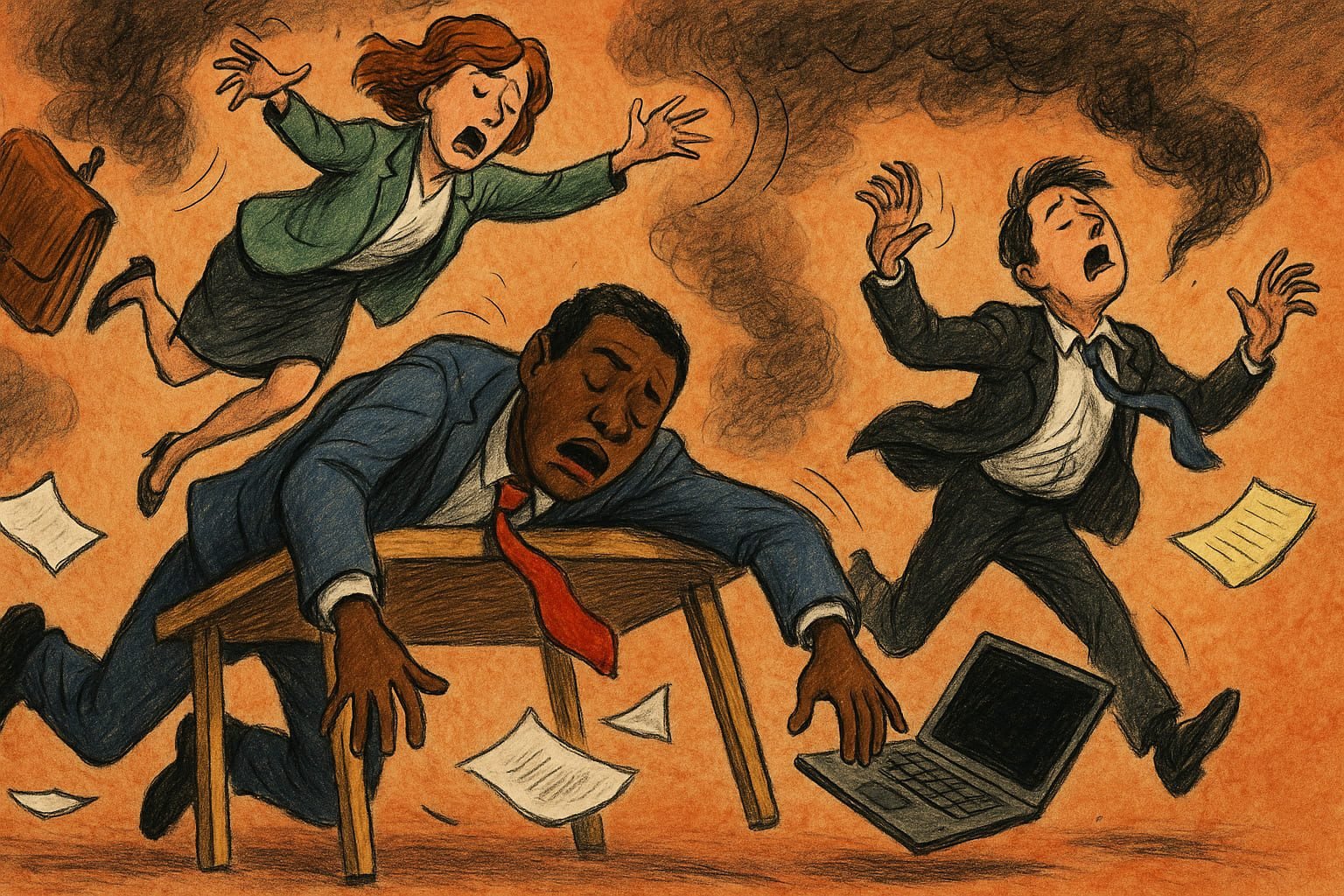
The office lights refused to surrender to midnight. Empty coffee cups gathered beside glowing laptops, unread messages multiplied across phone screens, and another ambitious founder whispered, “Just one more hour.” The promise sounded noble. It usually does. Somewhere between relentless determination and quiet exhaustion, the line separating commitment from self-destruction disappeared. Burnout rarely storms through the front door with dramatic warning signs. It settles gently into daily routines until extraordinary ambition begins consuming the very person who once inspired everyone else to dream bigger.
Entrepreneurship often rewards relentless persistence, yet persistence without recovery quietly becomes a liability. Startup culture has romanticized sleepless nights, endless hustle, and constant availability as badges of honor. The message sounds motivating until reality arrives. Decision-making weakens. Creativity fades. Relationships suffer. Small frustrations suddenly feel overwhelming. Ironically, the founder working the hardest may become the organization’s greatest operational risk because chronic exhaustion slowly erodes judgment before financial metrics reveal deeper organizational problems. Businesses rarely outperform the well-being of those leading them.
Burnout is not simply physical fatigue. It is emotional depletion mixed with growing detachment and a fading sense of purpose. Entrepreneurs frequently carry invisible burdens including payroll responsibility, investor expectations, customer demands, and personal financial uncertainty. Those pressures rarely arrive one at a time. They accumulate quietly. Many founders convince themselves that slowing down signals weakness. The opposite is often true. Strategic recovery protects long-term performance far more effectively than endless activity performed without clarity, perspective, or emotional resilience.
Selene built an online healthcare platform after leaving a secure corporate career. During the company’s early growth, she answered customer emails before sunrise, negotiated partnerships throughout the day, and reviewed software updates long after midnight. Friends admired her discipline. Employees admired her energy. Then simple decisions began feeling impossible. One afternoon she forgot the name of a long-time client during an important meeting. That unsettling moment forced a change. She delegated responsibilities, protected personal time, and encouraged healthier rhythms across the company. Performance improved because leadership regained balance.
Many respected entrepreneurs have spoken openly about the emotional costs of building companies. Arianna Huffington transformed her perspective on success after experiencing severe exhaustion, eventually making workplace well-being central to her business philosophy. Her experience challenged the widespread belief that constant overwork automatically produces extraordinary achievement. Sustainable leadership demands more than endurance. It requires recovery, reflection, and enough mental space to recognize opportunities that exhausted minds often overlook. Healthy founders usually build healthier organizations because their decisions emerge from clarity instead of survival.
Popular culture continues celebrating entrepreneurs who appear unstoppable, almost superhuman, as though sleep and personal relationships belong only to less ambitious people. The image attracts admiration but rarely reflects reality. Behind many celebrated success stories stand periods of uncertainty, loneliness, and emotional strain that receive far less attention. Great leadership is not measured by how much suffering someone can tolerate. It is measured by building systems capable of succeeding without demanding constant personal sacrifice from every individual involved.
Leadership researcher Brené Brown often emphasizes that courage includes acknowledging vulnerability rather than hiding behind perfection. That principle carries profound relevance inside entrepreneurial life. Founders who admit limits create cultures where employees also feel safe seeking support before problems become crises. Trust grows because authenticity replaces unrealistic expectations. Innovation thrives because people possess enough psychological energy to think creatively instead of merely surviving demanding schedules. Sustainable growth begins when organizations value human capacity as carefully as financial capital and technological advancement.
The calendar eventually fills with achievements, milestones, and hard-earned victories, yet another measure quietly determines whether success truly lasts. It appears in the founder who still greets family with genuine presence after demanding days, the leader whose curiosity survives difficult seasons, and the entrepreneur whose ambition never costs a sense of humanity. Businesses can recover from failed products, missed opportunities, and changing markets. Recovering from a life completely consumed by work proves far more difficult. Build a company that grows with your life, not one that quietly replaces it.
