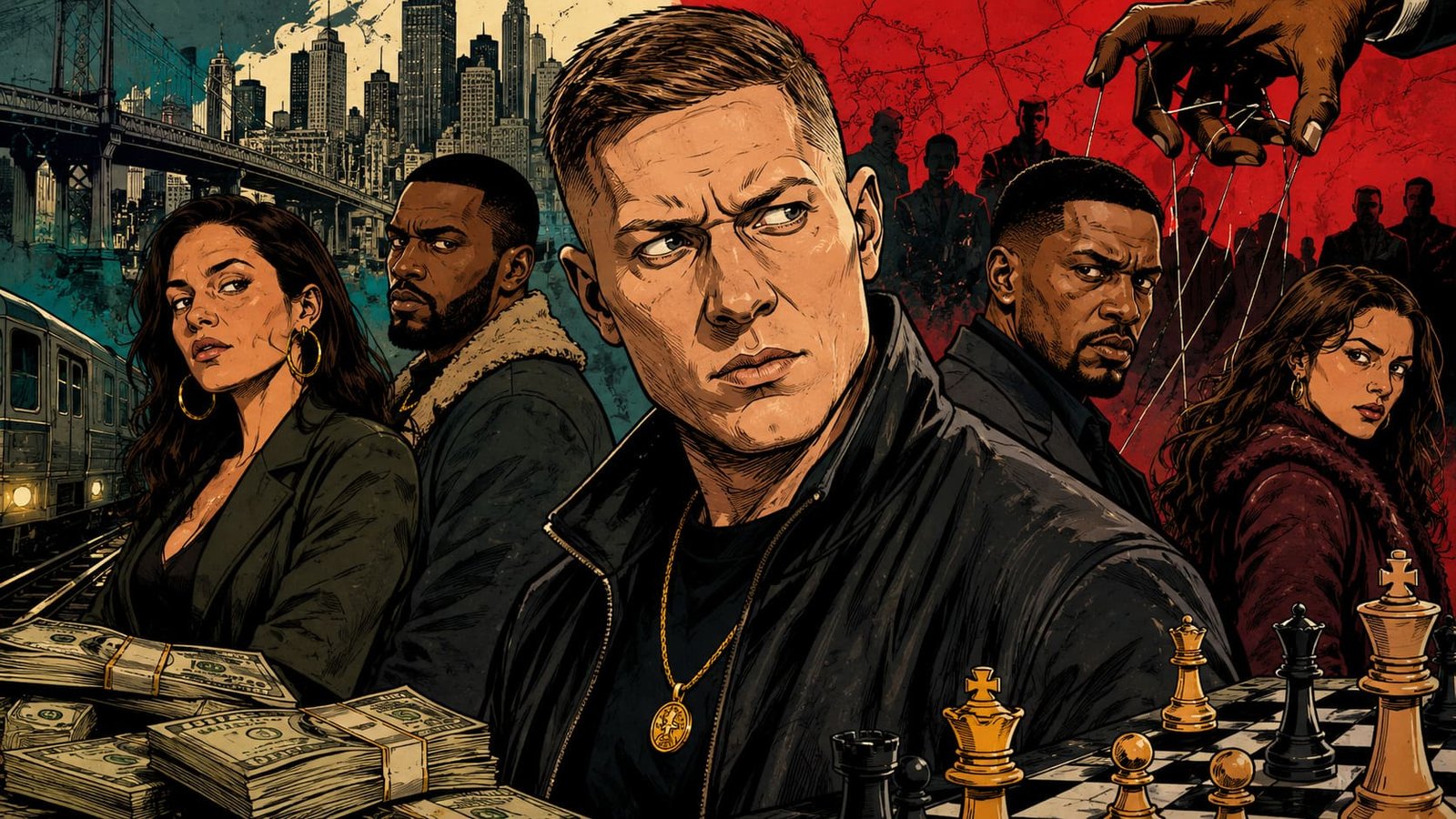
Chicago breathes differently after midnight. Sirens dissolve into cold wind between concrete towers. Bars glow with exhausted laughter while men carrying private wars negotiate loyalty in parked SUVs outside dimly lit restaurants. The city in Power Book IV: Force feels less like a location and more like a living predator testing everyone foolish enough to mistake ambition for immunity. This series does not romanticize power. It studies the emotional metabolism of people addicted to control inside systems where weakness becomes visible faster than blood on fresh snow. Beneath the violence, money, and tactical maneuvering sits a brutal meditation on reinvention, identity, fear, and the dangerous seduction of believing intelligence alone can outplay chaos forever.
Tommy Egan storms into Chicago carrying the energy of a man who survived too many funerals to fear another one. Joseph Sikora plays him with explosive charisma balanced against emotional fracture. Tommy is fascinating because he embodies contradiction so completely. He is impulsive yet strategic, fiercely loyal yet catastrophically destructive, emotionally wounded yet addicted to dominance. Many crime dramas flatten characters into predictable archetypes. Force avoids that trap by understanding that human beings rarely separate survival instincts from emotional trauma cleanly. Tommy does not simply seek money or territory. He seeks control over uncertainty itself. That makes him feel painfully modern.
The series becomes especially compelling through its understanding of organizational ecosystems. Drug empires here operate with startling similarity to corporate empires. Territory resembles market share. Alliances function like mergers. Reputation behaves like currency. One wrong decision ripples through entire networks with devastating speed. Watching Tommy negotiate with rival factions often resembles observing a CEO managing hostile acquisitions while emotionally unstable shareholders circle overhead. During the collapse of several aggressive tech startups, former executives privately admitted their companies often operated through fear disguised as urgency. Employees stayed productive because instability became normalized. Force captures that same emotional volatility through criminal infrastructure rather than corporate language.
A particularly sharp emotional thread emerges through Diamond Sampson. Fresh from prison, Diamond returns carrying the psychological weight of a man trying to reconcile past identity with present reality. His struggle reflects a broader tension modern society rarely addresses honestly: systems profit from keeping people psychologically trapped inside outdated versions of themselves. Rashad, who rebuilt his life after years inside gang culture in Baltimore, once described attending business networking events where investors praised his “authentic story” while quietly distrusting his actual presence in the room. The contradiction exhausted him more than poverty ever did. Force understands how difficult reinvention becomes when institutions continue monetizing old narratives.
Visually, the series drips with strategic tension. Nightclubs pulse with artificial warmth while betrayal quietly circulates beneath expensive liquor and polished smiles. Meetings occur in industrial warehouses glowing under hard fluorescent light. Luxury apartments overlook neighborhoods carrying historical abandonment in their architecture itself. Chicago becomes a psychological chessboard where class, race, politics, and survival intersect constantly. Even silence feels tactical. Characters study each other carefully because information often determines survival before violence ever enters the equation. That atmosphere gives the series its addictive rhythm. Nobody truly relaxes. Everyone calculates.
What separates Force from ordinary crime television is its understanding of emotional economics. Loyalty here functions as both human need and strategic liability. Characters crave belonging while simultaneously preparing for betrayal. That contradiction drives much of the psychological tension. Tommy repeatedly forms connections that humanize him, then sabotages stability because chaos has become emotionally familiar terrain. Modern ambition often operates similarly. Many professionals unconsciously recreate stressful environments because calmness feels psychologically unfamiliar after years of operating in survival mode. The nervous system mistakes instability for purpose. Force explores that emotional trap with surprising intelligence beneath its violent exterior.
The political undercurrents of the series also deserve attention. Power structures in Chicago extend beyond street organizations alone. Business interests, law enforcement, political influence, and criminal networks overlap constantly. Public morality shifts according to convenience and profit. That realism gives the narrative additional weight. Entire systems quietly depend on selective enforcement. Some people become disposable examples while others remain protected through proximity to influence. A city council advisor in Detroit once joked during an interview that corruption rarely looks cinematic in real life. “Mostly,” she said, “it looks like polite people protecting profitable arrangements.” That observation echoes through Force relentlessly.
Then comes the deeper emotional wound hiding beneath all the tactical brilliance and violent spectacle. Tommy Egan survives because he refuses emotional stillness. Movement becomes his anesthesia. Expansion becomes his coping mechanism. Yet every victory carries loneliness inside it like hidden contraband. The empire grows. Enemies fall. Cash flows. Still, the emptiness remains strangely untouched. Somewhere beneath the nightclub lights and strategic warfare sits a haunting truth about modern power itself: people often chase dominance believing it will finally silence fear, grief, or insecurity, only to discover those emotions travel faster than success ever can. Chicago keeps glowing against the night sky like a machine fueled by hunger and memory. Cars disappear into freezing darkness. Deals get signed with handshakes hiding quiet desperation. And somewhere in the middle of it all, another ambitious soul mistakes survival for freedom without realizing the cage simply learned how to wear a better suit.
Editorial Disclaimer: Whether a TV Show is rooted in fiction or inspired by real events, the actions, decisions, and behaviors portrayed within are not intended to be encouraged, replicated, or endorsed in real-world settings. This review exists solely to analyze the storytelling, characters, themes, and business dynamics presented in the TV Show for educational, analytical, and entertainment purposes. Any ethical or unethical conduct depicted in the TV Show does not reflect the views, values, or endorsements of ESYRITE.
