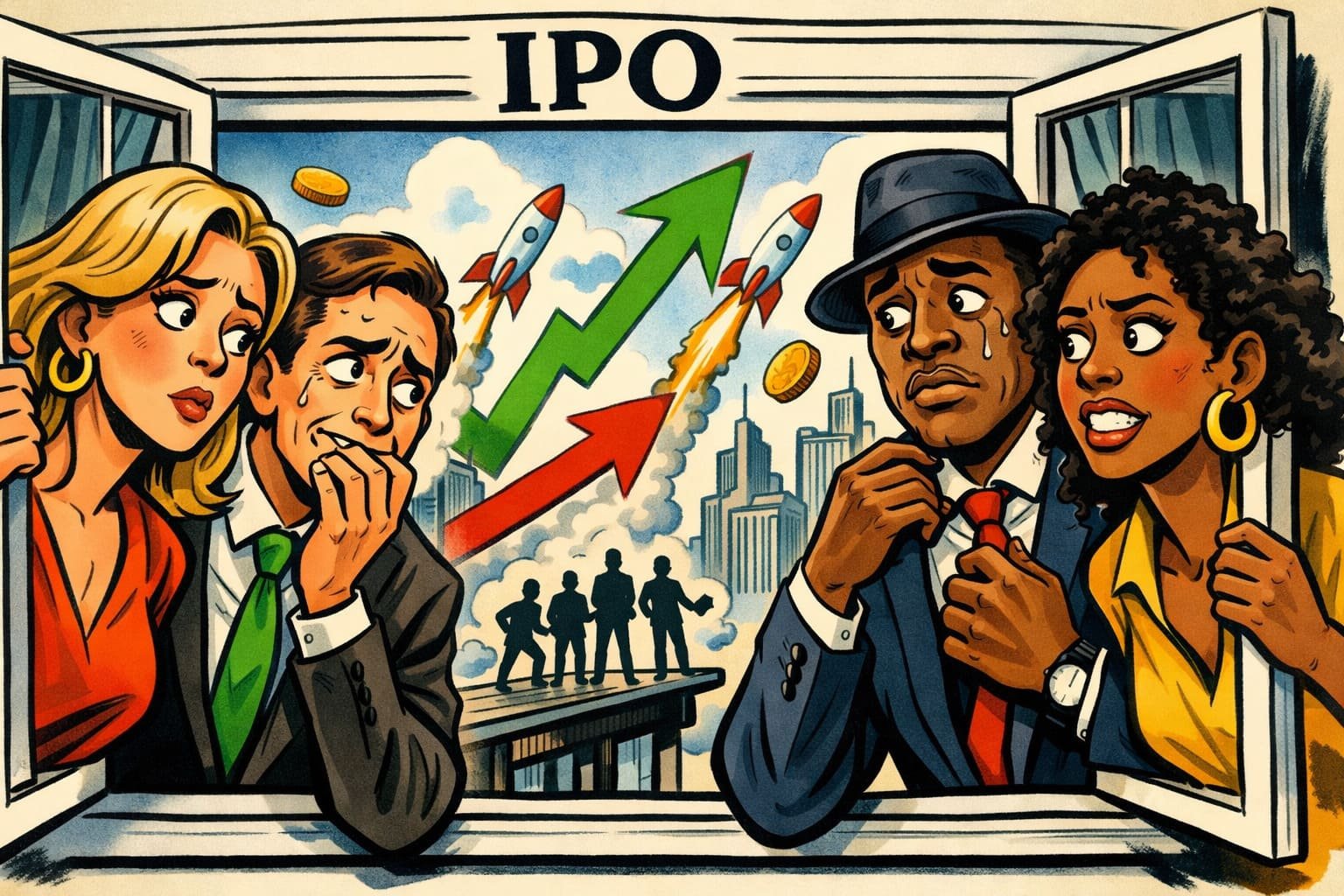
Applause erupted before anyone knew whether the performance deserved it. Trading screens glowed like theater lights while bankers smiled through rehearsed confidence, celebrating another company preparing to ring the opening bell. Public offerings have always carried an irresistible promise, turning years of private ambition into a public spectacle measured by market prices rather than conference room projections. Yet every reopening of the IPO window brings the same unsettling question. Is confidence returning, or are investors simply forgetting the last disappointment?
An initial public offering is often described as a milestone, though that word hides an uncomfortable reality. Going public is less a finish line than an examination conducted in full view of millions of observers. Private investors can tolerate uncertainty because they negotiate behind closed doors. Public shareholders rarely offer that luxury. Every quarterly result becomes a referendum. Every earnings call becomes a courtroom. Leadership shifts from telling a compelling growth story to proving that growth can survive unforgiving market expectations.
Consider the contrasting journeys of companies that entered public markets during periods of optimism. Firms such as Airbnb demonstrated that patient preparation, resilient business models, and disciplined financial communication could justify investor confidence despite uncertain economic conditions. Others discovered a harsher lesson. Ambitious valuations built during exuberant private funding rounds often collided with slower revenue growth once public markets demanded measurable profitability instead of persuasive narratives. One portfolio manager quietly remarked that markets rarely punish dreams. They punish expensive dreams.
A founder named Emilia spent years building industrial software that quietly solved expensive manufacturing problems. Investment banks encouraged an immediate listing after strong demand returned across equity markets. Her chief financial officer hesitated while sipping cold espresso before another meeting, arguing that stronger cash flow mattered more than a fashionable valuation. Emilia delayed the offering despite criticism from early investors seeking liquidity. Months later weakening sentiment rewarded patience, allowing stronger financial performance to support a healthier debut instead of defending unrealistic expectations.
Timing continues to dominate every conversation surrounding public listings because liquidity behaves like confidence rather than mathematics. Central bank policy influences borrowing costs, institutional allocations, and equity risk appetite, creating conditions that either encourage or discourage new issuance. Higher interest rates often redirect capital toward safer assets, forcing companies to justify richer valuations with stronger earnings quality. Lower financing costs usually reopen investor enthusiasm, though enthusiasm has repeatedly proven easier to generate than sustain across complete market cycles.
Curtains rarely fall when opening bells stop ringing. Another audience quietly assembles inside pension funds, university endowments, family offices, and retirement accounts where long-term ownership begins replacing promotional excitement. Public markets possess remarkable generosity, but they reserve lasting rewards for businesses capable of matching ambition with execution through changing economic seasons. Every IPO ultimately asks a timeless question that no investment banker can answer beforehand: when excitement fades, will enduring value remain standing beside the ticker symbol?
