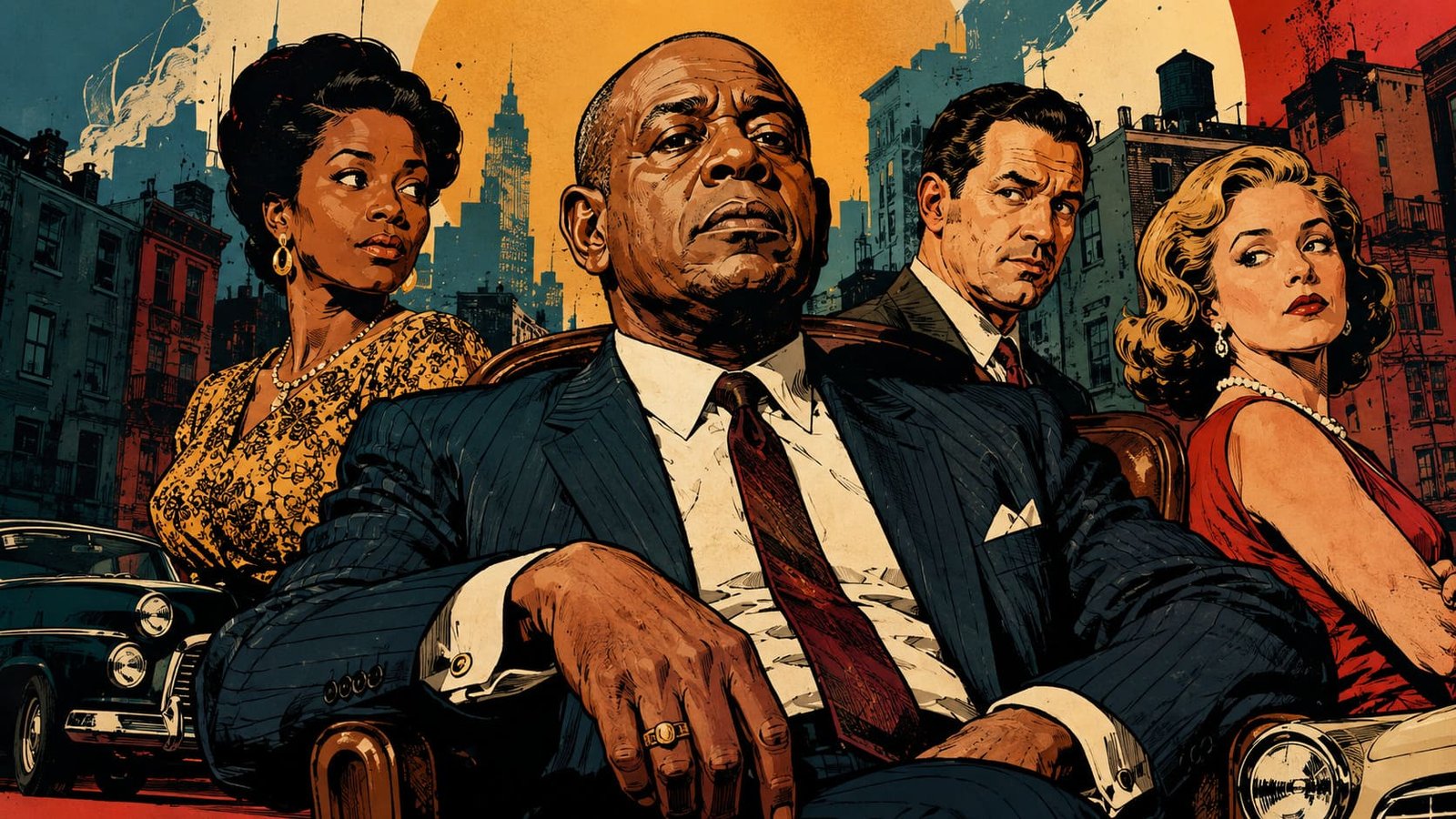
The streets glistened beneath rain and neon like a city trying to wash blood from its conscience before sunrise. Jazz leaked from smoky clubs. Politicians smiled beside criminals while pretending not to recognize one another. Preachers spoke about salvation blocks away from men negotiating murder over expensive whiskey. That is the emotional ecosystem Godfather of Harlem inhabits with chilling elegance. The series does not merely tell a gangster story. It dissects power itself, especially the uniquely American talent for dressing violence in respectable clothing until exploitation starts resembling opportunity. Beneath the tailored suits and political speeches sits a ruthless meditation on race, capitalism, identity, loyalty, and survival inside systems designed to reward domination long before morality enters the room.
Bumpy Johnson moves through Harlem with the heavy stillness of a man who understands that every empire eventually demands emotional sacrifice. Forest Whitaker plays him not as a cartoon criminal, but as a strategist navigating overlapping systems of oppression and ambition simultaneously. That distinction changes everything. Bumpy is both protector and predator. Community figure and violent enforcer. His contradictions give the series its intellectual gravity because real power rarely arrives morally pure. Modern audiences often crave simplified heroes and villains because ambiguity feels emotionally exhausting. Godfather of Harlem refuses that comfort. It insists that leadership inside broken systems often requires choices capable of staining the soul permanently.
The series becomes especially potent through its portrayal of institutional hypocrisy. Politicians publicly condemn organized crime while privately negotiating with it. Law enforcement selectively applies justice according to race, economics, and political convenience. Business interests exploit Harlem culturally while fearing its residents socially. Those tensions are not historical decoration. They form the structural backbone of the narrative. Watching the series today feels disturbingly contemporary because the mechanics of power remain recognizable. Entire industries still profit from marginalized communities while resisting their actual empowerment. Public morality often bends around money with astonishing flexibility.
One of the show’s sharpest emotional currents flows through its relationship with Malcolm X. Their interactions carry philosophical electricity because they represent competing visions of influence. Malcolm seeks transformation through ideological awakening. Bumpy pursues protection through practical control. Neither man fully trusts the systems surrounding him because both understand those systems were never designed for their liberation. A restaurant owner named Solomon in Atlanta once described negotiating city permits while wealthier developers bypassed regulations effortlessly through political connections. He laughed bitterly while explaining it, stirring cold coffee long after midnight. “The rules exist,” he said quietly, “but they don’t arrive equally.” Godfather of Harlem breathes inside that same recognition.
Visually, the series feels drenched in emotional contradiction. Harlem glows with cultural vitality while carrying constant danger beneath its beauty. Churches pulse with spiritual intensity beside backroom deals and brutal violence. Expensive cars roll past neighborhoods struggling against economic abandonment. Every frame communicates tension between aspiration and entrapment. The production design understands that cities themselves become psychological mirrors reflecting who receives protection, who receives punishment, and who becomes invisible. Even the music deepens this atmosphere. Soul, jazz, and blues drift through scenes like emotional witnesses documenting a civilization negotiating its own moral collapse.
What elevates the series beyond crime drama is its understanding of systems thinking. Power here operates through networks, not individuals alone. Crime syndicates overlap with political machinery. Economic desperation fuels violence. Racial segregation shapes opportunity. Religion offers both genuine hope and social influence. The show repeatedly demonstrates how human behavior changes according to incentives, pressure, fear, and historical memory. Vincent D’Onofrio’s portrayal of mob boss Vincent Gigante becomes especially fascinating through this lens. His performance captures how organized crime often mimics corporate hierarchy remarkably well. Loyalty structures, strategic negotiations, territorial competition, branding, reputation management, all the mechanics feel strangely familiar to modern business environments stripped of legal vocabulary.
The emotional depth of the series grows even sharper through its treatment of masculinity and identity. Men throughout the story perform toughness because vulnerability invites danger. Fathers struggle to protect families while preserving authority. Pride becomes both shield and prison. There is a devastating honesty in how the show portrays emotional suppression as survival technology. Modern leadership culture still carries echoes of that pattern. Executives, politicians, and founders often project certainty while privately collapsing under pressure. The performance of invulnerability becomes so normalized that emotional honesty starts looking dangerous. Godfather of Harlem understands that hidden exhaustion intimately.
Then comes the lingering philosophical wound the series leaves behind. America constantly markets itself as a land of freedom while repeatedly constructing systems that reward exploitation disguised as ambition. Harlem in the series feels alive with brilliance, music, entrepreneurship, political awakening, and cultural power. Yet every attempt at advancement collides with structures protecting existing hierarchies. That conflict gives the narrative its haunting relevance. The smoky rooms fade. Jazz records spin softly against the night. Men shake hands while calculating betrayal beneath polite smiles. Somewhere inside the machinery of power, communities continue searching for dignity inside systems designed to monetize their struggle. Godfather of Harlem never pretends easy redemption exists. Its deeper truth feels far more unsettling: civilizations often celebrate resilience precisely because they refuse to dismantle the conditions requiring resilience in the first place. And once that realization enters the bloodstream, ordinary ideas about success, justice, and leadership begin to feel painfully incomplete.
Editorial Disclaimer: Whether a TV Show is rooted in fiction or inspired by real events, the actions, decisions, and behaviors portrayed within are not intended to be encouraged, replicated, or endorsed in real-world settings. This review exists solely to analyze the storytelling, characters, themes, and business dynamics presented in the TV Show for educational, analytical, and entertainment purposes. Any ethical or unethical conduct depicted in the TV Show does not reflect the views, values, or endorsements of ESYRITE.
