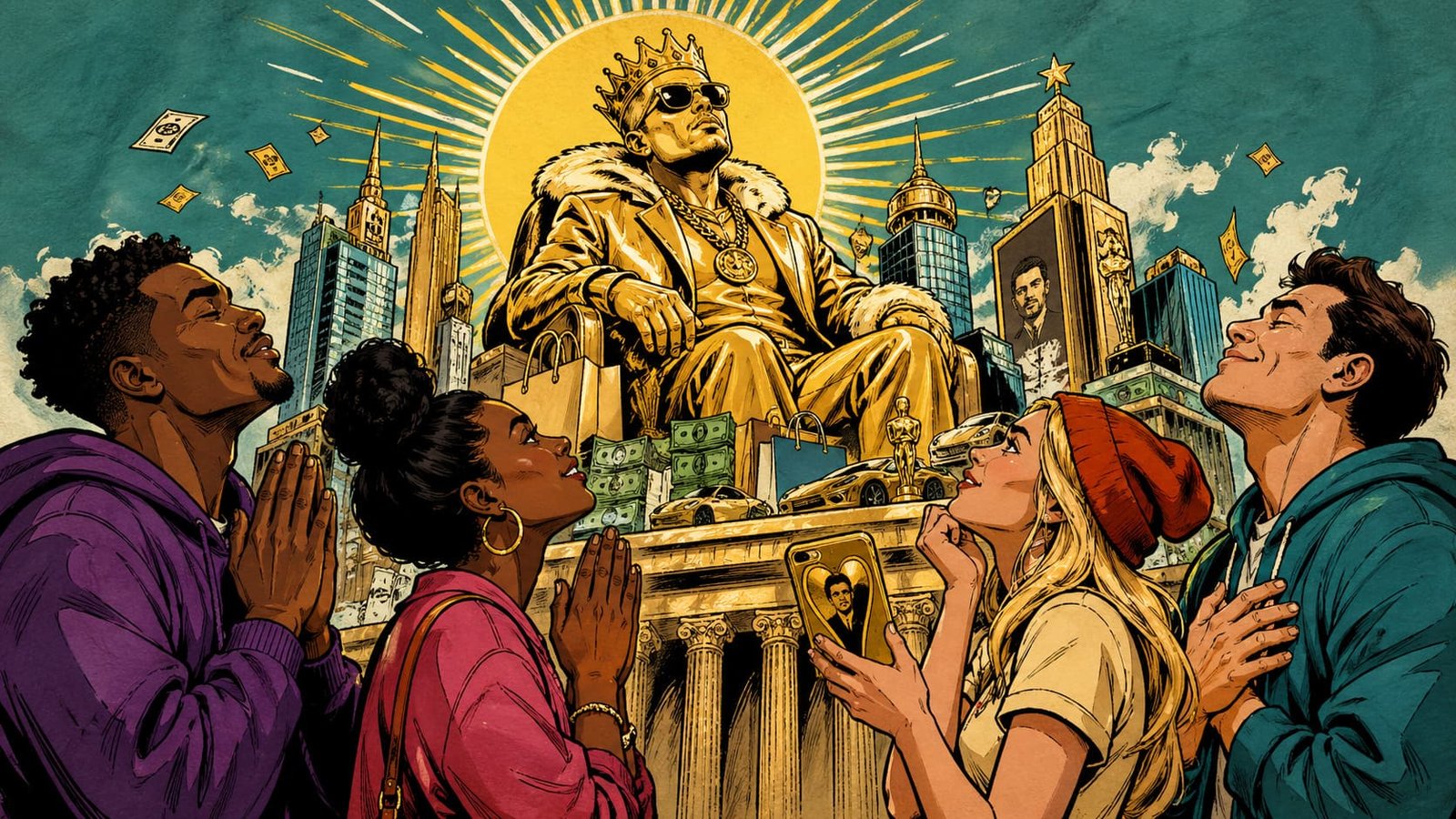
A stadium breathes like a living organism, thousands of voices rising in perfect unison, not rehearsed yet strangely synchronized. Lights cut through the dark like stained glass in motion. A figure steps onto the stage, and the atmosphere shifts from excitement to something heavier, almost sacred. Phones lift like candles. Every lyric is known before it is sung. It does not feel like entertainment anymore. It feels like belonging sharpened into ritual.
Fandom has evolved far beyond admiration. It now functions as a system of identity, a shared language that binds strangers into something resembling a congregation. The symbols are familiar, logos, hashtags, inside references that signal membership. Participation is not passive. It requires engagement, defense, contribution. The more invested someone becomes, the harder it is to step back. The boundary between appreciation and devotion begins to blur.
There was a community manager named Zubair who oversaw an online group dedicated to a rising artist. At first, the space revolved around music. Fans shared interpretations, celebrated releases, connected through a common interest. Over time, the tone shifted. Criticism, even mild, was treated as betrayal. Members who questioned decisions were quietly excluded. Zubair noticed how quickly the group transformed from a forum into something closer to a gate. Loyalty became the currency. Dissent became a threat.
The power of fandom lies in its ability to create meaning at scale. It offers people a place to belong without requiring proximity. A teenager in one country can feel connected to someone across the world through shared devotion to a figure they may never meet. This is not trivial. It fills a real human need. The sense of being part of something larger, something recognized, something alive, is deeply compelling. It turns individuals into participants in a story that feels continuous.
Yet this same mechanism can create a form of emotional outsourcing. When identity becomes tied too closely to an external figure, personal boundaries begin to soften. Success feels shared. Criticism feels personal. A brand strategist named Helena once worked with a global entertainment company to cultivate fan engagement. She described the process with unsettling clarity. “You are not just building an audience,” she said during a closed meeting. “You are building defenders.” The goal was not only attention, but allegiance.
This allegiance has economic implications that are difficult to ignore. Fandom drives consumption with remarkable efficiency. Limited releases sell out instantly. Merchandise becomes a badge rather than a product. Experiences are priced not for utility, but for emotional proximity. The closer one feels to the source, the more valuable the offering becomes. It creates a loop where devotion fuels revenue, and revenue reinforces devotion.
A small independent label run by Tomas once witnessed this firsthand. One of his artists developed a modest but intensely loyal following. Sales were not massive, but engagement was extraordinary. Fans organized events, created content, even defended the artist in online disputes. Tomas realized that the strength of the community outweighed its size. He shifted strategy, focusing less on expansion and more on deepening connection. The result was a sustainable ecosystem built on shared investment rather than broad reach.
There is a tension within fandom that often goes unspoken. It promises belonging while demanding alignment. To remain part of the group, one must adopt certain positions, defend certain narratives, maintain a consistent level of enthusiasm. This creates a subtle pressure to perform loyalty. The experience becomes less about genuine connection and more about maintaining status within the community. It mirrors dynamics found in other forms of organized identity, where belonging is conditional.
Pop culture reinforces this structure by elevating certain figures to near-mythical status. Stories are constructed around them, narratives that emphasize struggle, triumph, transformation. These narratives are repeated, refined, and amplified until they take on a life of their own. Fans do not just follow a person. They follow a story that feels larger than any single individual. This is where worship begins to take shape, not in overt declarations, but in consistent reinforcement of meaning.
A filmmaker named Noor once documented a fan convention where attendees traveled from across continents to celebrate a fictional universe. Costumes were detailed, conversations intense, emotions genuine. Noor observed that the energy in the room resembled something deeper than entertainment. People spoke about the characters as if they were companions. The stories had become frameworks for understanding their own lives. The line between fiction and personal narrative had quietly dissolved.
This phenomenon is not inherently negative. It can foster creativity, connection, and shared joy. It can provide a sense of direction and inspiration. The issue arises when the structure becomes rigid, when questioning is discouraged, when identity becomes too tightly bound to something external. At that point, fandom shifts from a space of exploration to one of preservation. It begins to protect itself against change.
There are creators who attempt to navigate this carefully, encouraging engagement without demanding devotion. They invite interpretation rather than enforcing it. They allow space for disagreement without framing it as disloyalty. This approach is more fragile, less explosive in growth, but often more enduring. It treats the audience not as followers, but as participants in a shared process.
A writer named Elio built a readership that resisted typical fan behavior. His work invited reflection rather than allegiance. Readers discussed ideas rather than defending positions. The community grew slowly, but it developed a different kind of resilience. It did not rely on constant affirmation. It allowed for distance, for evolution, for change. It felt less like a crowd and more like a conversation.
The larger culture continues to lean toward systems that reward intensity. Attention is drawn to what is loud, unified, and highly engaged. Fandom, in its most concentrated form, fits this model perfectly. It generates momentum that is difficult to replicate through other means. It builds empires not through force, but through shared belief.
The stadium lights dim slightly, the crowd still humming with energy that does not dissipate easily. The figure on stage remains at the center, amplified by thousands of voices that echo every movement. It feels powerful, almost transcendent. Yet somewhere at the edge of that sound, there is a quieter presence, a space where admiration can exist without surrender.
Stand in that space for a moment and ask yourself: are you part of something that expands who you are, or something that slowly replaces it?
