It starts with a crowded conference hall, lit by hopeful faces and the glow of a thousand screens. You can feel the hunger in the air—a mix of ambition, adrenaline, and a touch of fear. Onstage, a slick presenter waves a pie chart, promising “100x” returns, while nervous laughter rolls through the crowd. Rows of dreamers clutch plastic cups of coffee, eyes darting between screens and whispers, secretly wishing for a shortcut to riches. Somewhere in the shadows, an old-timer named Mabel, with silver hair and an antique calculator, sits quietly—her patience unshaken, her fortune slow-grown.
The energy is feverish. Whispers ripple through as someone flashes a screenshot of a winning trade, igniting envy and excitement. One table claps for a guest who “made it big” in six months. Others watch, equal parts inspired and unsettled, as stories of meteoric gains crash against tales of silent loss. Each boast becomes a lesson in disguise, every high a warning signal to those who listen closely.
Investors wear their hopes on their sleeves. Some fidget with phone apps, eyes wide at the smallest chart move, hoping for instant validation. Others scribble strategies in worn notebooks, immune to hype, measuring risk with a kind of stubborn calm. The divide is clear: thrill-seekers chase the next big win, while the patient harvest small, steady gains year after year.
Outside the venue, a young founder sits on a curb, scrolling through regretful messages about “missed moons” and “could’ve been’s.” He wonders if he should have listened to his mentor, who always counseled “slow money, not fast fantasy.” He gets up, dusts off his jeans, and decides to call her, suddenly desperate for wisdom that never crashes overnight.
Beneath the noise, you sense a deeper story: fast money is a firework show, bright but gone in seconds. Slow money is a forest, ancient, patient, quietly shaping the world while others are distracted by the next spark.
Quick Notes
- Fast Riches Disappear Faster: Most “overnight” fortunes burn out just as quickly, while disciplined investors quietly build lasting wealth.
- Patience Is Power: Slow growth rewards those who resist hype, compound small wins, and let time do the heavy lifting.
- Real Stories, Real Lessons: Behind every viral crypto or stock meme lies someone quietly rebuilding after chasing shortcuts.
- Greed Destroys Value: History repeats as greed-driven bubbles burst, leaving only those who embraced caution with anything to show.
- Wisdom Outlasts Hype: Enduring prosperity isn’t luck, but a habit of resilience, learning, and choosing long-term strategies over flashy trends.
Chasing Lightning—Why Fast Money Traps the Ambitious
Speed is seductive. The promise of instant wealth sparks a thrill that few can resist, and financial news celebrates every viral win. When “RapidTech” soared overnight, crowds gathered online, cheering and trading rumors as if watching a global sporting event. Their joy was contagious, but the panic set in just as quickly when the price nosedived.
A project manager named Jonah rode the wave up, only to see his profits vanish in a weekend crash. He confessed to friends, “I forgot to ask where the value was coming from.” The lesson cut deep, and the aftershocks haunted his next decisions. Now he keeps a sticky note on his monitor: “No shortcuts—only substance.”
Media headlines amplify the rush. Talk shows feature “teen millionaires” and “crypto prodigies,” but rarely mention those left picking up the pieces. The illusion of easy money spreads like wildfire, while the truth simmers quietly in the background. Real wealth seldom comes fast, and when it does, it rarely lasts.
Social media turbocharges the chase. Every post is a highlight reel, hiding the slow grind and setbacks behind filters and emojis. The story you don’t see: thousands holding the bag, left out of the party, wondering how patience got left behind.
Slow investors, on the other hand, treat each gain as a building block, not a finish line. They know that wealth with roots grows slowly, far from the blinding lights of hype.
Seeds of Fortune—The Power of Compounding
Compounding is the closest thing to magic in finance. It turns small, boring investments into extraordinary outcomes—slowly, quietly, relentlessly. The secret? Letting time do the work nobody else wants to wait for.
Susan, an elementary school teacher, started putting away a small part of her paycheck each month. She didn’t chase the latest trends or panic during downturns. Two decades later, her quiet portfolio outpaced colleagues who tried to time every swing. “I never noticed it growing,” she once joked, “until it felt like a second salary.”
Legendary investors build their empires on compounding, not on bets. Warren Buffett often says he got rich by “being consistent, not clever.” His fortune is a living case study in patience: decades of steady progress, no shortcuts, no panic sales.
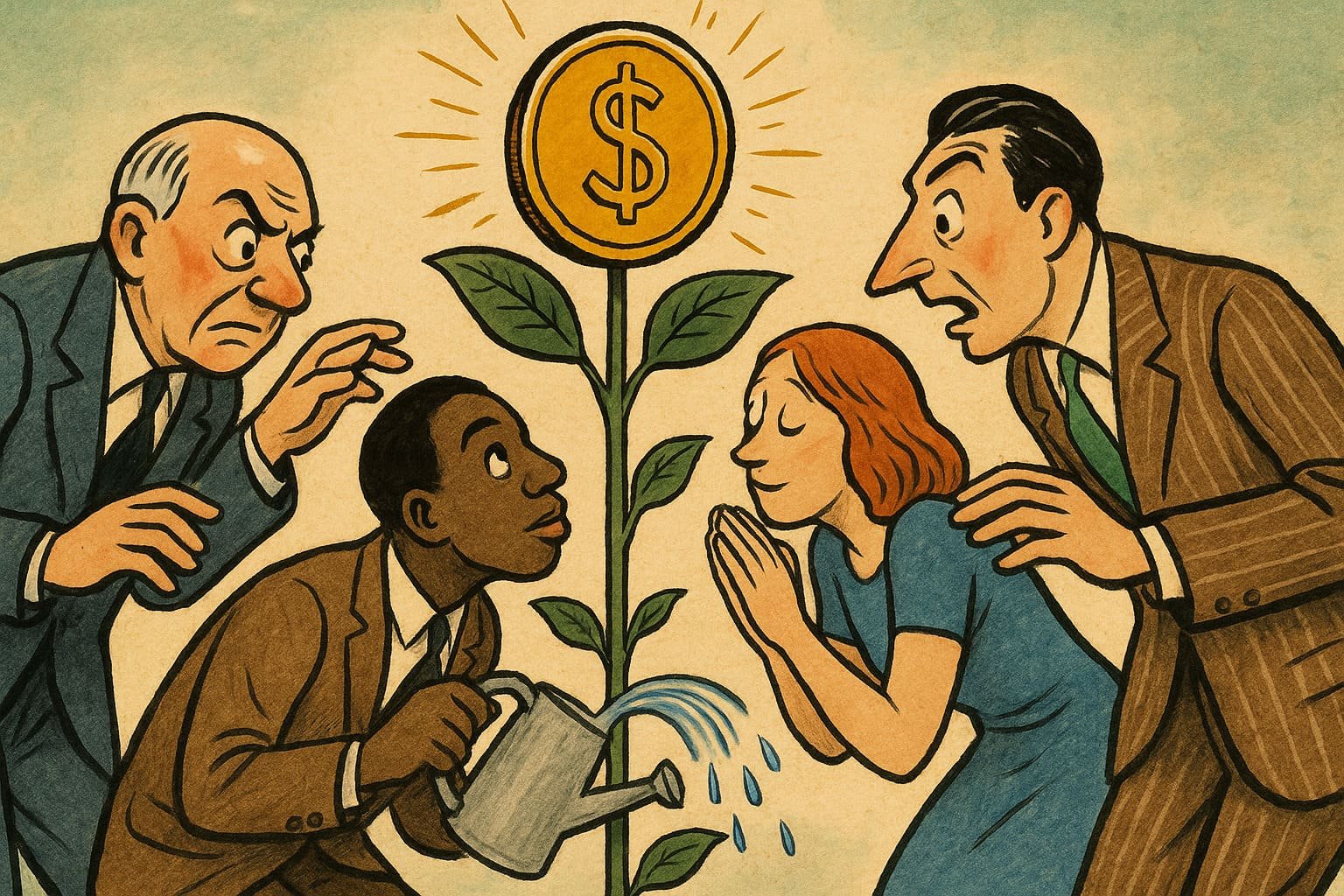
Every economic crash highlights the contrast. Fast money disappears, but compounding remains—a stubborn tree in a storm. Those who plant early, water regularly, and ignore noise see their efforts multiply while others are distracted by headlines.
Compounding isn’t just math; it’s mindset. It requires resisting envy, ignoring hot tips, and trusting the invisible progress that stacks over time. Like a chef who lets dough rise slowly, the result is richer, deeper, more satisfying than anything rushed.
In the end, the power of slow growth isn’t just financial. It’s a philosophy, a way of moving through uncertainty with grace and confidence.
Scar Stories—How Greed Torched Empires
Every bubble starts with a whisper and ends with a roar. In the early 2000s, tech stocks became lottery tickets, and ordinary people mortgaged homes for a seat at the table. By the time the music stopped, fortunes evaporated and hard lessons hit home.
Tariq, a young analyst, watched his boss lose it all in the dot-com bust. “He went from legend to lesson in two years,” Tariq remembered. His boss chased every hot IPO, laughing at caution, until one bad call wiped out decades of work. The office coffee room never felt the same after that day.
Greed turns brains to mush. People ignore warnings, double down on risks, and convince themselves the rules don’t apply. It’s easy to laugh at past bubbles, but every new cycle tempts fresh victims. From tulips to meme stocks, the patterns never change.
Shortcuts seduce with promises of freedom and luxury, but most only deliver regret. Behind every “get-rich-quick” headline is a crowd of silent losers, rarely featured on YouTube or Forbes. The aftermath is always messy—dreams punctured, relationships strained, confidence shattered.
Slow growth avoids this carnage. It’s the antidote to fear, hype, and herd madness. It requires saying “no” to the quick buck, “yes” to uncomfortable patience, and “maybe” to the next big thing—after a long, hard look at the facts.
The Compounders—Profiles in Quiet Victory
True investing heroes rarely make the news. Their stories unfold over decades, not months, and their triumphs are measured in steady progress, not viral moments. These “compounders” build empires the slow way, brick by patient brick.
Meet Lydia, a small-town shop owner who bought shares in blue-chip companies every year for thirty years. Her friends teased her for ignoring the latest fads, but her discipline paid off. Today, she funds scholarships for local kids, living proof that patience multiplies impact.
Family offices and pension funds rely on similar principles. Their mandates are simple: protect wealth, grow it slowly, avoid the temptation of chasing every trend. When financial storms hit, they rarely panic, trusting in long-term strategy over adrenaline.
The best compounders embrace setbacks as part of the journey. They learn from market crashes, see opportunity in chaos, and never mistake luck for skill. It’s not glamourous, but it’s powerful.
A startup founder named Oliver, burned by three failed ventures, built his final company using lessons from slow growth. He refused risky capital and scaled carefully, prioritizing sustainability over sizzle. His “overnight success” took ten years.
Compounders prove that wisdom outlasts flash. They offer a blueprint for anyone willing to trade quick wins for enduring value.
Slow Money Philosophy—Changing the Game for Good
The world worships speed, but slow money creates freedom. It unlocks options, lowers stress, and gives people the time to think before acting. The “slow” approach challenges the myth that only gamblers win, offering an alternative that is both safer and smarter.
Behavioral science backs up what patient investors already know: slow growth reduces anxiety and impulsive mistakes. A Harvard study once revealed that investors who checked their portfolios less frequently made better decisions. Time smooths out the noise and lets logic lead.
Slow money empowers communities. Small business owners who reinvest patiently build resilience, outlasting trends and downturns. Their steadiness attracts loyal customers and fosters strong networks, creating a ripple effect of prosperity.
Pop culture loves the comeback story. Rocky Balboa, Michael Jordan, and Oprah all thrived by playing the long game, outlasting doubt and failure. Their legacies, like those of slow investors, grow stronger over time.
Slow money is about more than numbers. It’s a mindset—a belief in the value of patience, the wisdom of restraint, and the magic of watching something beautiful take shape over years, not hours.
The Last Candle Burns Bright: Slow Wins the Race
The night is silent in a tiny office, where an old banker locks away the day’s ledgers, pausing to savor the weight of handwritten records. A window creaks open, letting in the city’s cool breath, while streetlights cast slow-moving shadows on stacks of faded contracts. In another part of town, a grandmother stirs tea for her grandson, showing him a savings book worn thin by decades of careful deposits. Both know what the world keeps forgetting: fortune grows in silence, protected by patience and shaped by countless quiet decisions.
A venture capitalist steps out of a polished boardroom, remembering his first big loss—a reckless bet that vanished before sunrise. The pain lingers, but so does a newfound respect for the power of slow, steady discipline. His greatest pride isn’t a viral startup, but a company that still pays dividends thirty years later.
In the suburbs, a nurse turns off her investment app, smiles, and steps outside to water her garden, knowing her financial security blooms in tandem with her roses. The taste of slow growth is subtle, like the first cool breeze after a scorching summer, or the sound of rain on a metal roof in spring.
The slow money revolution isn’t flashy, but it endures. It rewards the careful, the curious, and the wise. You can hear its promise every time you resist the urge to rush and let your dreams breathe.
You hold the pen, the patience, and the plan—what kind of fortune will you choose to grow next?