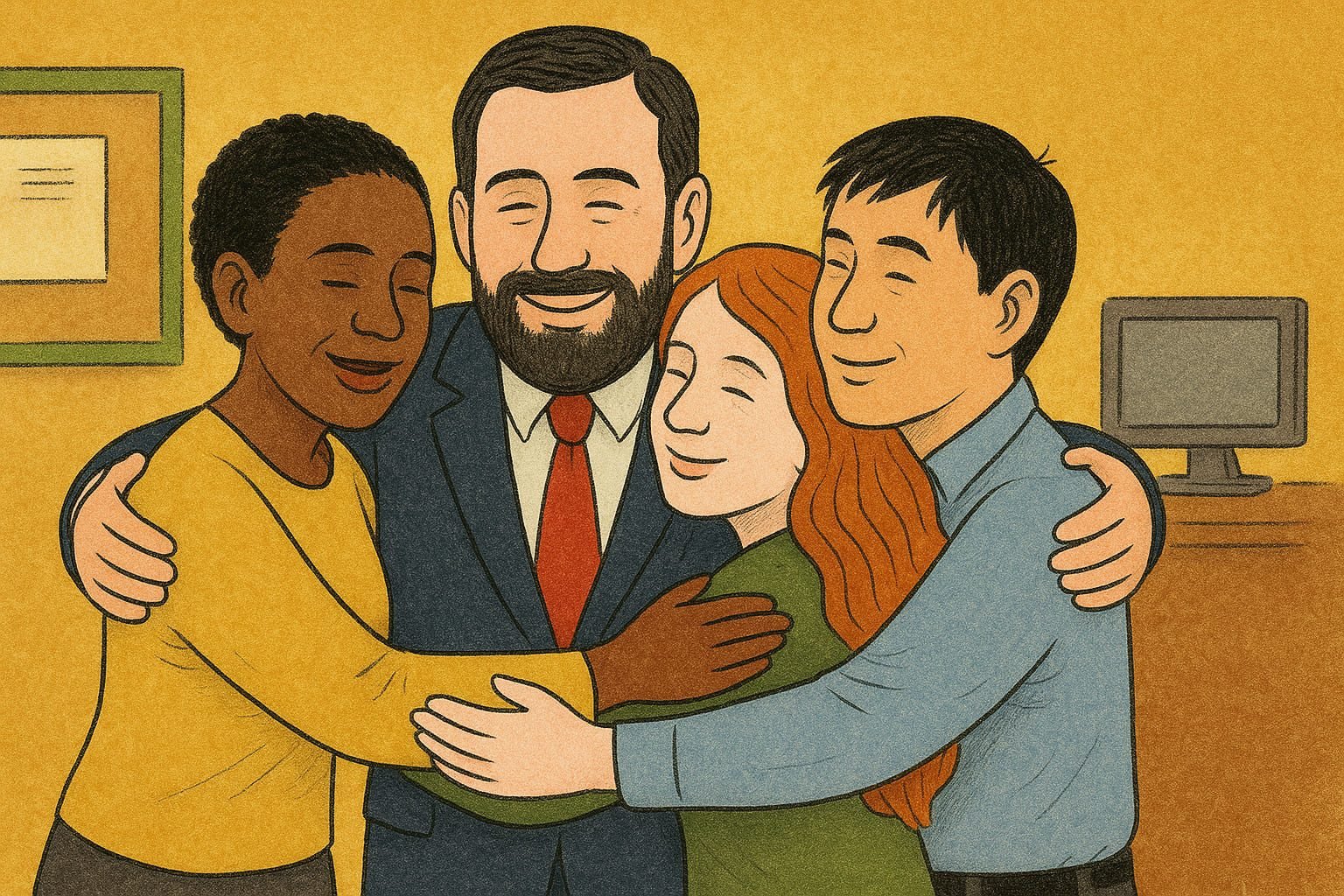
There was a time when work was mostly a transaction. Hours exchanged for wages. Skills exchanged for stability. Imperfect, certainly, but emotionally legible. Modern work complicated the arrangement. Offices became communities. Startups became families. Corporate culture became identity architecture. Slack channels replaced breakroom chatter with curated belonging. Team retreats promised connection. Mission statements began sounding suspiciously like moral invitations. For many people, especially in fragmented urban life, work became more than livelihood. It became tribe. That shift solved one kind of loneliness while creating an entirely different tension: what happens when belonging and meaning become professionally outsourced to organizations with quarterly targets.
The appeal is obvious. Humans are social creatures with a frankly embarrassing appetite for recognition, purpose, and shared symbols. Traditional institutions that once supplied identity, faith communities, local associations, extended family structures, neighborhood rituals, weakened in many modern settings. Work rushed into the vacancy carrying branded hoodies and catered lunches. Tech firms mastered this emotional architecture particularly well. Mission-driven language offered significance. Team rituals created coherence. Collaborative energy mimicked social intimacy. None of this is inherently manipulative. Many workplaces genuinely create friendship, mentorship, and purpose. The tension begins when belonging becomes structurally dependent on performance within institutions whose priorities remain commercial, not existential.
Take Akello, who joined a rapidly scaling media company whose culture felt electric. Shared jokes, late-night brainstorms, collaborative victories, emotionally charged launches. Work did not merely pay bills. It created identity. Friends outside the company faded. Personal routines reorganized around team rhythms. Then restructuring arrived. Not maliciously, just commercially. Akello survived the cuts but described the experience as emotionally disorienting. The institution that had quietly become social gravity suddenly revealed its transactional spine. That realization stings because it exposes a truth many professionals avoid naming: some workplace intimacy is genuine, but its continuity is rarely guaranteed by affection alone. Economics remains in the room, even during karaoke night.
Pop culture keeps circling this theme because audiences recognize it immediately. Workplace comedies thrive partly because colleagues often function as surrogate social ecosystems. “The Office” worked because viewers understood the weird intimacy of professional absurdity shared over time. “Succession” offered a darker version, where family and business boundaries became psychologically radioactive. A workplace anthropologist named Deka once observed, “People stay in unhealthy jobs longer when leaving feels like social exile rather than career change.” That sentence explains an astonishing amount about retention, burnout, and organizational loyalty. Humans tolerate extraordinary discomfort when belonging appears tied to endurance.
This creates fascinating management implications. Strong culture improves collaboration, resilience, onboarding, and emotional commitment. Belonging can absolutely elevate performance when authentic and well-governed. Yet leaders must recognize the ethical asymmetry involved. Organizations invite emotional investment while retaining unilateral restructuring power. That imbalance demands care. Exploiting tribal loyalty to normalize overwork, suppress dissent, or discourage boundaries becomes corrosive quickly. Healthy cultures encourage connection without emotional captivity. Weak cultures weaponize belonging language while extracting unsustainable commitment. The difference often reveals itself in how organizations behave during hardship. Culture is not the language used when times are good. Culture is what remains when sacrifice becomes inconvenient.
A founder named Eshe built a design agency celebrated for intense creative camaraderie. Team members vacationed together. Internal language emphasized chosen family. New hires found the environment intoxicating. Over time, subtle pressures emerged. Declining after-hours events carried social cost. Boundaries looked like disloyalty. Burnout became reframed as passion fatigue. Eshe eventually recognized the trap and reengineered cultural norms toward healthier separation. That required humility because the emotional closeness had felt authentic. Authenticity does not immunize systems from unhealthy incentives. Some of the most exhausting cultures are built by well-meaning leaders who confuse intimacy with sustainability. Warmth becomes dangerous when it quietly erases consent.
There is also a strategic paradox here. Employees who find real meaning at work often contribute extraordinary energy, creativity, and resilience. Meaning matters. People are not machines seeking compensation alone. The problem emerges when organizations become the sole provider of identity significance. Diversified meaning is psychologically healthier. Relationships, hobbies, civic life, family structures, spiritual practice, creative pursuits, all create resilience against institutional volatility. A business executive named Omari once said the best employees often have rich lives beyond the office because they bring perspective rather than dependency. Counterintuitive, perhaps. Also often true. Overattached employees may appear loyal while becoming emotionally fragile under organizational change.
Someone is staying late not because the task demands it, but because leaving feels strangely like abandoning a tribe. Maybe the belonging is beautiful. Maybe it is quietly expensive. Work can absolutely provide friendship, dignity, growth, and purpose. Those gifts are real. The danger begins when commercial institutions become the primary custodians of human meaning. Companies can nurture belonging. They should not become emotional monopolies. Because when identity is too tightly braided into organizational life, every restructuring becomes existential weather. The deeper question is not whether work should matter. It is whether any institution that can end employment with a calendar invite should also be trusted to define who someone is.
