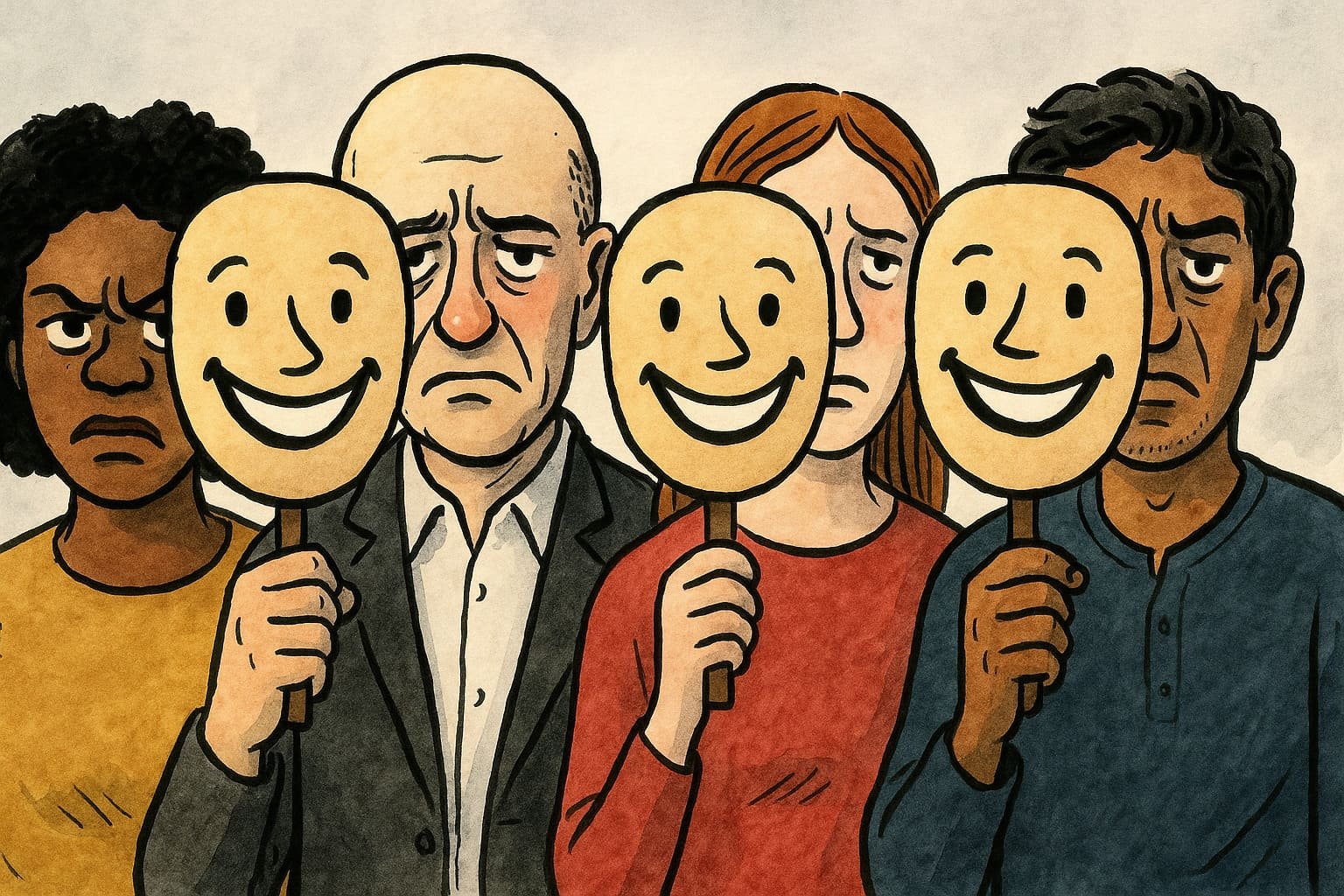
A polished smile can be one of the most sophisticated deception tools in professional life. Not because smiling is dishonest, but because organizations have become remarkably skilled at turning emotional performance into operational camouflage. The cheerful executive greeting staff by name. The charismatic manager whose jokes keep meetings light. The colleague who radiates warmth while quietly accumulating political leverage like a patient chess player. Workplaces reward emotional readability, yet often misunderstand emotional truth. A pleasant atmosphere can conceal resentment, manipulation, exhaustion, fear, or ambition sharp enough to cut glass. Surface friendliness is often treated as evidence of cultural health. That assumption deserves interrogation.
You have likely encountered the charming operator. Every organization has one. The person who remembers birthdays, praises contributions publicly, and somehow remains socially untouchable despite strange patterns of collateral damage. Emotional intelligence and emotional performance are not identical skills. One reflects human awareness. The other can become strategic theater. Corporate environments unintentionally reward polished emotional signaling because it reduces friction. Leaders prefer easy rapport over difficult ambiguity. That preference creates blind spots. A warm demeanor can disguise poor judgment, self-interest, or territorial politics just as easily as a cold demeanor can hide integrity. Emotional aesthetics are unreliable performance indicators.
Halima discovered this while joining a fast-growing software company whose culture looked enviably vibrant from the outside. Slack channels overflowed with celebration emojis. Leadership town halls felt energetic. A senior operations manager named Elias was widely adored, known for public encouragement and theatrical positivity. Within months, troubling patterns emerged. High-performing staff quietly transferred out. Project ownership became strangely opaque. Feedback vanished into polite dead ends. Private conversations revealed what public culture concealed. Elias maintained influence by controlling access, flattering upward, and freezing out dissent behind immaculate charm. Smiling faces do not automatically indicate psychological safety. Sometimes they signal advanced political weather systems.
History offers familiar versions of this dynamic. Elizabeth Holmes captivated investors with conviction and narrative control long before reality intervened, though that case involved broader governance failures far beyond interpersonal charm. The lesson remains relevant. Confidence, warmth, and social fluency can create persuasive illusions of competence. Organizations frequently overweight charisma because human cognition loves coherence. If someone sounds convincing and behaves pleasantly, the brain relaxes its skepticism. That is dangerous. A business cannot outsource discernment to emotional aesthetics. Trust should emerge from patterns, accountability, and evidence, not merely from likability wrapped in expensive confidence.
A procurement director named Joaquín once inherited a team whose interpersonal culture looked almost suspiciously harmonious. Conflict was rare. Social rituals were abundant. Performance reviews described strong collaboration. Yet procurement cycles kept slowing in strange ways. Investigation uncovered an informal influence network where certain employees exchanged social loyalty for protection and access. Decisions happened in private alliances rather than formal structures. Nobody described the environment as toxic because overt hostility was absent. This is where leaders get fooled. Dysfunction does not always arrive snarling. Sometimes it enters offering pastries, remembering anniversaries, and quietly rerouting institutional power.
Leadership mistakes often intensify the problem. Many executives equate visible positivity with engagement because difficult emotional realities are inconvenient to manage. A team that appears cheerful demands less intervention than one openly wrestling with conflict. Yet emotional suppression can become organizational debt. Reed Hastings famously emphasized candor in Netflix culture, sometimes controversially, because performance cultures without honest feedback decay into political theater. One need not adopt extreme versions of candor to appreciate the principle. Organizations need emotional truth more than emotional choreography. A culture obsessed with appearing healthy may eventually become incapable of recognizing its own symptoms.
There is also a personal cost for employees trapped inside emotionally performative systems. A communications manager named Zanele once described the exhaustion of working in a culture where everyone acted relentlessly upbeat while privately expressing distrust. “It felt like emotional costume work,” she told a former colleague. That phrase lingers because it captures the hidden labor involved. Performing safety is not the same as experiencing it. Workers forced into perpetual positivity often become emotionally detached, strategically cautious, and less inventive. Creativity requires authenticity’s oxygen. Political smiling cultures slowly replace genuine contribution with calculated emotional self-preservation.
In another immaculate office, someone will laugh at the right joke, nod at the right proposal, and quietly withhold the truth that could save a failing initiative. The room will feel warm enough. The culture deck will still describe trust, openness, collaboration. Yet institutions do not become healthy because people smile convincingly. They become healthy when emotional reality can survive exposure without punishment. Charm is not culture. Pleasantness is not integrity. Warmth is not proof of trust. The harder question waiting behind every polished interaction is this: when everyone looks emotionally fluent, who is still brave enough to be emotionally honest?
