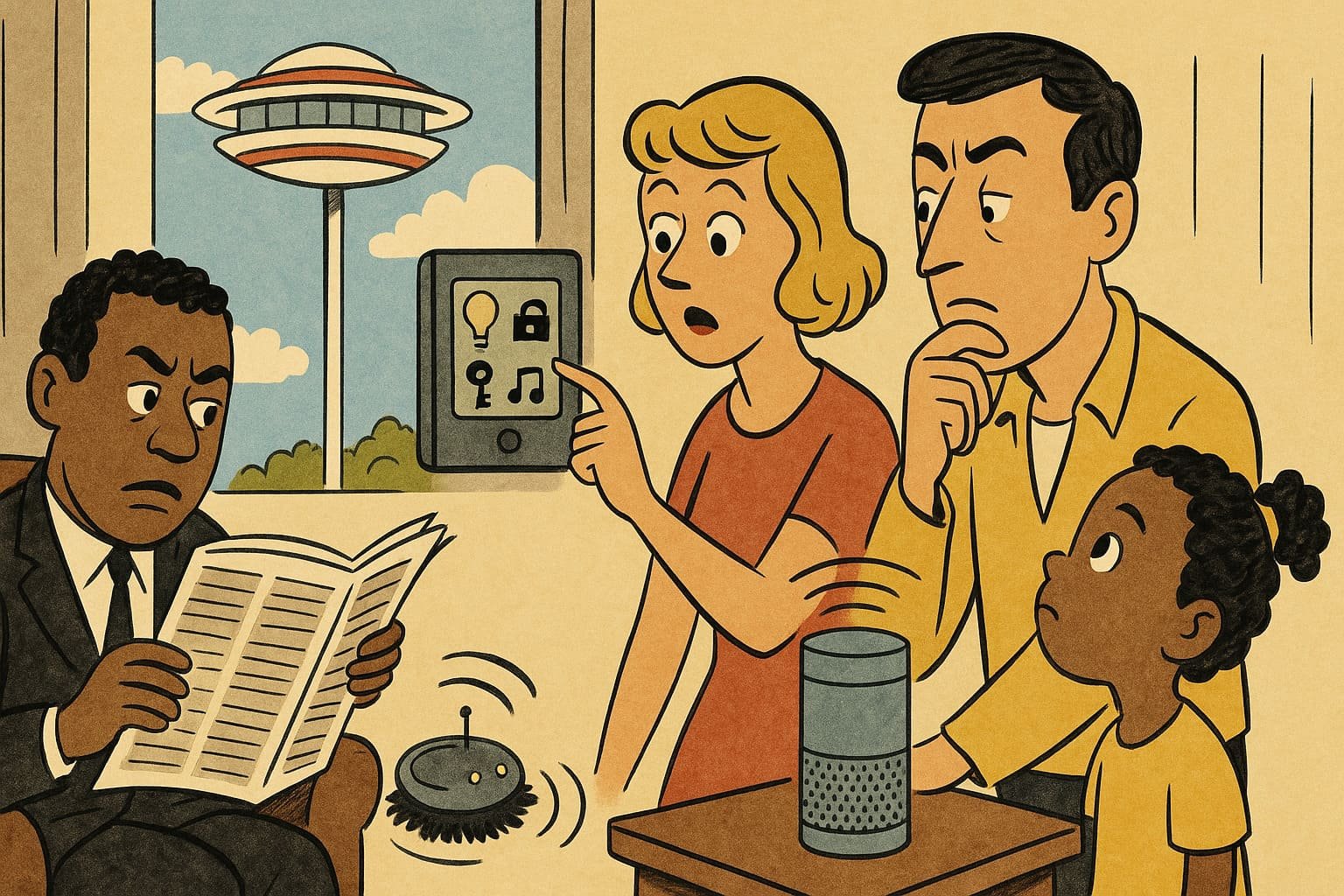
Ceiling lights brighten before a sleepy hand reaches for a switch, while curtains glide open as rain whispers against wide windows overlooking a restless city. Coffee begins brewing without an alarm, heating adjusts to changing weather, and a forgotten front door quietly locks itself. None of this feels theatrical anymore. What once belonged to Saturday morning cartoons has slipped into ordinary neighborhoods, where homes are learning to anticipate routines instead of simply responding to commands.
Early smart homes often resembled collections of disconnected gadgets competing for attention rather than working together with purpose. A smart speaker here, a connected thermostat there, and perhaps a video doorbell completed the illusion of intelligence. Real transformation arrived when devices began sharing information instead of operating in isolation. A home could finally understand context. Lights dimmed because bedtime approached, energy usage shifted as electricity prices changed, and security systems recognized familiar family patterns without constant manual intervention.
Major technology companies have accelerated this evolution through connected ecosystems. Google has expanded home automation around voice assistance and intelligent devices that coordinate lighting, climate, and security. Amazon continues integrating Alexa into an expanding network of household products that simplify everyday routines. Sofia, who manages a busy design agency, noticed an unexpected benefit after upgrading her apartment. Her mornings became calmer because dozens of tiny decisions disappeared, leaving more attention for creative work rather than household logistics.
Healthcare is quietly becoming another beneficiary of intelligent living spaces. Connected sensors can alert caregivers when elderly residents experience unusual movement patterns or prolonged inactivity, helping families respond more quickly without constant physical supervision. Smart medication reminders reduce missed treatments while wearable devices communicate with home systems to support healthier routines. These capabilities are not replacing doctors or caregivers. They are extending care beyond hospitals into familiar environments where comfort often supports recovery as much as medicine itself.
Skeptics often worry that convenience invites dependency, and that concern deserves thoughtful attention. Connected homes collect information about habits, preferences, and daily movements, making privacy an essential design challenge rather than an afterthought. Trust becomes just as important as innovation. Companies that prioritize transparency, strong cybersecurity, and user control will build lasting confidence, while those treating personal data carelessly risk turning convenience into suspicion. Intelligent homes succeed only when residents remain firmly in control of their digital lives.
Twilight settles across quiet neighborhoods where windows glow with gentle warmth, each home carrying invisible conversations between people and thoughtful machines. Progress rarely announces itself with dramatic fanfare. More often, it arrives disguised as an ordinary evening made slightly easier than the one before. Smart homes are not remarkable because they automate chores. Their real achievement lies in giving people back precious moments once consumed by routine, leaving more room for family, creativity, and experiences that no technology can ever replace.
