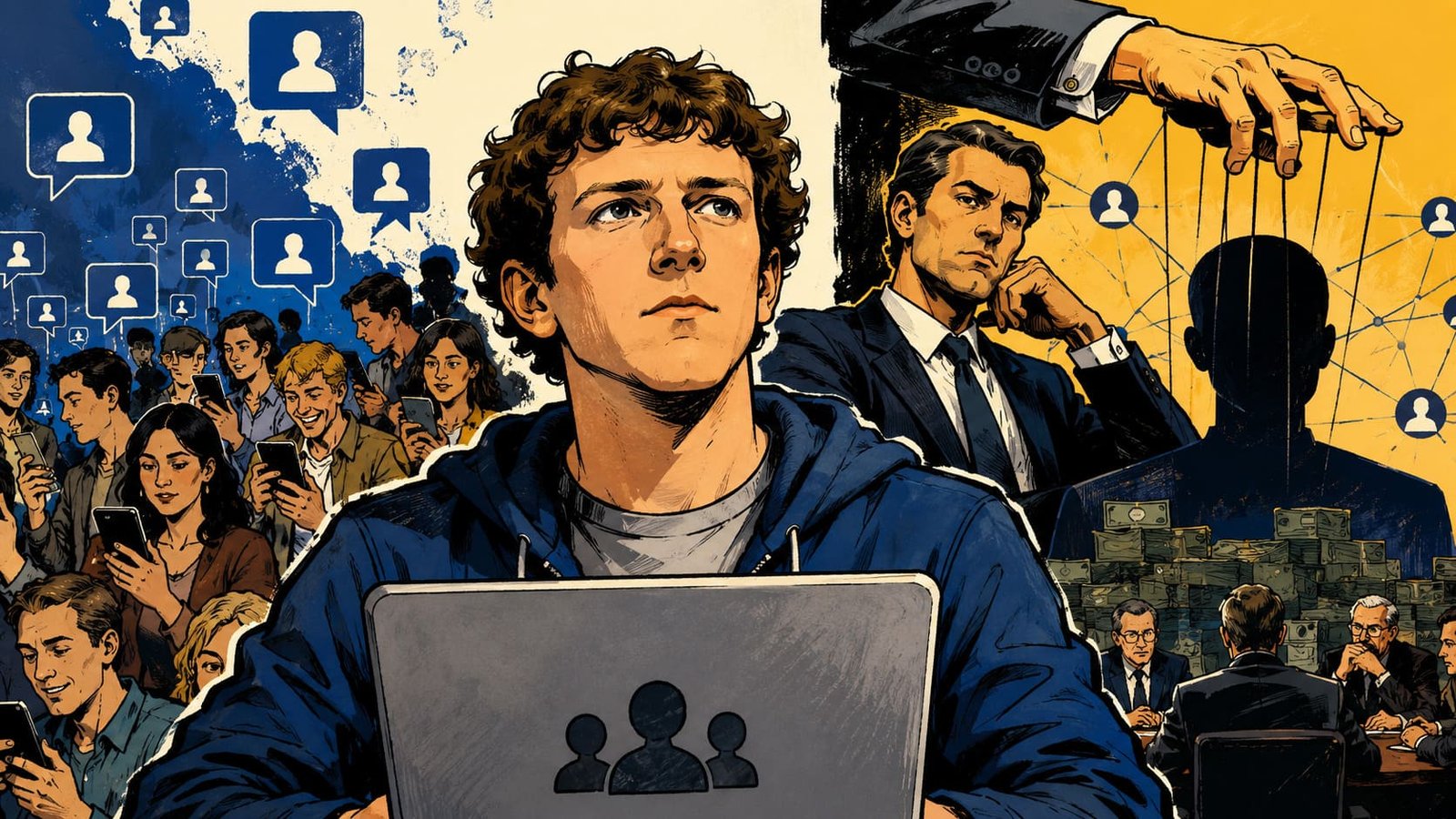
Cold rain clung to Harvard windows while privileged students moved through candlelit halls speaking in the polished confidence of people raised to inherit the future automatically. Somewhere between elite final clubs and glowing computer screens, a furious young man refreshed a webpage with the emotional intensity of someone trying to outpace humiliation itself. Beer bottles crowded dorm rooms. Keyboard clicks sounded like distant gunfire. Reputation traveled faster than thought. The Social Network begins not as a triumph story, but as an emotional fracture. David Fincher’s masterpiece understands something many technology narratives avoid admitting: some of the world’s most transformative platforms were born not from idealism, but from loneliness, insecurity, resentment, and the desperate human need to matter. Mark Zuckerberg, portrayed with eerie precision by Jesse Eisenberg, does not invent Facebook merely to connect people. He builds it while emotionally failing to connect with anyone standing directly in front of him. That contradiction gives the film its haunting pulse.
The opening conversation between Mark and Erica remains one of modern cinema’s sharpest dissections of ambition colliding with emotional blindness. Mark speaks constantly yet fails to communicate anything truly human. Intelligence becomes armor. Wit becomes aggression. Status anxiety leaks through every sentence like static electricity. Erica’s rejection wounds him not simply because he loses a relationship, but because it exposes a deeper fear: exclusion. Harvard functions almost like a medieval kingdom throughout the film, where social hierarchy determines psychological worth as much as academic achievement. Facebook emerges inside that ecosystem as both rebellion and revenge. A software founder named Idris once admitted after selling his startup that “half the tech industry is socially rejected teenagers building systems powerful enough to never feel ignored again.” The Social Network understands that emotional architecture with terrifying clarity.
What makes the movie extraordinary is its refusal to romanticize innovation cleanly. Facebook expands because it satisfies primal human desires already simmering beneath modern culture: validation, visibility, belonging, comparison. The platform feels revolutionary because it industrializes social identity itself. Eduardo Saverin sees business potential. Sean Parker sees cultural domination. Mark sees escape velocity from insignificance. Their competing motivations create the emotional gravity pulling the story forward. Fincher frames coding sessions less like engineering work and more like psychological warfare conducted through caffeine, obsession, and sleepless ambition. The famous hacking sequences pulse with manic energy because the characters are not merely building software. They are redesigning human interaction without fully understanding the emotional consequences.
Sean Parker enters the film like a glamorous virus carrying Silicon Valley mythology inside designer jackets and nightclub smoke. Sean Parker represents a seductive new form of power where charisma, disruption, and cultural coolness matter more than traditional legitimacy. His influence over Mark feels almost spiritual. Suddenly Facebook stops looking like a college project and starts resembling destiny. That transformation mirrors countless modern startups where vision expands aggressively once proximity to elite networks alters psychological scale. A venture advisor named Lucien once described Silicon Valley as “a place where ambition spreads through rooms like perfume.” Parker embodies that contagion perfectly. He teaches Mark that influence matters more than friendship, scale matters more than loyalty, and myth matters more than stability. The tragedy is that Mark listens because Parker articulates the version of power he secretly craves.
Eduardo’s gradual displacement provides the movie’s emotional wound. Andrew Garfield plays him with heartbreaking restraint because Eduardo genuinely believes friendship still exists beneath the corporate machinery. He approaches Facebook like a partnership. Mark increasingly approaches it like conquest. That difference destroys them. The dilution scene lands with devastating force precisely because betrayal arrives bureaucratically rather than dramatically. Legal documents replace emotional honesty. Percentages replace trust. Modern corporate culture specializes in this kind of emotional sterilization. People destroy relationships through process language while pretending professionalism absolves cruelty. A startup operations manager named Talia once described founder conflict as “watching friendship slowly translated into spreadsheets until nobody recognizes the original language anymore.” That observation sits quietly inside every boardroom scene throughout the film.
Fincher’s direction transforms Harvard and Silicon Valley into emotionally frozen environments despite their constant activity. Hallways glow gold yet feel cold. Parties appear crowded yet spiritually empty. Success arrives wrapped in isolation. Trent Reznor and Atticus Ross’s score hums beneath scenes like digital anxiety becoming music itself. The atmosphere matters because The Social Network is fundamentally about disconnection disguised as connection technology. Facebook promises belonging while amplifying comparison. It expands communication while thinning intimacy. The movie sensed this paradox before much of society fully recognized it. Today entire generations measure self-worth through metrics designed by platforms optimizing engagement rather than emotional wellbeing. Mark becomes one of history’s most influential architects of human interaction while struggling profoundly with vulnerability himself. That irony feels almost mythological.
There is also something brutally honest about the film’s portrayal of elite ambition. Nearly every character wants proximity to significance more than happiness itself. Harvard final clubs symbolize this hunger beautifully. Membership represents social immortality within a tiny ecosystem obsessed with hierarchy. Mark initially appears excluded from those circles. By the end, he controls something larger than the institutions rejecting him originally. Yet the emotional emptiness remains stubbornly intact. Achievement does not heal insecurity automatically. Wealth does not guarantee emotional fluency. The movie quietly dismantles the fantasy that external validation can permanently resolve internal loneliness. A communications executive named Noelle once stared across a rooftop gathering in London filled with successful founders and whispered something painfully simple. “Everyone here built visibility. Almost nobody built peace.” The Social Network circles that realization relentlessly.
The Winklevoss twins deserve more credit than popular culture often grants them because they represent another recurring tension in innovation economies: ideas versus execution. They possess status, pedigree, resources, and social capital. Mark possesses obsession. History repeatedly favors obsessive operators over entitled gatekeepers because systems reward relentless adaptation more than inherited confidence. Yet the film also complicates that narrative. The twins are not entirely wrong morally. Mark does exploit ambiguity aggressively. Success emerges through ethical gray zones difficult to separate cleanly from outright betrayal. Fincher refuses easy heroes because modern power rarely operates transparently enough for moral simplicity.
Late at night inside a silent conference room glowing faintly blue from laptop screens, a young billionaire refreshed a friend request repeatedly while lawyers packed away documents proving he had conquered nearly everything except the emotional distance sitting directly in front of him. Around the world, millions continued uploading photographs, chasing validation, comparing lives, and feeding pieces of themselves into a machine born from insecurity disguised as innovation. That is the lingering brilliance of The Social Network. The film recognizes that modern civilization did not merely invent better communication tools. It built vast digital mirrors reflecting humanity’s deepest cravings back at itself endlessly. Somewhere between ambition and loneliness, coding and betrayal, connection and performance, a generation handed its emotional architecture to algorithms designed by people still trying to understand their own hearts. And now the entire world refreshes the page together, hoping recognition might finally feel enough.
Editorial Disclaimer: Whether a film is rooted in fiction or inspired by real events, the actions, decisions, and behaviors portrayed within are not intended to be encouraged, replicated, or endorsed in real-world settings. This review exists solely to analyze the storytelling, characters, themes, and business dynamics presented in the film for educational, analytical, and entertainment purposes. Any ethical or unethical conduct depicted in the film does not reflect the views, values, or endorsements of ESYRITE.
