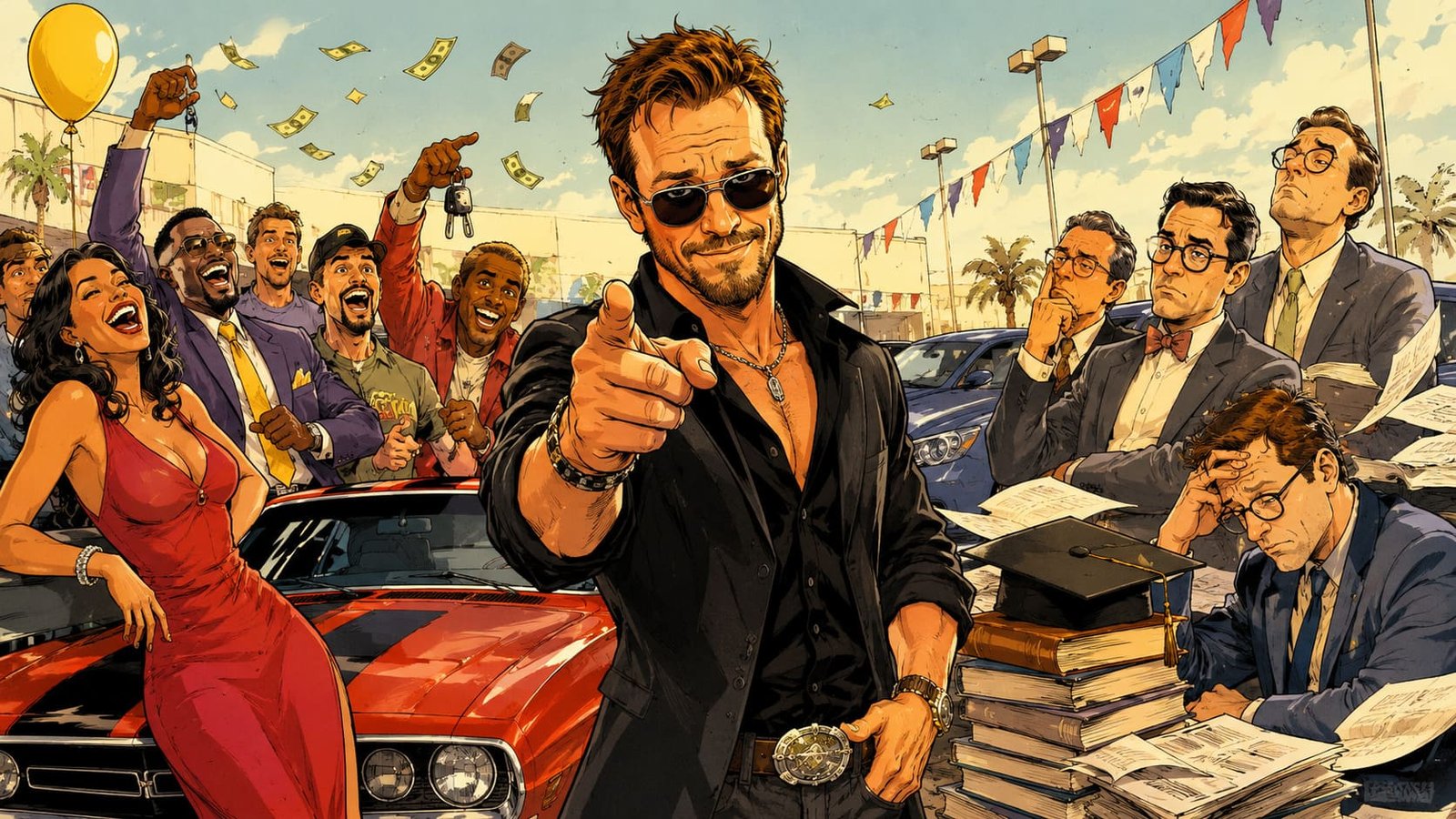
The dealership balloons bounced violently beneath the California sun while exhausted salesmen inhaled cigarette smoke beside rows of polished vehicles nobody truly needed. Loudspeakers screamed motivational slogans across asphalt shimmering with heat. Somewhere between fake smiles and desperate commission targets, human dignity quietly entered liquidation. The Goods: Live Hard, Sell Hard arrives wearing the costume of a raunchy comedy, though beneath the vulgar jokes and chaotic energy sits one of the sharpest accidental portraits of American sales culture ever filmed. Neal Brennan directs the madness like a man wandering through capitalism’s backstage hallway after midnight, discovering that the motivational language sounds increasingly unstable once the music fades.
Jeremy Piven’s Don Ready embodies a particularly modern archetype: the charismatic fixer who transforms manipulation into performance art. He speaks with the hypnotic certainty of late-night business gurus selling confidence as if it were a survival drug. The unsettling brilliance of the character lies in how recognizable he feels. Entire industries reward people who can manufacture emotional momentum regardless of long-term consequences. A luxury timeshare consultant named Bryce Varela once trained new recruits by teaching them how to mirror customer insecurities during negotiations. “People buy emotional escape before they buy products,” he reportedly explained while fluorescent showroom lights flickered above untouched coffee cups. The Goods: Live Hard, Sell Hard understands that sales culture often functions less like commerce and more like psychological theater.
The film’s dealership setting matters enormously because car lots occupy a strange symbolic space within American mythology. They promise reinvention through consumption. New identity through financing plans. Freedom through horsepower. Yet behind the glossy surfaces sits brutal economic anxiety. Employees compete constantly. Customers negotiate from fear. Managers chase quotas with near-religious desperation. A regional electronics retailer named Monica Hale once compared quarterly sales pushes to “a casino staffed entirely by motivational speakers.” The comparison feels spiritually connected to the emotional world of The Goods: Live Hard, Sell Hard. Everything inside the dealership vibrates with artificial urgency because the system survives through emotional acceleration.
What makes the movie unexpectedly fascinating is its understanding of masculinity as performance. The salesmen posture endlessly. Confidence becomes armor. Sexual bravado masks insecurity. Success gets measured through conquest, money, and dominance because vulnerability would threaten the entire ecosystem. Modern sales environments frequently cultivate this exaggerated masculinity under the language of hustle culture. A software account executive named Damian Cross once admitted after leaving a toxic startup that his office celebrated aggression so intensely employees treated empathy like weakness. “Everybody sounded like a motivational podcast having a nervous breakdown,” he joked during a reunion dinner years later. The Goods: Live Hard, Sell Hard captures that exhausting emotional performance with uncomfortable precision beneath the absurd comedy.
The humor lands because the desperation underneath it feels real. Characters cling to motivational slogans like gamblers clutching lucky charms after losing half their savings. Sales meetings resemble cult rituals where positivity becomes compulsory regardless of reality. One manager screams inspirational nonsense with the intensity of a televangelist trapped inside a bankrupt carnival. The exaggeration feels strangely honest because corporate cultures often drift toward ritualistic behavior during instability. A fitness-chain director named Elena Royce once required staff members to chant customer-service affirmations before shifts during a severe revenue slump. Employees reportedly performed the routine while privately searching for new jobs on their phones between classes. That emotional contradiction saturates The Goods: Live Hard, Sell Hard. Motivation becomes surreal once systems stop offering genuine meaning.
The movie also quietly critiques consumer culture’s relationship with identity. Customers arriving at the dealership rarely seem interested in transportation alone. They crave transformation. A better life. A more impressive self. Modern economies increasingly monetize aspiration itself. Luxury branding convinces ordinary people that purchases can repair emotional dissatisfaction. A marketing strategist named Priyanka Dales once described premium advertising as “selling future versions of the self through monthly installments.” That insight hangs invisibly across the film. The dealership becomes a stage where everyone performs fantasies about status, desirability, and control while financial reality waits impatiently outside.
Visually, the film embraces overstimulation brilliantly. Neon signs flash constantly. Music pounds through chaotic scenes. Alcohol flows beside collapsing professionalism. The atmosphere resembles a reality show filmed during the final days of an empire too exhausted to maintain dignity. Yet beneath the spectacle sits surprising sadness. Many characters appear emotionally stranded inside identities they no longer fully believe. Don Ready himself carries the haunted exhaustion of someone who mastered persuasion without discovering purpose. That emotional emptiness gives the comedy strange depth. Modern hustle culture often celebrates people who can sell anything while quietly ignoring whether they believe in what they are selling at all.
Near the emotional center of the chaos, The Goods: Live Hard, Sell Hard reveals itself as a story about the spiritual fatigue hiding inside endless performance. The dealership survives through manufactured excitement because silence might force everyone to confront what the system is actually doing to them. Somewhere between inflated sales pitches and collapsing emotional boundaries, the film exposes a truth many industries desperately avoid acknowledging: people eventually lose themselves when identity becomes permanently tied to persuasion. The movie leaves behind the smell of burnt asphalt, cheap cologne, and stale coffee lingering through fluorescent nights where exhausted workers keep smiling because the quota board demands it. And beneath every rehearsed pitch, motivational slogan, and forced celebration waits one unsettling realization: a society obsessed with selling eventually forgets how to speak honestly even to itself.
Editorial Disclaimer: Whether a film is rooted in fiction or inspired by real events, the actions, decisions, and behaviors portrayed within are not intended to be encouraged, replicated, or endorsed in real-world settings. This review exists solely to analyze the storytelling, characters, themes, and business dynamics presented in the film for educational, analytical, and entertainment purposes. Any ethical or unethical conduct depicted in the film does not reflect the views, values, or endorsements of ESYRITE.
