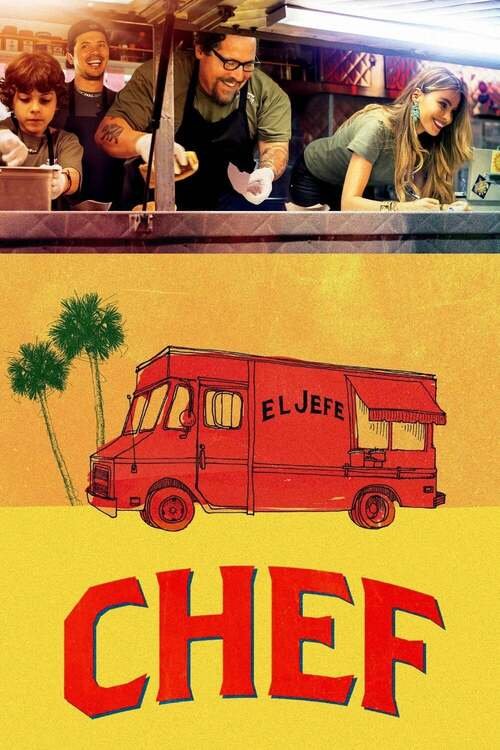
What if losing your job was the best thing that ever happened to you? That’s the existential spice at the heart of Chef (2014), Jon Favreau’s soulful, sizzling film that blends food, freedom, and fatherhood into one unforgettable ride. This isn’t your average feel-good flick. It’s a journey of self-discovery, served with Cuban sandwiches and a dash of Twitter beef. Literally. In a digital age drowning in hashtags and hot takes, Chef invites us to slow down, listen to our gut, and take back the wheel of our lives; one dish at a time.
You can almost smell the garlic butter hit the skillet as Favreau, who writes, directs, and stars in this indie gem, invites us into the chaotic yet liberating world of Chef Carl Casper. Once a rising star in Los Angeles fine dining, Carl’s world implodes after a very public meltdown, and he’s forced to start from scratch; this time on four wheels. But this isn’t just about cooking. It’s about reclaiming identity, reconnecting with family, and rediscovering joy through craft.
What makes Chef remarkable isn’t just the food porn (though fair warning: you’ll be ravenous by the end). It’s the film’s raw, relatable portrayal of burnout, reinvention, and creative autonomy. Anyone who’s ever felt stuck in a job, trapped by expectations, or lost in a loop of unfulfilling routines will find something soul-stirring in Carl’s messy, mustard-stained renaissance. The movie doesn’t sugarcoat the struggle, but it reminds us that passion, if properly sautéed, can still turn into purpose.
Beyond the laughter and grilled cheese close-ups, Chef is an insightful allegory about modern leadership and the creator economy. From toxic hierarchy to entrepreneurial freedom, Carl’s arc mirrors the path many creatives, freelancers, and founders dream of but rarely dare to pursue. And like any good leader, he doesn’t just feed people. He teaches, mentors, adapts, and most importantly, listens.
Chef is not just a movie. It’s a manifesto for anyone who’s ever wanted to take their life back. With clever satire, heartfelt moments, and a cast that cooks with chemistry (including Sofia Vergara, John Leguizamo, and a surprise cameo by Robert Downey Jr.), this film sneaks up on you with its heart. And when it hits, it hits hard. Not with fireworks, but with flavor.
Quick Notes
- Freedom Over Fame: The film champions creative autonomy over status or recognition.
- Fatherhood Front and Center: At its heart, it’s a father-son story steeped in growth and reconnection.
- Mental Health in the Kitchen: Explores burnout and emotional resilience with honesty and warmth.
- Social Media Savvy: Demonstrates both the dangers and powers of online platforms in building (or breaking) reputations.
- Startup Grit: Shows how humble beginnings; like a food truck can be the gateway to personal and professional rebirth.
From Kitchen Chaos to Cuban Cool
Carl Casper, once the darling of the L.A. culinary scene, is now creatively caged in a top-tier restaurant where the menu is dictated by a risk-averse owner. When a respected food critic (played with perfect snark by Oliver Platt) publicly roasts Carl for his uninspired dishes, the chef’s pent-up frustration boils over into an online spat that soon goes viral. The result? A spectacular implosion. Carl quits in a blaze of profanity and burnt bridges, losing not just his job, but his professional identity.
But failure, it turns out, is a great appetizer for freedom. Carl retreats to Miami with his ex-wife Inez (Sofia Vergara) and their young son Percy (Emjay Anthony), where an old food truck enters the picture like a lifeline wrapped in aluminum. With the help of his loyal sous-chef Martin (John Leguizamo), and an unexpected emotional nudge from his ex, Carl decides to hit the road, both literally and metaphorically. From Miami’s Little Havana to the streets of New Orleans and Austin, they sling Cuban sandwiches to thrilled locals, and more importantly, rebuild bonds that fame and stress had long eroded.
The road trip becomes more than just a business revival; it becomes a heartfelt reconnection between a father and son. Percy isn’t just along for the ride; he becomes the digital strategist, documenting every mile on social media, turning Carl’s new venture into an online sensation. It’s modern entrepreneurship wrapped in love and lard, proving that family and fans alike crave authenticity.
Through trial, error, and plenty of spilled sauce, Carl transforms from an emotionally unavailable workaholic into a present, engaged dad who finally listens. And as Percy grows more confident in his own creativity, Carl learns to trust again; in people, in possibilities, and in himself. By the time the credits roll, Carl isn’t just feeding hungry customers; he’s healed something much deeper.
The film wraps on a satisfying note that feels earned rather than forced. No billionaire bailout, no sudden fame fix. Just a man who stripped away the noise to find clarity in the quiet clatter of his own food truck. A man who traded fine dining for fine moments. And if that’s not the true measure of success, what is?
Key Lessons and Insights to Learn from the Movie
True fulfillment rarely comes from applause; it often comes from alignment. Carl’s burnout stemmed not from lack of success, but from disconnect; between who he was and what he did daily. Many professionals, especially in high-stakes industries, fall into this same trap: becoming top performers in roles that hollow them out. *Chef* nudges us to ask not “What will impress others?” but “What will fulfill me?” The answer often leads to less glamorous, but far more meaningful roads.
Work-life balance is not a myth; it’s a practice. Throughout the film, Carl learns that excellence doesn’t have to be toxic. As he becomes more present for Percy, his creativity blooms. This reflects real-world insights from leading firms like McKinsey, where studies show sustainable performance stems from emotional well-being, not hustle culture. Sometimes, stepping away from the stove is exactly what your career needs.
Innovation thrives in constraint. With no Michelin stars to chase, Carl’s food truck becomes his canvas. No frills, no maître d’, just heart, hustle, and flavor. His creative reawakening underscores a timeless business truth: limitations often unlock invention. Consider how Airbnb started by renting out air mattresses or how Basecamp built their empire with minimal tools. Carl’s story echoes this: the scrappier the start, the sharper the vision.
Relationships are the real capital. Carl’s journey is powered not by money, but by people. His loyal friend Martin quits his job to help without blinking. His ex-wife still believes in him. His son becomes his biggest brand ambassador. This mirrors the concept of “social capital”; a growing measure of value in today’s leadership models. Your network isn’t just who you know, it’s who shows up when you’re down.
*Chef* reinforces that mastery and joy are not mutually exclusive. You can be excellent and exuberant. Passion doesn’t have to be tortured. Carl’s arc reminds us of what Cal Newport refers to as “craftsman mindset”: the joy that comes from relentless improvement and loving what you do. It’s a life lesson as much as a business model; don’t just chase success. Savor the process.
A Plate Full of Passion and Purpose
*Chef* isn’t trying to blow up the box office. It’s not vying for Oscar bait. But it does something more meaningful; it stays with you. Long after the credits roll, Carl’s quiet rebellion whispers encouragement into your own dreams. It’s the film you watch when you’re stuck, lost, or teetering on the edge of “What if?” Because at its core, *Chef* is a love letter to reinvention.
The movie is a rare breed: it manages to be both wildly entertaining and deeply instructive. It never moralizes, but it teaches. Never shouts, but still speaks volumes. You come for the food but stay for the soul. And just like any truly great dish, it’s the combination of ingredients; the characters, the music, the dialogue, the heart—that makes it unforgettable.
There’s also an unexpected satirical bite to it. Favreau pokes gentle fun at food critics, tech culture, and even celebrity ego without turning the film into a takedown. It’s clever but kind. It’s honest without being heavy. In a cinematic world obsessed with explosions and climaxes, *Chef* simmers, letting the flavors develop slowly. And wow, do they hit.
Beyond film school and food culture, *Chef* should be required viewing for leaders, creatives, and parents alike. It’s a case study in emotional intelligence, entrepreneurial grit, and the soft power of staying true to your voice; even when it’s buried under deadlines and expectations. Carl’s food truck isn’t just a business. It’s a symbol of creative resurrection.
So next time you’re on the brink; burned out, boxed in, or broken down; watch *Chef*. Let it remind you that it’s never too late to start over. That love, in all its forms, is the best seasoning. And that sometimes, to really succeed, you just have to cook your own way.
Disclaimer
It’s also critical to remember that whether the Movie is either a work of fiction or a real-life depiction, it must be emphasized that the actions depicted within are not encouraged in reality and shouldn’t be imitated. The review aims to analyze the storytelling, characters, and business decisions portrayed in the Movie solely for educational and entertainment purposes. Any ethical & unethical practices highlighted in the Movie are not endorsed by the Esyrite publication.
