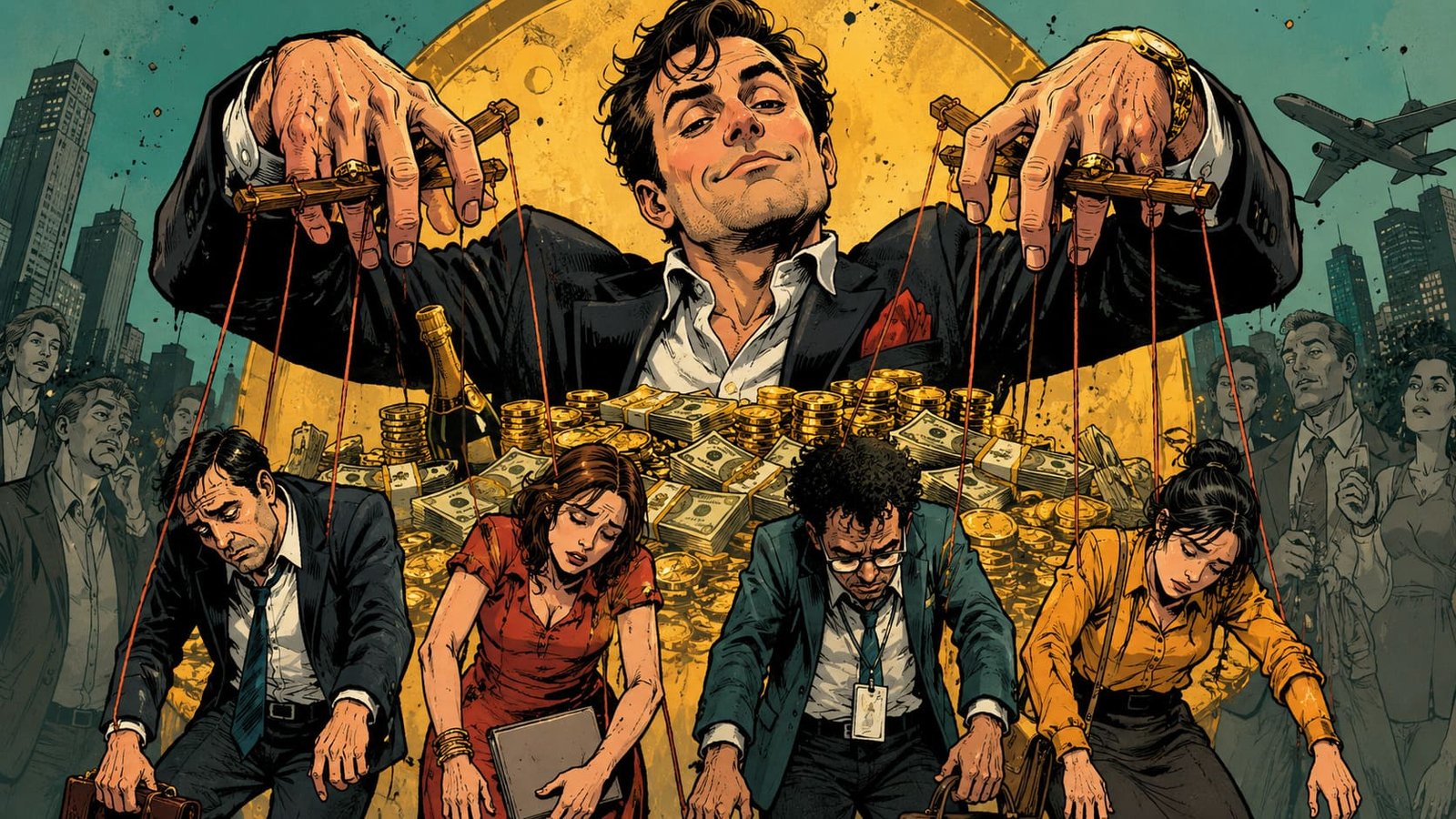
The casino lights looked exhausted, almost embarrassed by their own brightness. Somewhere between the clinking glasses and synthetic jazz, a salesman in a cheap suit leaned over a velvet table and smiled with the confidence of a televangelist promising salvation through a toll-free number. That is the strange electricity running through Con Man. The film does not merely tell a story about deception. It stages a carnival of modern hunger where ambition dresses itself like charisma and desperation walks around pretending to be strategy. James Veitch directs the chaos with the energy of a late-night infomercial spiraling toward collapse. Every scene feels sticky with manipulation, like touching a gold-plated elevator button inside a bankrupt hotel. Beneath the comedy sits something colder and more familiar: the realization that entire industries often reward confidence long before they reward competence.
Barry Minkow, the real-life fraudster whose life inspired the film, hangs over the narrative like cigarette smoke trapped inside expensive curtains. The movie understands something uncomfortable about capitalist mythology. Society loves the entrepreneur who moves fast, talks loudly, and sells impossible dreams with cinematic certainty. A founder named Kellan Ruiz once convinced a room full of investors that his artificial intelligence startup could predict human loneliness through smartwatch data. The presentation felt hypnotic. Neon slides glowed across polished glass walls while cold espresso sat untouched beside venture capital notebooks. Months later, the company collapsed because the technology barely existed. Nobody remembered the product. They remembered the performance. Con Man slices into that exact psychological wound. The film quietly argues that modern culture does not simply tolerate illusion. It industrializes it.
The humor lands because the absurdity feels painfully recognizable. Boardrooms today often resemble reality television auditions where certainty matters more than truth. One of the film’s smartest tricks involves showing how people willingly participate in their own manipulation. Nobody wants to appear skeptical while everyone else appears enchanted. That social pressure creates dangerous ecosystems. Elizabeth Holmes built an empire around this principle for years before the collapse of Theranos became one of Silicon Valley’s defining cautionary tales. In the film, conversations glide with that same polished emptiness executives sometimes use during earnings calls. The dialogue sounds smooth enough to calm anxiety while hiding the fact that the floor beneath everyone is cracking apart. There is satire here, but also anthropology. The movie studies human beings the way a behavioral economist studies irrational markets.
What makes the story linger is not the fraud itself. Fraud has existed since ancient marketplaces sold miracle oils beside dusty roads. The fascinating part is how people emotionally attach themselves to fantasy because reality feels too slow and too ordinary. A regional car dealership manager named Helena Morris once pushed her sales team into a bizarre motivational ritual where employees rang a brass bell every time they exaggerated financing terms enough to close a customer. At first the workers laughed about it over burnt coffee and stale pastries. Months later the ritual became normalized. Some even felt proud of their manipulation because the numbers looked impressive during quarterly meetings. Con Man understands that corruption rarely arrives wearing horns. It usually arrives smiling, carrying performance metrics and motivational slogans.
There is also something quietly tragic about the masculine identity hidden underneath the film’s swagger. The central figures chase validation with the intensity of gamblers feeding coins into a machine that never truly pays out. The suits become armor. The confidence becomes theater. Even the jokes carry loneliness inside them. Modern work culture often rewards this emotional camouflage. A consultant can sound visionary while privately drowning in exhaustion. A startup founder can trend online while staring blankly at a hotel ceiling after midnight, chewing antacids beside a flickering laptop charger. The movie catches these emotional contradictions with surprising precision. It recognizes that greed is often disguised fear. The need to dominate a room usually hides the terror of becoming invisible within it.
The pacing occasionally feels chaotic, though that messiness strangely benefits the film. Financial scandals rarely unfold in neat cinematic symmetry. They spiral. They mutate. They absorb everyone nearby into confusion. Watching Con Man feels similar to walking through a convention center during a startup expo where every booth promises disruption while exhausted interns secretly wonder whether any of it is real. Pop culture has spent decades romanticizing charismatic rule-breakers, from Wall Street to The Wolf of Wall Street. This film takes a different route. It strips glamour from manipulation and exposes its cheap wiring. The laughter becomes uncomfortable because audiences recognize fragments of their own compromises hidden inside the spectacle.
Some viewers may dismiss the movie as exaggerated satire. That reaction misses the deeper point. Modern institutions often operate through perception loops rather than substance. Social media accelerated this condition until reputation became a form of currency detached from reality itself. A branding executive named Priya Daman once admitted during a conference dinner that her company spent more time crafting founder mythology than improving product quality. Nobody at the table looked shocked. One guest laughed while cutting into a dry steak beneath dim chandelier light. Another compared it to politics. The entire exchange felt eerily similar to the emotional ecosystem inside Con Man. The film keeps asking a brutal question without announcing it directly: if enough people benefit from illusion, does anyone truly want honesty to survive?
Near the emotional center of the story sits a truth that feels heavier than satire. Human beings crave orientation. They want certainty during unstable moments. Con artists understand this better than most philosophers. They sell emotional relief disguised as opportunity. Somewhere inside a glowing casino hallway, beneath expensive watches and rehearsed confidence, the film quietly reveals how fragile modern ambition has become. Success today often resembles a hall of mirrors where identity, status, and performance blur into one exhausting performance. The frightening part is not that manipulation exists. The frightening part is how eagerly culture applauds it while pretending to value integrity. Long after the credits fade, the movie leaves behind the taste of cold champagne and moral exhaustion, like waking from a glamorous fever dream and realizing the room was empty the entire time. And somewhere beyond the noise, a quieter question keeps waiting for anyone brave enough to face it: what part of your ambition still belongs to you once performance becomes survival?
Editorial Disclaimer: Whether a film is rooted in fiction or inspired by real events, the actions, decisions, and behaviors portrayed within are not intended to be encouraged, replicated, or endorsed in real-world settings. This review exists solely to analyze the storytelling, characters, themes, and business dynamics presented in the film for educational, analytical, and entertainment purposes. Any ethical or unethical conduct depicted in the film does not reflect the views, values, or endorsements of ESYRITE.
