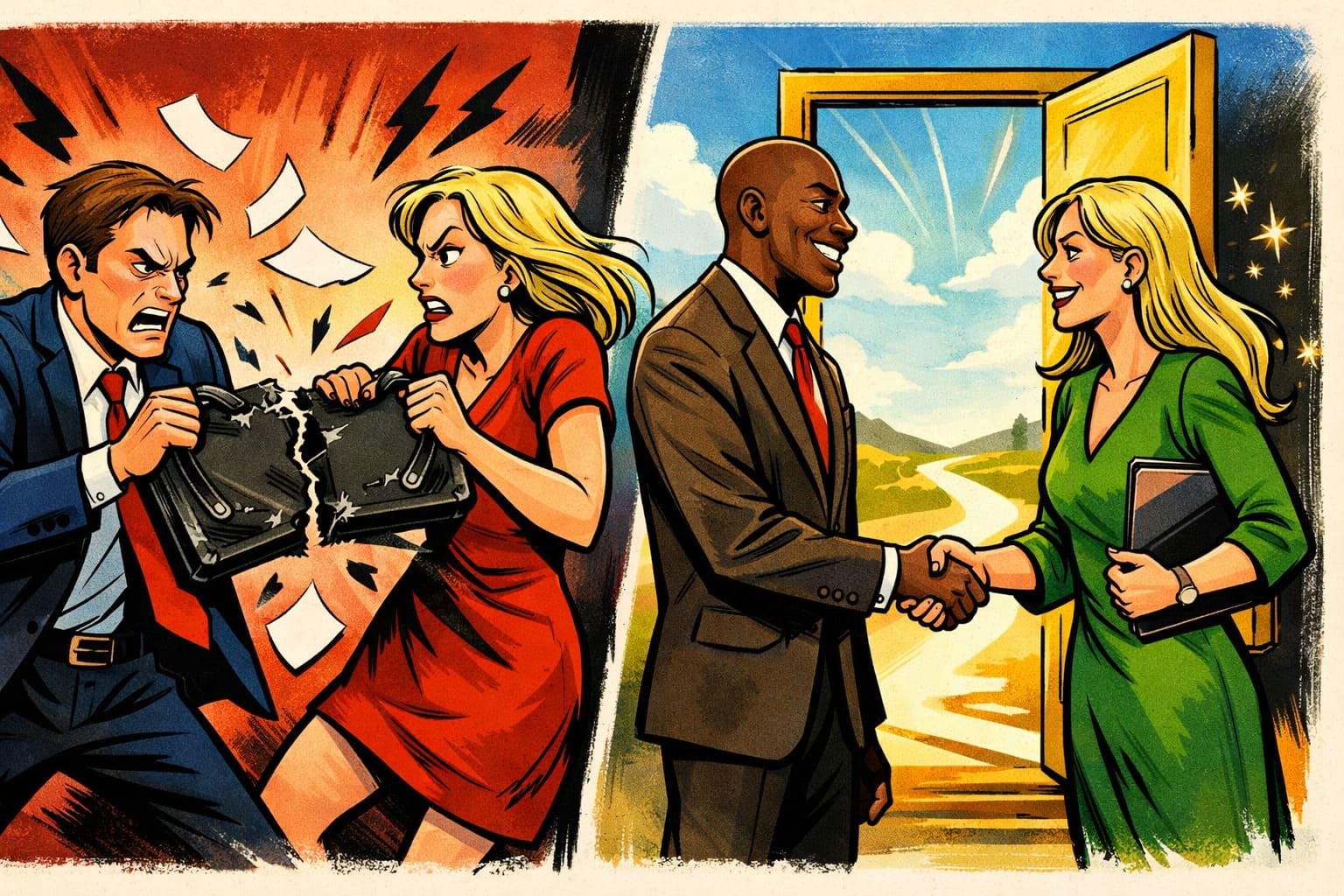
The handshake lasted only a few seconds, yet it carried the weight of years. Partners smiled for the cameras while uncertainty lingered behind practiced confidence. Outside the meeting room, employees whispered, suppliers speculated, and competitors watched closely. Every business relationship begins with optimism, but not every partnership is meant to last forever. Sometimes the boldest strategic decision is not finding another way to stay together. It is recognizing the right moment to part with purpose.
Business culture often celebrates persistence above everything else. Leaders are encouraged to fight harder, negotiate longer, and endure difficult partnerships indefinitely. Persistence certainly builds resilience, yet blind persistence can quietly destroy value. A partnership that once accelerated growth may eventually limit innovation, create constant conflict, or divert attention from customers. Strategic leadership requires distinguishing temporary challenges from permanent misalignment. Wisdom lies in knowing whether a relationship deserves repair or a respectful conclusion.
The separation between eBay and PayPal illustrates this principle well. For years the businesses strengthened one another. Eventually their futures demanded different paths. Independence allowed PayPal to expand beyond its original ecosystem while enabling eBay to reshape its marketplace strategy. The split was not evidence of failure. It reflected strategic maturity. Sometimes organizations unlock greater value by standing apart rather than remaining connected through arrangements that no longer support their evolving ambitions.
A creative design agency faced a quieter version of the same dilemma. Founder Olivia had worked with the same printing supplier for many years, despite missed deadlines and growing frustration. Loyalty made every difficult conversation feel personal. After months of declining client satisfaction, she chose a new partner whose systems matched the agency’s ambitions. Customers noticed the improvement almost immediately. The hardest decision became the healthiest one because emotion finally stopped overruling strategy.
Every business breakup teaches something about priorities. Leaders often discover hidden weaknesses only after a partnership ends. Processes improve. Responsibilities become clearer. New collaborations emerge that would never have appeared otherwise. Strategic exits therefore create space for renewal rather than simply marking an ending. Organizations willing to let go of unhealthy relationships often regain focus because energy once spent managing conflict can finally support innovation and customer value.
Corporate history offers countless reminders that disciplined separation sometimes creates stronger businesses. Hewlett-Packard eventually divided into two focused companies, allowing each organization to pursue distinct strategic objectives with greater clarity. Investors, customers, and employees gained clearer direction because leadership recognized that complexity had begun slowing progress. Growth does not always require adding more pieces. Occasionally it demands simplifying the puzzle so every remaining piece finally fits together with purpose.
Successful exits also reveal character. Respectful communication preserves relationships that may become valuable again under different circumstances. Employees watch how leaders handle difficult farewells. Customers notice professionalism during moments of uncertainty. Trust survives when organizations demonstrate honesty instead of resentment. A graceful departure often strengthens reputation more than a reluctant partnership held together through frustration. Leadership is measured not only by how opportunities begin, but also by how necessary endings are managed.
Some partnerships deserve another chance because shared purpose still outweighs temporary disagreement. Others quietly reach a point where staying together costs more than moving forward separately. The courage to recognize that difference separates emotional decision making from strategic leadership. Business is ultimately about creating value, not preserving arrangements that no longer serve anyone well. Sometimes the strongest path forward begins with the wisdom to let go before yesterday’s success becomes tomorrow’s burden.
