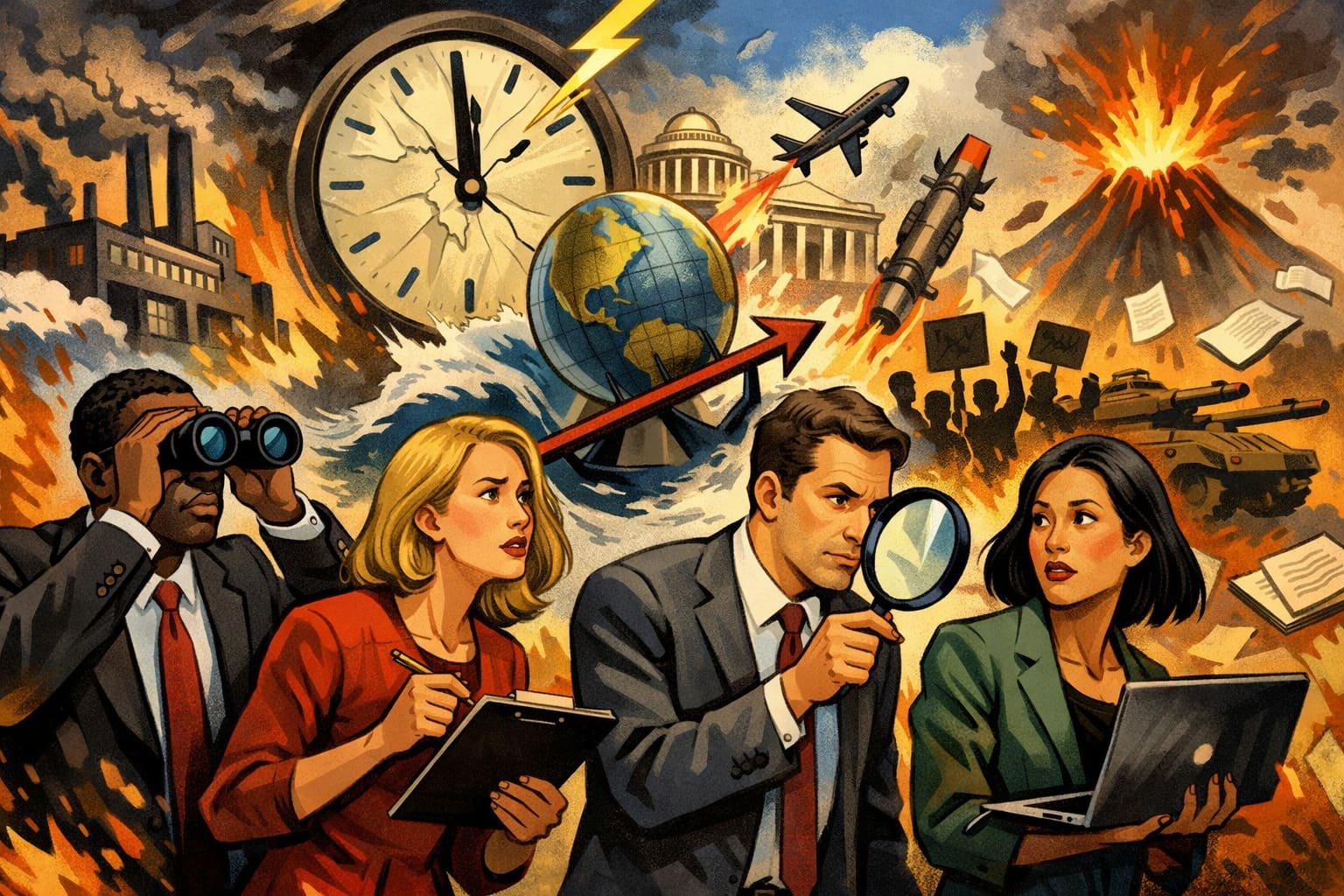
A company can feel solid right up until the outside world decides otherwise. The office is tidy, the dashboard is green, the team is busy, the founder is smiling through a slide deck that smells faintly of confidence and printer heat. Then the air changes. A regulation tightens. A government shifts tone. A consumer habit bends. A technology nobody took seriously starts eating the edge of the market like acid through silk. Suddenly the problem is not inside the building. The problem is the sky.
That is what many leaders miss when they get too hypnotized by internal performance. They study team productivity, pricing, product quality, sales process, and brand positioning with admirable discipline, then behave as if the rest of the world is a decorative backdrop. It is not. The external environment is not scenery. It is the battlefield, the weather system, the traffic law, the rumor mill, the courtroom, and the next plot twist all at once. If you ignore it, the market will eventually educate you with force.
This is where PESTEL becomes far more than a business-school acronym. Political, economic, social, technological, environmental, legal. Six lenses, simple enough to fit on a slide, sharp enough to expose why good companies get blindsided. Leaders dismiss it because it sounds broad, almost too neat for a chaotic world. Yet that breadth is precisely the point. Businesses rarely get crushed by one perfect enemy. They get squeezed by overlapping forces that feel harmless in isolation and brutal in combination.
You have seen the pattern. Uber’s rise collided with legal and regulatory battles that shaped its path almost as much as customer demand did. Facebook, now Meta, learned that social power can quickly become political heat and legal scrutiny. Retailers, manufacturers, media firms, and startups alike have spent the last decade discovering that technology moves faster than organizational pride, and public sentiment can turn a beloved brand into a nervous apology machine by Tuesday afternoon. None of this is random. It is the cost of failing to read the larger map.
This article is about how to do that reading before panic starts writing your decisions for you. You are about to see why PESTEL matters, why external signals often look boring before they look fatal, why the smartest companies study the mood of the world as seriously as they study their own spreadsheets, and why striking before upheaval is often the difference between becoming the disruptor and becoming the case study. A business can survive many internal mistakes. It struggles to survive leaders who keep mistaking the outside world for background noise.
Quick Notes
1. PESTEL matters because markets do not move in a vacuum. Your company may feel healthy while the outside world is already loading the gun.
2. Political and legal changes often arrive sounding technical, then quietly redraw the whole business landscape. Trouble rarely knocks wearing boots. It often enters carrying paperwork.
3. Social and technological shifts can make yesterday’s winning strategy feel ancient almost overnight. Consumers do not send farewell letters. They just move.
4. Economic and environmental changes expose which businesses were built for resilience and which were built for a stable fantasy. Calm weather hides weak architecture.
5. The sharpest leaders do not only manage the company. They study the world around it with the same intensity, because chaos leaves clues long before it sends the invoice.
Politics Shapes Markets More Than Most Executives Want to Admit
Many business leaders like to talk as if politics is a dirty side issue, something noisy people argue about on television while serious adults focus on operations. That illusion dies quickly when policy changes pricing, regulation, tax burdens, trade routes, labor access, or public trust. Politics is not background chatter. It is part of the operating environment whether leaders enjoy that fact or not.
You can see this in almost every sector that scales beyond a local comfort zone. Tech firms that once moved with pirate energy now spend serious time dealing with lawmakers, regulators, and public officials. Energy companies live inside political calculation whether they admit it or not. Housing, healthcare, transport, agriculture, education, finance, all of them sit under policy weather that can shift the economics of a business faster than a rebrand ever could. A smart operator watches legislation with the same seriousness given to monthly revenue.
Airbnb offers a telling example. It built a wildly successful global platform around a simple value exchange, then discovered that city politics could reshape the rules overnight. Concerns around housing supply, tourism pressure, neighborhood disruption, and tax fairness brought political scrutiny to the model in city after city. The company did not stop being innovative. It simply learned that innovation does not exempt you from the mood and muscle of local power.
A logistics founder named Pavel learned this without the glamour of a global brand. His company moved specialty goods across borders with impressive precision, and the business looked almost boring in the best possible way. Then trade tensions shifted, customs procedures tightened, and one government decision turned his previously smooth corridors into a slow-motion traffic jam. He had been studying fuel costs, route efficiency, and sales pipeline with near-religious discipline. He had paid far less attention to political signals that were already muttering in plain sight. The problem was not that the storm came from nowhere. The problem was that he had been facing the wrong window.
That is why political analysis belongs inside strategy, not outside it. The point is not partisan obsession. The point is operational realism. Policy shapes cost, access, risk, speed, and public legitimacy. A leader who treats political shifts as someone else’s issue is often just volunteering to be surprised later, which is a costly hobby in any industry.
Economic Signals Do Not Care About Your Optimism
Economic conditions have a way of humiliating motivational language. A founder can be inspiring, a team can be hungry, a brand can be beloved, and none of that changes what happens when borrowing costs rise, demand weakens, consumer caution spreads, or currency pressure starts chewing through margins. Optimism is useful for morale. It is useless as insulation against macroeconomic reality.
This is where many companies get caught acting as though momentum is a permanent personality trait. A good run in business can feel like a private blessing, something earned through grit and smart choices alone. Then the wider economy changes temperature and reveals how much of the past success depended on a broader environment that was more generous than anyone admitted. Cheap capital, confident customers, easy spending, stable input costs, those conditions can make weak discipline look like genius for a while.
The rise and fall of various direct-to-consumer brands showed this dynamic with painful clarity. Many built real communities and attractive products, yet their economics often leaned heavily on an era of cheaper attention, looser capital, and customer enthusiasm that would not last forever. When the macro conditions shifted, plenty of brands discovered that what looked like durable advantage was partly borrowed weather. The business did not become worthless overnight. The conditions that had flattered it simply stopped cooperating.
Mina, who ran a furniture brand with a devoted online following, hit that wall during a tightening cycle. For years, the business had ridden strong demand from design-conscious buyers who treated home improvement almost like self-expression therapy. Then household caution set in, delivery costs bit harder, and supplier terms lost their softness. Her team kept quoting old conversion rates in meetings as though yesterday’s customer mood still lived in the room. It did not. The smell of sawdust and ambition was still there in the studio, but the customer had changed. By the time they adjusted inventory, pricing, and product mix, the market had already taught them the lesson the economy had been whispering for months.
PESTEL matters here because economic awareness is not about becoming gloomy. It is about becoming proportionate. You should know what kind of tide your business is swimming in. A strong company can still lose balance if it mistakes a favorable cycle for a timeless law of nature. The market has a mean streak for leaders who treat temporary conditions like destiny.
Social Shifts Rewrite Demand While Companies Are Still Admiring Themselves
Social change is one of the most underestimated business forces because it does not always arrive with a formal announcement. People do not gather in town squares to declare that their values, tastes, habits, and expectations have shifted. They simply start buying differently, speaking differently, caring about different things, and losing patience with brands that feel emotionally outdated. A company can miss this change for months while still congratulating itself for strong engagement metrics.
This is why social analysis is not soft thinking. It is demand intelligence in human clothing. Consumer attitudes around convenience, authenticity, sustainability, privacy, flexibility, mental health, status, identity, and trust can reshape whole categories. Work culture shifts can redraw labor expectations. Media habits can change how products are discovered. A brand that understands these shifts gains more than trend awareness. It gains the right to matter while competitors keep sounding like they were written in another decade.
Nike has repeatedly shown the strategic power of understanding social currents, though not without controversy or tension. The company has long understood that cultural relevance is not just about sneakers. It is about identity, aspiration, debate, and belonging. That has helped it stay symbolically alive even as markets changed around it. Brands that treat society as a billboard rather than a living force rarely keep that edge for long.
A skincare founder named Teresa learned this in a smaller but sharper way. Her product line had been built around glamour, polish, and the kind of aspirational perfection that once performed beautifully online. Then her customers began responding more to candor, skin realism, ingredient literacy, and communities that felt less airbrushed and more human. Teresa kept insisting that elegance would always win. Meanwhile, younger rivals were building trust through education, messy bathroom-shelf videos, and founder voices that sounded like actual people rather than magazine captions. Her products did not suddenly become bad. Her social reading became old.
That is the discomfort at the center of this lens. Society moves before boardrooms do. A brand can remain technically competent and still become emotionally irrelevant. PESTEL forces you to ask harder questions than most companies enjoy. Who is your customer becoming. What new moral language shapes buying. Which expectations are rising. What once felt premium but now feels performative. If you cannot answer those questions, then demand may already be slipping through your fingers while your dashboard smiles politely.
Technology Does Not Knock, It Replaces
Technology is often described in business writing with the sort of shiny excitement reserved for futuristic trailers and billionaire conference stages. In reality, technological change is not always glamorous. Often it feels irritating at first. A new tool shortens a process you once charged well for. A platform changes discovery. Automation chips away at a role someone believed was untouchable. A product feature that once felt premium becomes standard and then boring. That is how technology works. It removes the price tag from yesterday’s magic.
This is why technological awareness matters even for companies that do not consider themselves tech firms. A restaurant is shaped by delivery platforms, online discovery, payment systems, and consumer review behavior. A fashion label is affected by digital merchandising, manufacturing tools, creator platforms, and the pace of visual trend cycles. A consultancy is touched by data tools, AI workflows, collaboration software, and client expectations that evolve with every new interface. You do not need to be building chips to be transformed by technology. You only need to exist in a market.
Netflix understood this more clearly than Blockbuster, and that difference still echoes like a warning bell. The deeper insight was not simply that streaming would grow. It was that customer expectations would be reset by convenience and digital access, making the old ritual feel heavier each year. Technology changed the method, then the habit, then the emotional baseline of what a good experience felt like. Once that baseline shifts, nostalgia becomes a weak business defense.
Jonah, who ran a legal-services firm, dismissed AI tools as gimmicks meant for showy founders and people who loved posting screenshots of productivity hacks. His clients still respected the firm, referrals were steady, and the old workflow felt reliable. Then competitors began using smarter tools to shorten turnaround time, improve document analysis, and offer clearer pricing with less friction. The old prestige started looking suspiciously like slowness. Jonah had not been defeated by a better lawyer. He had been defeated by a better system, which is often more humiliating.
The lesson is not that every new technology deserves worship. Plenty are overhyped, overfunded, and underwhelming. The lesson is that leaders need a method for watching what changes customer expectations, cost structures, and industry habits before those changes become punishments. Technology rarely asks for permission. It shifts the ground and lets late movers call it unfair.
Environmental and Legal Forces Punish Businesses That Build for Convenience Alone
Legal and environmental pressures often sound dull right until they get expensive. A company hears “compliance,” “standards,” “sustainability,” or “environmental exposure” and files the issue under things to handle later, preferably after growth feels more exciting. That instinct is understandable and deeply foolish. The world has become less forgiving toward businesses that assume operational convenience will outweigh legal duty or environmental consequence forever.
This shows up in obvious sectors first. Manufacturing, agriculture, packaging, transport, construction, energy, and food all sit close to environmental and regulatory change. Yet the lesson spreads far wider. Consumer expectation around sourcing, waste, labor conditions, and environmental footprint now shapes buying behavior, investor comfort, and brand trust. Legal scrutiny, data privacy, employment standards, and liability concerns can transform a clever model into a courtroom headache with astonishing speed. The law is not always elegant, but it is terribly effective at interrupting arrogance.
Think of the way fast fashion has increasingly come under pressure, not only for labor concerns and waste, but for the broader question of what kind of consumption model the public is willing to keep celebrating. Even when demand remains high, scrutiny changes the air. Brands that once treated sustainability as a decorative campaign line are discovering that the conversation has grown teeth. Legal frameworks and public expectation often tighten together, and that combination can wound both margins and reputation.
A beverage company called North Vale learned that through packaging. For years, the business rode strong retail demand with visually striking products that looked excellent under store lighting and even better in social posts. Then local waste rules tightened, retailers raised standards for packaging responsibility, and public sentiment became less patient with obviously disposable choices. The founder had always treated sustainability talk as a branding accessory. Suddenly it became a condition of access. The old packaging still looked beautiful. It just looked beautiful in the way a bad decision sometimes does, right before it costs money.
This is why the environmental and legal pieces of PESTEL belong near the center of strategy, not buried at the edge. They tell you where tolerance is shrinking, where standards are hardening, and where the future may become less accommodating to lazy design choices. Businesses built only for short-term convenience often mistake delayed consequences for permanent permission. The outside world rarely shares that optimism for long.
Strike Before the Ground Moves
Late at night, the world outside a business can feel far away. The office is warm, the lights hum softly, someone is still nursing stale coffee beside a spreadsheet, and the illusion of control hangs in the air like expensive cologne. Then morning comes with a policy memo, a rate shift, a social backlash, a new tool, a legal challenge, a heatwave, a transport issue, a customer mood swing, and the illusion cracks all at once. The company was never standing still. The ground beneath it was moving the whole time.
That is the deeper gift of PESTEL. It teaches leaders to respect forces they cannot command but must understand. Political power, economic mood, social drift, technological change, environmental strain, legal pressure, these are not side notes to strategy. They are the larger currents carrying every business whether it notices or not. A company that studies only itself becomes narcissistic in the most expensive possible way.
The best operators develop a kind of disciplined paranoia. Not panic, not fatalism, not the theatrical anxiety that wastes meetings and clogs inboxes. Something calmer. They learn to scan the edges. They notice what feels small but recurring. They respect signals before those signals become headlines. They move while others are still holding workshops about whether the weather really counts.
The entrepreneur, seen from a distance, starts to look less like a builder standing proudly over a finished structure and more like a navigator reading currents in ugly light. That image fits because business is not only about ambition. It is about orientation. The world changes. The rules shift. The crowd moves. The map warps. The leader who survives is usually the one who felt the tension early and adjusted before the collapse became visible to everyone else.
So here is the real question, the one that matters before the next upheaval starts speaking in full sentences: are you reading the world early enough to strike, or will you wait until chaos has already learned your company’s name?