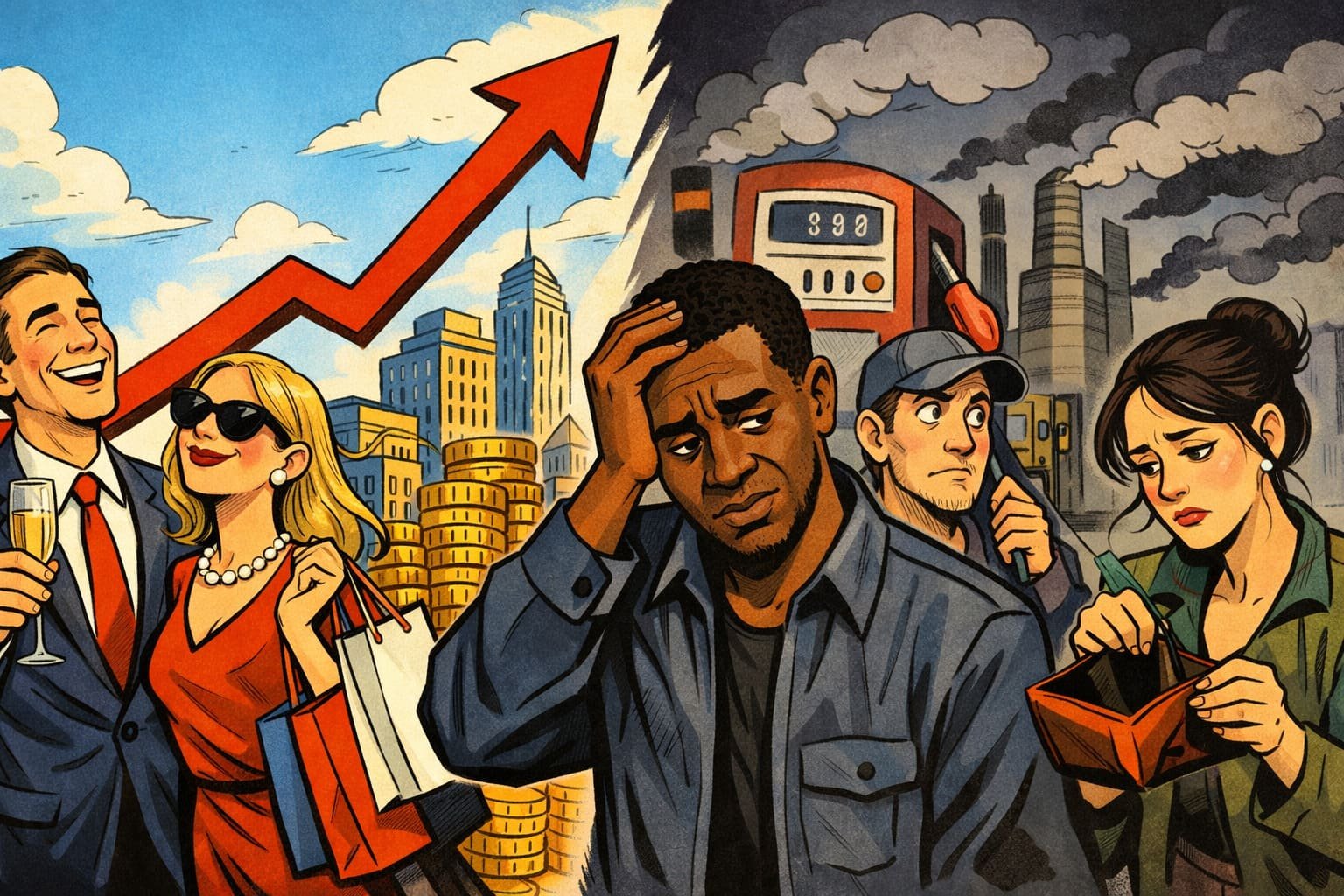
Applause filled a government auditorium as fresh economic figures flashed across giant screens. Headlines celebrated expanding output, rising investment, and another quarter of respectable growth. Outside those polished walls, commuters counted coins before boarding buses, shoppers returned groceries to supermarket shelves, and young graduates quietly refreshed job listings that never seemed to multiply as quickly as the statistics. Economic success had arrived on paper. Everyday life remained unconvinced.
Gross domestic product is one of the world’s most watched economic indicators because it measures the value of goods and services produced across an economy. Yet GDP was never designed to measure personal wellbeing, financial security, or quality of life. A nation can report stronger growth while households struggle with rising housing costs, expensive healthcare, stagnant wages, or declining purchasing power. Economic expansion answers an important question. It does not answer every important question.
Ireland provides an interesting illustration of this disconnect. Its impressive economic growth has often reflected multinational corporate activity that boosts national output without fully representing everyday living conditions experienced by residents. Sofia owned a neighborhood café where tables remained busy from morning until evening. Sales appeared healthy from a distance, yet higher electricity bills, food costs, and payroll expenses steadily narrowed profits. Customers kept arriving, but fewer ordered dessert, quietly revealing pressures that official growth figures rarely captured.
Corporate accounting recognizes a similar distinction between revenue and financial health. Higher sales alone do not guarantee stronger profitability if expenses rise even faster. Economies behave much the same way. National output can expand while inflation, inequality, or debt reduce the practical benefits reaching ordinary households. Costco has consistently attracted shoppers during periods of economic pressure because consumers increasingly prioritize value over convenience. That shift demonstrates how changing household finances reshape business performance long before economic headlines acknowledge deeper consumer stress.
Behavioral economics reminds us that lived experience often influences confidence more than statistical reports. Families judge the economy through grocery receipts, rent payments, school fees, and monthly savings rather than macroeconomic indicators. Teacher Miriam recently celebrated receiving a long-awaited salary increase after years of patient service. Relief quickly faded when rising household expenses consumed nearly every additional shilling before the month ended. Her income had grown. Her financial freedom had not.
Evening trains carried thousands home beneath city skylines glowing with symbols of national progress and corporate success. Economic growth remains essential because prosperity cannot exist without expanding opportunity, investment, and productive enterprise. Still, healthy economies ultimately earn their legitimacy through ordinary lives, not extraordinary charts. When stronger numbers fail to improve daily experience, confidence quietly begins separating from celebration. Growth becomes truly meaningful only when families feel prosperity long before they read about it.
