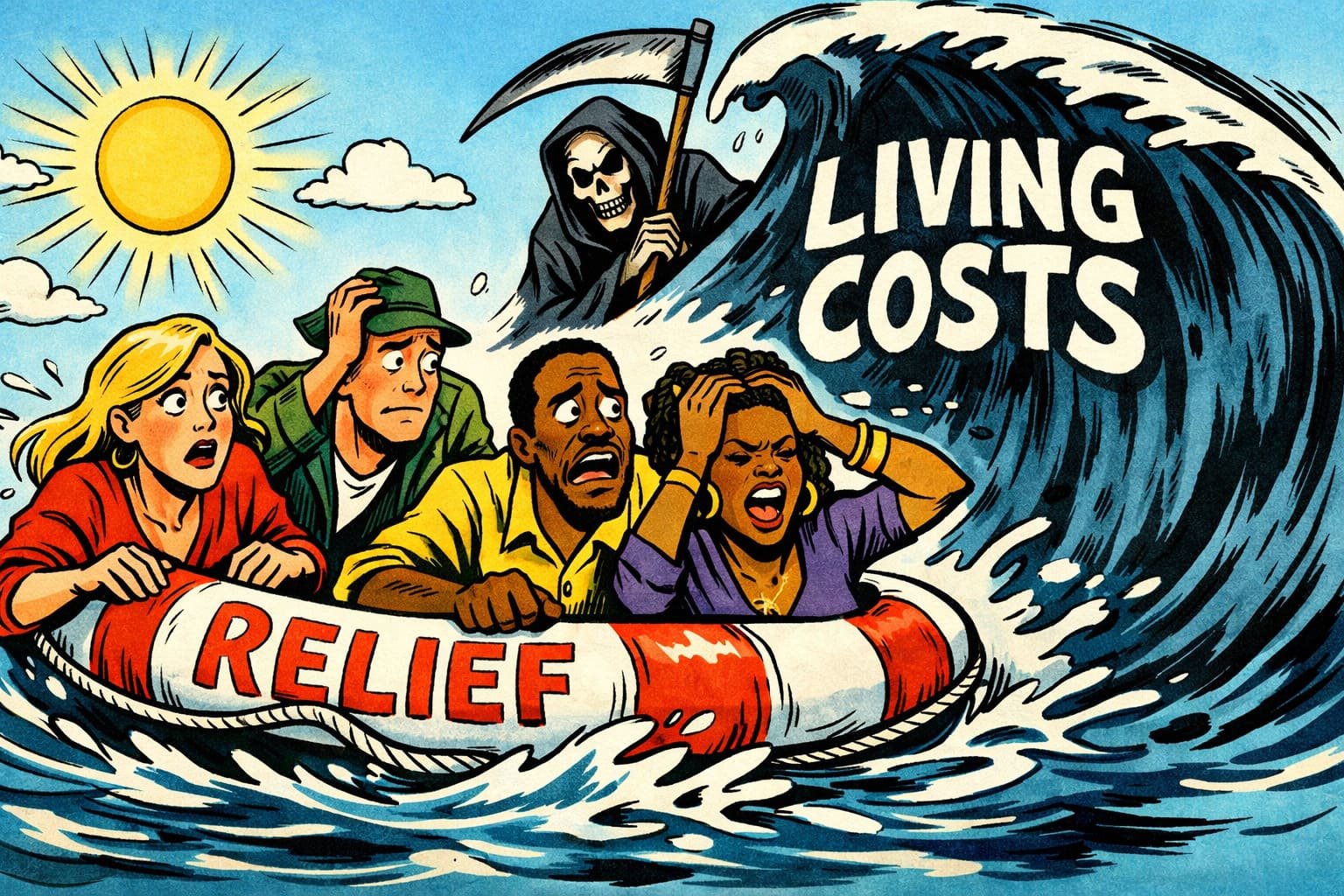
A family restaurant fills with laughter while menus pass from hand to hand, yet every pause lands on a familiar line. Prices again. Even after inflation begins slowing, household budgets often refuse to recover with equal speed because rent, groceries, insurance, transport, and utilities rarely return to earlier levels. That lingering pressure creates a strange economic illusion. Headlines celebrate improvement while ordinary families continue wondering why payday still feels painfully short.
Living costs have remarkable staying power because prices seldom move backward across an entire economy. Businesses facing higher wages, financing costs, and supplier expenses rarely reduce prices once customers have accepted increases. Instead, they compete through promotions, product redesigns, or efficiency improvements while maintaining higher price levels. Housing markets illustrate this pattern clearly. Mortgage rates, construction costs, and limited housing supply frequently keep accommodation expensive long after broader inflation begins easing, leaving households with little financial breathing room.
Corporate finance reflects this tension with surprising clarity. Executives may celebrate stabilizing costs, yet consumers burdened by expensive essentials often reduce discretionary spending. Restaurants experience fewer impulse visits. Retailers notice shoppers switching toward private-label brands. Tourism companies encounter travelers booking shorter holidays instead of abandoning trips entirely. Walmart and Costco have repeatedly adapted by emphasizing value, efficient inventory management, and disciplined pricing because financially cautious customers reward businesses that stretch every dollar without sacrificing quality.
Priya managed a neighborhood furniture store known for handcrafted dining tables. Customer interest remained strong, but completed purchases slowed because rising rent and utility bills consumed disposable income before families reached her showroom. Rather than waiting for demand to recover, she introduced flexible payment options and smaller multifunctional furniture designed for apartments. Sales gradually improved because the business adapted to changing financial realities instead of hoping yesterday’s market would quietly return. Resilience became a commercial advantage.
Economists often distinguish between inflation slowing and affordability improving because those outcomes are rarely identical. Central banks may succeed in controlling broad price growth, yet living standards recover only when wages, productivity, and purchasing power strengthen together over time. Accountants, investors, and policymakers therefore watch household spending patterns closely. Consumer confidence becomes an early signal of economic health because confidence influences borrowing, investment, hiring decisions, and future business expansion long before official reports confirm broader trends.
Evening settles across apartment windows where careful budgeting quietly replaces carefree spending. Grocery lists become shorter, vacations grow closer to home, and conversations about money carry less embarrassment than determination. Living costs leave marks that outlast inflation charts because financial habits change after prolonged pressure. Recovery rarely arrives with fireworks or triumphant speeches. It appears one confident purchase, one rebuilt savings account, and one hopeful decision at a time, reminding every household that resilience often grows long before prosperity returns.
