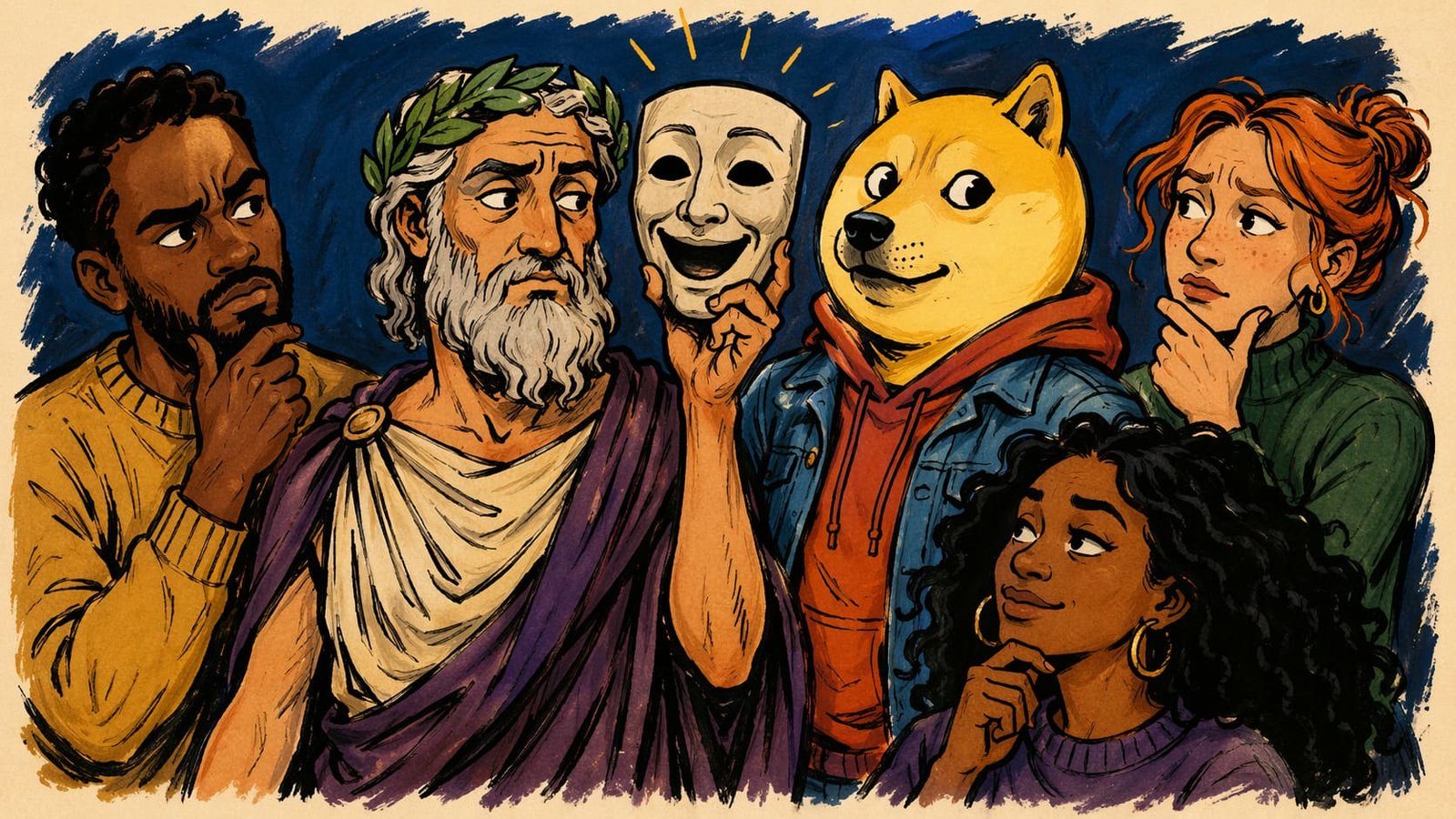
A flicker of laughter moves through a crowded feed, quick and almost disposable. A caption lands, an image loops, and for a second it feels like nothing more than a passing joke. Yet the repetition begins. The same format appears again, slightly altered, then again, then everywhere. What started as humor quietly evolves into language. Meaning shifts, not through debate, but through imitation. By the time anyone notices, the joke has already rewritten how something is understood.
Memes move faster than traditional ideas because they do not wait for permission. They are built to travel, to adapt, to mutate. Each version carries a fragment of the original, yet introduces a subtle change. Over time, these changes accumulate, reshaping the core message. What begins as satire can become belief. What begins as critique can transform into endorsement. The speed of this process makes it difficult to track, let alone control.
A social media strategist named Leila once noticed this while managing a brand account. A meme format that initially mocked corporate jargon began circulating widely. Soon, the same format was being used by companies themselves, repurposed to appear self-aware. The tone shifted. What was once a critique of corporate language became part of its evolution. Leila realized that the meme had not just reflected culture. It had been absorbed by it, altering the very thing it once challenged.
This is how meaning changes costume. Memes strip ideas down to their most portable form, then dress them in humor, irony, or absurdity. The simplicity makes them accessible. The humor makes them shareable. Together, they create a powerful vehicle for ideas to spread. Unlike traditional narratives, memes do not require sustained attention. They operate in flashes, yet their cumulative impact can be profound.
A small design studio experienced this shift in a surprising way. The team, led by a creative director named Jonas, began using meme references in client presentations to signal cultural awareness. Clients responded positively, seeing the approach as modern and relatable. Over time, the references became expected. What started as a playful addition turned into a standard practice. The meme had moved from the margins into the center of professional communication.
Anthropologists might describe memes as modern folklore. They carry shared experiences, encode social commentary, and evolve through collective participation. The difference lies in speed and scale. Traditional folklore changed slowly, shaped by generations. Memes transform in hours, sometimes minutes, reflecting and reshaping culture in real time. This acceleration compresses the cycle of meaning-making, making it more fluid and less stable.
A content creator named Priyansh once built an entire following around a single meme format. At first, it was purely comedic, highlighting everyday frustrations. As his audience grew, the tone shifted. The same format began to address more serious topics, blending humor with critique. Followers engaged deeply, using the comments to share their own interpretations. The meme became a space for dialogue, not just laughter. Its meaning expanded beyond its original intent.
This fluidity creates both opportunity and ambiguity. Memes can democratize expression, allowing ideas to spread without traditional gatekeepers. They can also blur the line between irony and sincerity. A statement presented as a joke can be interpreted as truth. A serious idea can be dismissed as humor. This ambiguity makes memes powerful but unpredictable. They can unite and divide, clarify and confuse, often at the same time.
A marketing team once learned this during a campaign that relied heavily on meme culture. The initial response was enthusiastic. Engagement surged, and the brand felt more connected to its audience. Then a shift occurred. A variation of the meme emerged that reframed the campaign in a critical light. The same format that had driven success now carried a different message. The team struggled to respond, realizing that once a meme is released, its evolution is no longer controlled by its originators.
The deeper implication is that memes are not just vehicles for content. They are tools for shaping perception. By framing ideas in specific ways, they influence how those ideas are understood. The repetition reinforces certain interpretations, making them feel familiar, even obvious. Over time, this can alter collective understanding in subtle but significant ways.
A professor of media studies once asked students to trace the evolution of a popular meme. What began as a simple joke had, through countless iterations, come to represent a broader commentary on work culture. The students were surprised by how much meaning had accumulated in such a short time. The exercise revealed how easily ideas can shift when they are carried through formats designed for rapid change.
Somewhere, a new meme is being created. It starts as a quick observation, a moment of humor that feels timely. It will be shared, adapted, reshaped. Each iteration will add a layer, altering the original meaning in small ways. The process will continue until the meme becomes something else entirely, a symbol of an idea that may no longer resemble its origin.
The next joke spreads, carrying with it a quiet transformation of meaning, a question lingers beneath the laughter: are you sharing a meme, or helping rewrite what it means?
