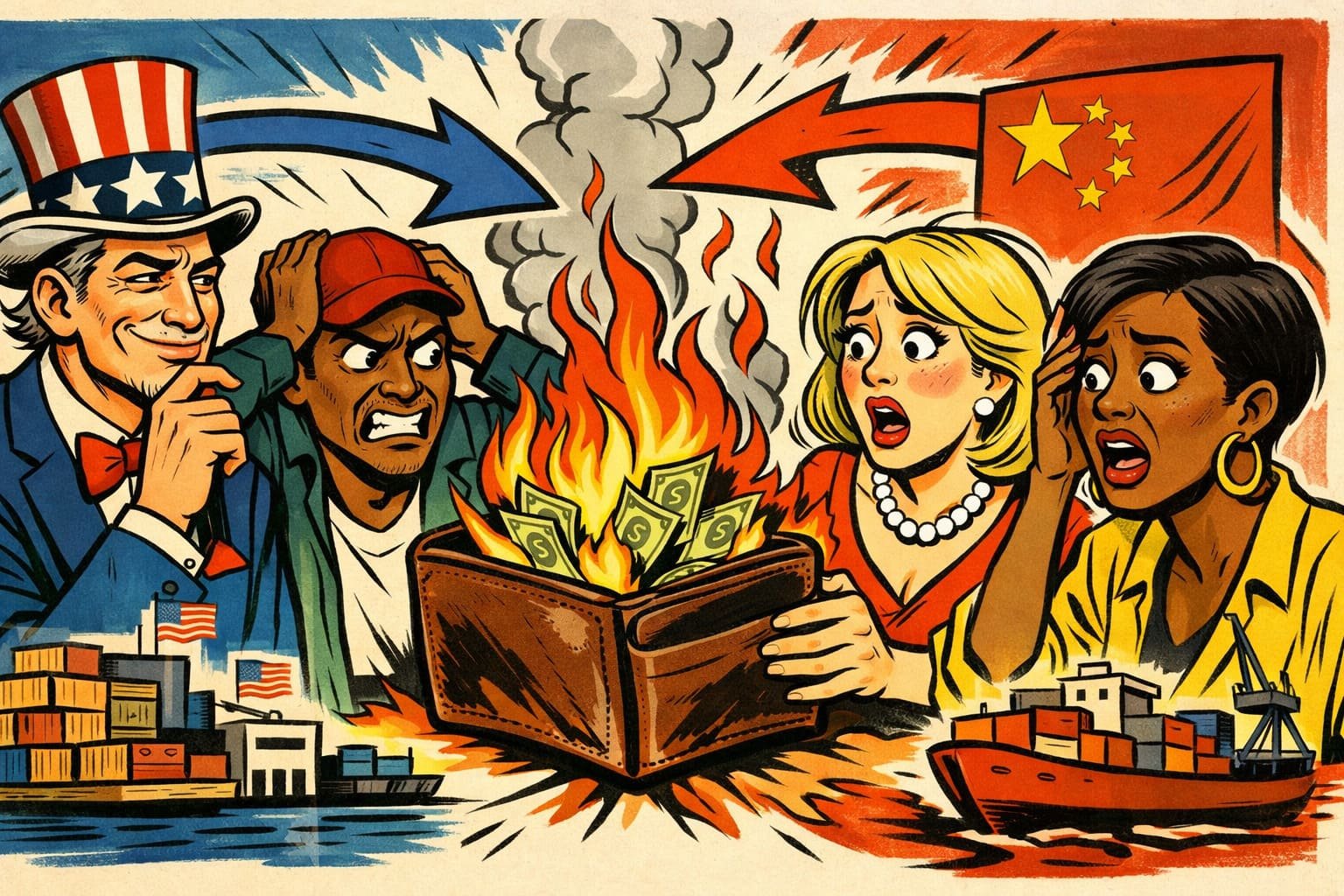
Shipping containers stand in perfect rows beneath towering cranes, painted in bright colors that suggest effortless global commerce. From a distance, trade resembles a carefully choreographed dance where goods glide across oceans without friction. Reality is far less graceful. Every tariff quietly changes the choreography, adding hidden costs that ripple through factories, retailers, and family budgets before most shoppers ever notice. Protectionism often arrives wrapped in patriotic language, yet its financial consequences rarely remain confined within national borders.
Tariffs are designed to make imported goods more expensive, encouraging domestic production and protecting local industries from foreign competition. That objective can succeed under specific conditions, particularly when strategic industries require time to develop or unfair trade practices distort competition. Yet tariffs also raise input costs for businesses relying on imported materials and components. Those additional expenses rarely disappear. Manufacturers absorb part of the burden, suppliers renegotiate contracts, and consumers ultimately encounter higher prices across countless everyday products.
Recent trade disputes demonstrated how interconnected modern supply chains have become. Manufacturers ranging from automotive companies to consumer electronics firms reassessed sourcing strategies after tariffs altered production economics. Apple diversified portions of its manufacturing footprint beyond China, while firms across industrial sectors explored suppliers in Vietnam, India, and Mexico to reduce geopolitical and financial exposure. Those shifts demanded years of planning and significant investment because global supply chains cannot simply relocate overnight. Every strategic adjustment carried accounting consequences long before operational benefits appeared.
Carlos operated a family furniture workshop that depended on imported fittings unavailable from local suppliers. Each new shipment arrived with slightly higher costs, forcing uncomfortable conversations with customers who believed the business had simply become more expensive. Raising prices risked losing loyal buyers. Absorbing additional costs steadily reduced already modest profits. Neither option felt sustainable. His greatest challenge was no longer craftsmanship, but explaining why forces thousands of miles away had quietly entered his small showroom.
Financial statements reveal why tariffs deserve careful scrutiny beyond political debates. Higher import costs influence inventory valuation, profit margins, capital investment decisions, and long-term competitive positioning. Businesses increasingly diversify suppliers not only to reduce expenses but also to strengthen resilience against future policy shifts. Economists continue debating whether strategic protection can strengthen national industries over time. The answer depends less on tariffs alone than on whether protected industries innovate, improve productivity, and eventually compete without permanent policy support.
Cargo ships continue crossing oceans beneath vast horizons, carrying far more than steel, machinery, clothing, or electronics. They transport choices about openness, resilience, and economic priorities that shape prosperity for generations. Trade has never been free because every exchange carries costs somewhere along the journey. The real question is who ultimately pays them. Before applauding or condemning any tariff, look beyond the customs checkpoint and follow the invoice until it reaches the checkout counter, because that is where economic policy finally becomes personal.
