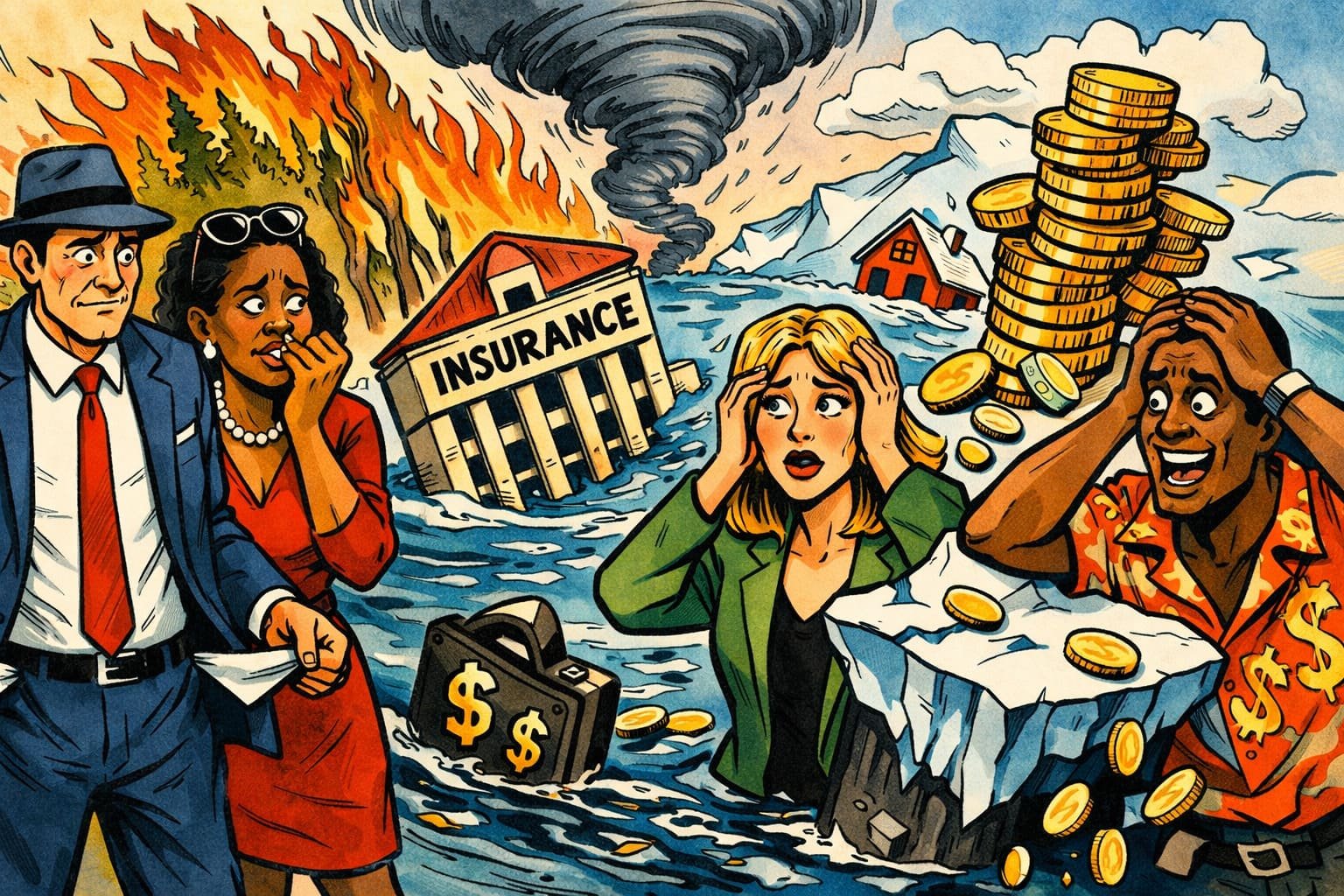
Rain arrived without ceremony. Claims did not. Across boardrooms, catastrophe maps began to resemble financial statements, with every floodplain and wildfire corridor quietly rewriting assumptions that once felt permanent. Insurance has always sold confidence before compensation, yet confidence becomes expensive when nature refuses predictable patterns. That tension now sits at the center of capital markets, where insurers are discovering that climate risk is no longer merely an underwriting concern. It has become a balance-sheet problem that reaches investors, regulators, reinsurers, homeowners, and governments alike.
Insurance works because uncertainty is shared across many policyholders. Climate change challenges that foundation by making losses more concentrated, correlated, and difficult to forecast. Events that were once treated as exceptional increasingly arrive in clusters, forcing insurers to hold more capital while paying larger claims. Reinsurance costs rise in response, premiums follow, and affordability becomes another casualty. Warren Buffett has often remarked that insurance depends on disciplined pricing. Discipline becomes much harder when yesterday’s probabilities lose their relevance before tomorrow’s policies are written.
Consider the experience of insurers operating in regions repeatedly struck by hurricanes or wildfires. Several major carriers have limited new policies or withdrawn from particularly exposed markets after consecutive years of elevated catastrophe losses. Residents often assume competition disappeared because companies became greedy. Reality is less dramatic and far more uncomfortable. Capital has a memory. When repeated losses consume reserves faster than investment income can rebuild them, preserving solvency becomes more important than pursuing market share, even when demand remains exceptionally strong.
A small commercial property owner once described insurance renewal as “negotiating with the weather.” The phrase sounded humorous until renewal quotes arrived at almost double previous premiums. Similar conversations echo through farming communities, manufacturers, and hospitality businesses. Every higher premium changes investment decisions, expansion plans, and hiring expectations. Climate risk quietly migrates into accounting decisions, borrowing costs, property valuations, and corporate strategy. Financial statements rarely mention storms directly, yet their fingerprints appear almost everywhere once attention shifts from headlines toward cash flows.
This evolution is also reshaping capital allocation. Investors increasingly evaluate insurers by examining catastrophe exposure, reserve adequacy, and portfolio resilience rather than simply focusing on premium growth. Firms investing heavily in advanced climate modelling, geographic diversification, and disciplined underwriting often inspire greater confidence during volatile periods. Those relying on historical averages risk discovering that familiar spreadsheets cannot fully explain unfamiliar weather. Markets reward preparation long before disasters arrive, because confidence itself has become a valuable financial asset.
Crowded emergency shelters eventually empty, damaged buildings are repaired, and markets reopen, yet another quieter reconstruction continues inside financial institutions where assumptions receive careful examination. Insurance has never promised to eliminate risk. It promises to distribute it wisely. Climate pressure reminds every participant that capital is finite, resilience demands constant adaptation, and yesterday’s certainty cannot insure tomorrow’s uncertainty. Perhaps the most valuable policy any institution can purchase now is the willingness to rethink risk before nature insists upon the lesson.
