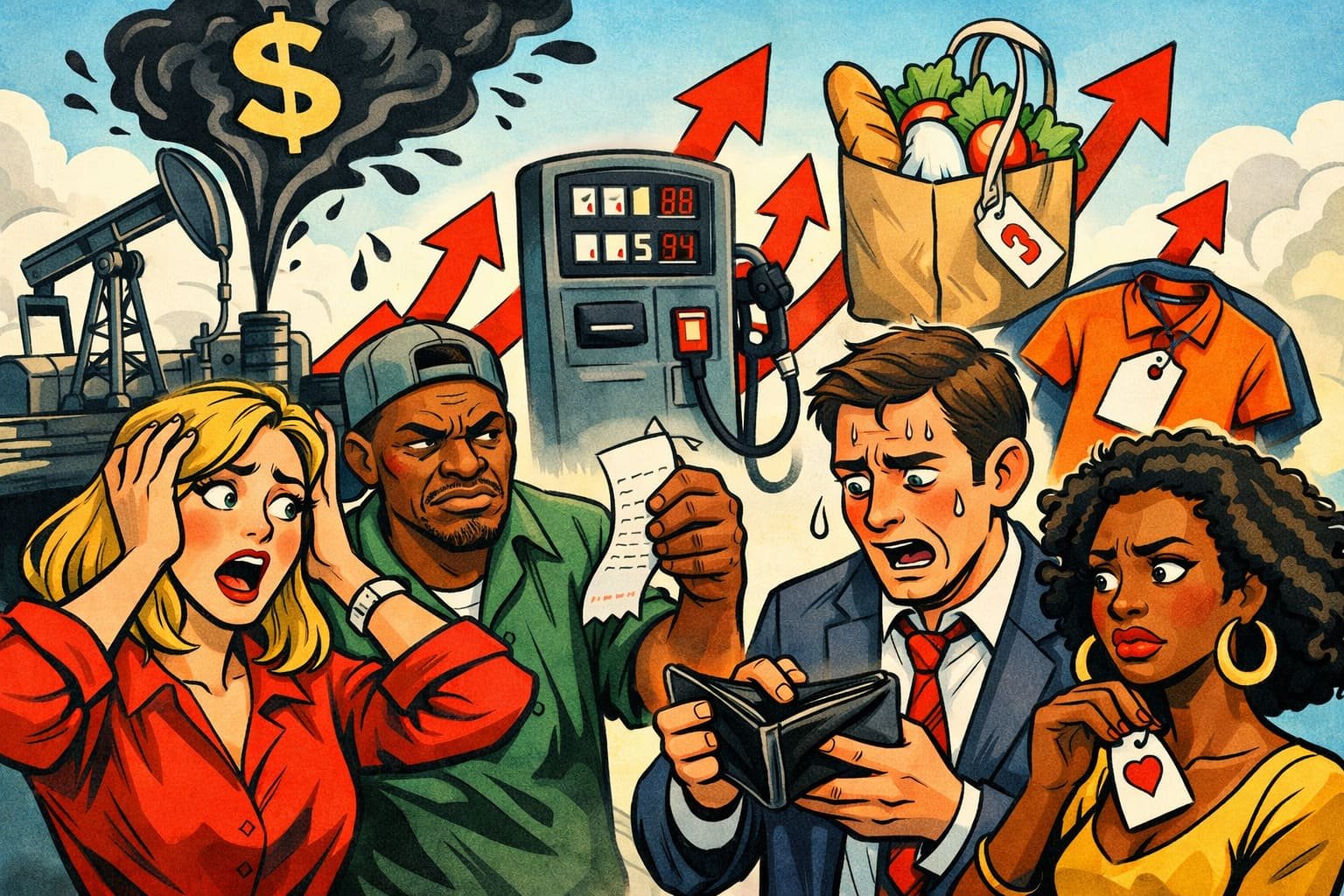
Flames dance above distant refinery towers while cargo ships wait patiently beyond crowded harbors, their engines humming against restless waves. Few people notice those scenes until fuel prices leap without warning, transforming ordinary routines into expensive calculations. An oil shock never remains trapped inside pipelines or tankers. It travels through factories, supermarkets, airlines, farms, construction sites, and household budgets, quietly rewriting financial assumptions across entire economies before most people realize what has changed.
Energy sits near the beginning of almost every production process, making oil one of the world’s most influential economic inputs. When crude prices rise sharply because of geopolitical conflict, supply disruptions, or production cuts, transportation becomes more expensive almost immediately. Manufacturers absorb higher operating costs, farmers spend more moving crops, retailers pay more for deliveries, and consumers encounter rising prices across products that seem completely unrelated to energy. Oil rarely acts alone. Its influence spreads through nearly every commercial transaction.
Financial executives understand this chain reaction better than anyone balancing corporate accounts. Rising fuel expenses compress profit margins unless businesses improve efficiency or pass costs to customers through higher prices. Airlines offer a familiar example. Southwest Airlines earned recognition for carefully managing fuel price exposure through hedging strategies during volatile periods, while competitors often struggled with rapidly changing operating costs. Logistics companies also redesign delivery routes, modernize vehicle fleets, and renegotiate supplier agreements because disciplined cost management becomes essential when energy prices remain unpredictable.
Jonas operated a regional food distribution business serving independent grocery stores across several towns. Every delivery truck leaving his warehouse consumed more fuel than the previous month, quietly shrinking profits despite stable customer demand. Rather than raising prices immediately, he invested in route optimization software, consolidated deliveries, and scheduled shipments more efficiently. Customers barely noticed operational changes, yet the company preserved financial stability because careful planning proved more valuable than quick reactions. Every saved kilometer protected long-term competitiveness.
Oil shocks also influence monetary policy in uncomfortable ways. Rising energy costs often contribute to broader inflation, placing central banks in a difficult position. Higher interest rates may reduce spending and slow inflation, yet they cannot produce additional barrels of crude or reopen disrupted supply routes. Economists therefore distinguish between demand-driven inflation and supply-driven inflation because each requires different policy responses. Accounting professionals, investors, and lenders closely monitor energy markets since commodity volatility frequently alters business valuations, investment forecasts, and future cash flow expectations.
Dark clouds drift above illuminated highways where trucks continue carrying food, medicine, machinery, and countless ordinary necessities toward waiting communities. Every journey depends upon decisions stretching far beyond local neighborhoods, connecting global energy markets with everyday financial choices. Oil shocks reveal how tightly modern economies remain woven together despite remarkable technological progress. Energy prices may begin with distant events, yet their final destination often arrives quietly inside household budgets, reminding every business that resilience starts long before the next crisis appears.
