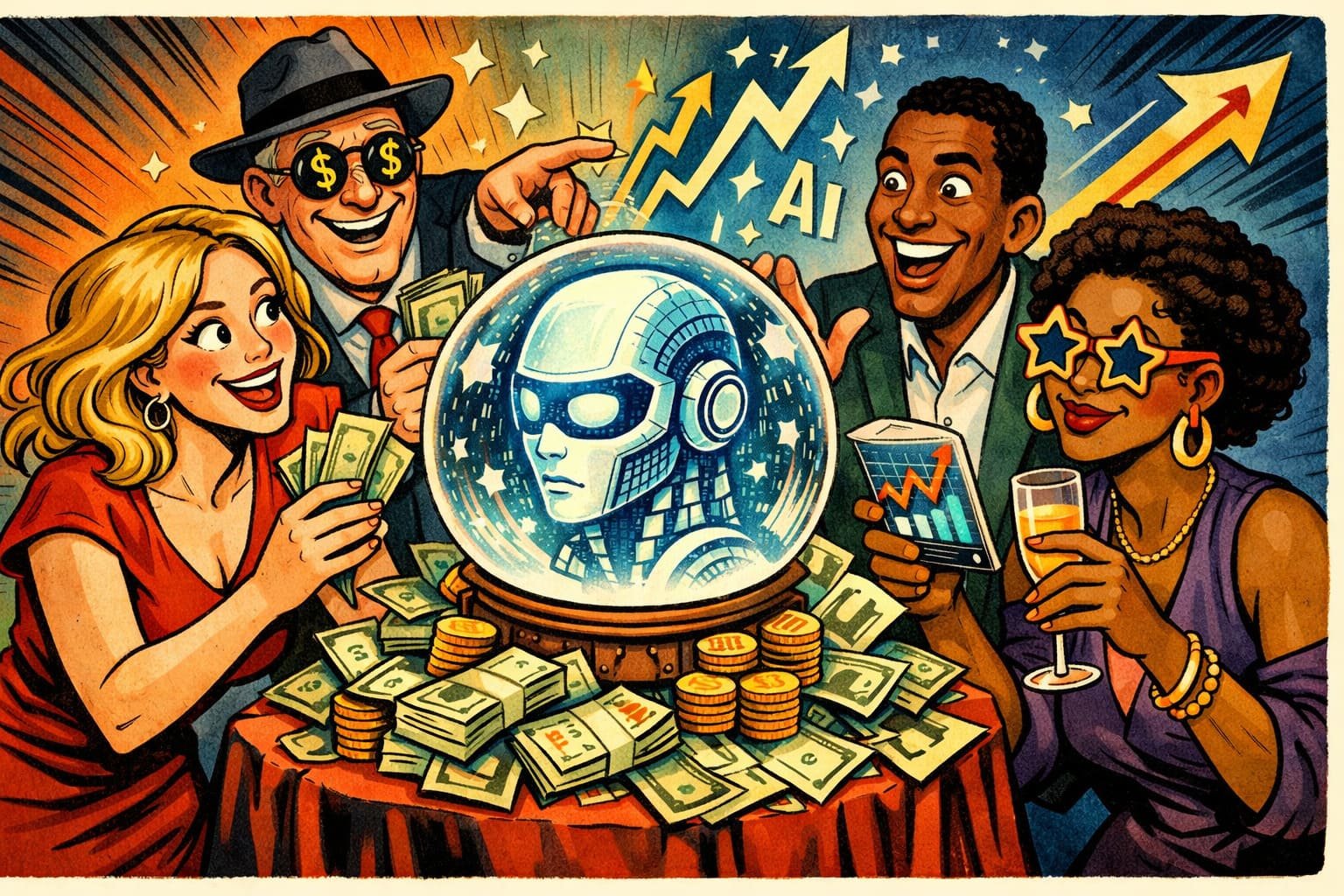
A trading floor can feel strangely theatrical when excitement outruns evidence. Screens flash emerald, commentators celebrate another astonishing valuation, and investors lean forward as though watching a magician reveal one final impossible trick. Nobody wants to blink first. That peculiar atmosphere has become familiar as artificial intelligence dominates financial headlines, pushing company valuations into territory where expectation often outweighs measurable business performance, leaving markets balancing between remarkable innovation and dangerous imagination.
Financial markets have always rewarded compelling stories before rewarding predictable earnings. Railroads, automobiles, personal computers, internet platforms, and renewable energy each inspired moments when capital raced ahead of commercial reality. Artificial intelligence follows that long tradition, yet with extraordinary intensity because investors struggle to estimate how large future markets might become. Uncertainty creates possibility. Possibility attracts money faster than spreadsheets ever could, especially when executives promise transformational productivity while analysts compete to justify increasingly ambitious assumptions about future cash flows.
Consider how Nvidia transformed from a respected chip designer into a company viewed as essential infrastructure for modern artificial intelligence. Investors rewarded extraordinary revenue growth with extraordinary expectations. Another illustration emerged through C3.ai, where enthusiasm repeatedly accelerated far beyond operating fundamentals before market sentiment corrected expectations. Those contrasting experiences reveal an uncomfortable lesson. Markets rarely misprice innovation because technology lacks value. They misprice uncertainty because nobody truly knows where sustainable profits will eventually settle, inviting confidence to outrun accounting discipline.
A portfolio manager named Elias once rejected an investment committee’s favorite artificial intelligence startup despite relentless pressure from colleagues. Forecast models looked spectacular, customer enthusiasm sounded genuine, yet recurring revenues remained fragile beneath polished presentations. Months later, venture funding tightened and expansion slowed dramatically, validating cautious skepticism. Warren Buffett often reminds investors that price represents what somebody pays while value reflects what somebody receives, a distinction becoming increasingly blurred whenever optimism becomes mistaken for evidence.
Accounting quietly serves as reality’s referee even while headlines celebrate astonishing market capitalizations. Revenue quality, operating margins, capital expenditure requirements, depreciation schedules, and cash conversion gradually expose whether exciting narratives rest upon durable economics or temporary enthusiasm. Those measurements rarely create viral conversations. They matter anyway. Investors who ignore balance sheets during euphoric periods often rediscover their importance after refinancing costs rise, competitive pressures intensify, or anticipated demand arrives far slower than optimistic forecasts originally suggested.
Storm clouds rarely announce themselves with dramatic thunder. Instead, confidence fades through tiny revisions, cautious earnings calls, hesitant lenders, and investors asking harder questions than yesterday. Artificial intelligence will undoubtedly reshape industries, yet revolutionary technologies have never suspended financial gravity or eliminated valuation discipline. Excitement remains valuable because progress depends upon imagination. Wisdom begins when imagination finally shakes hands with evidence. Before chasing another dazzling headline, ask whether genuine value or irresistible illusion deserves today’s capital.
