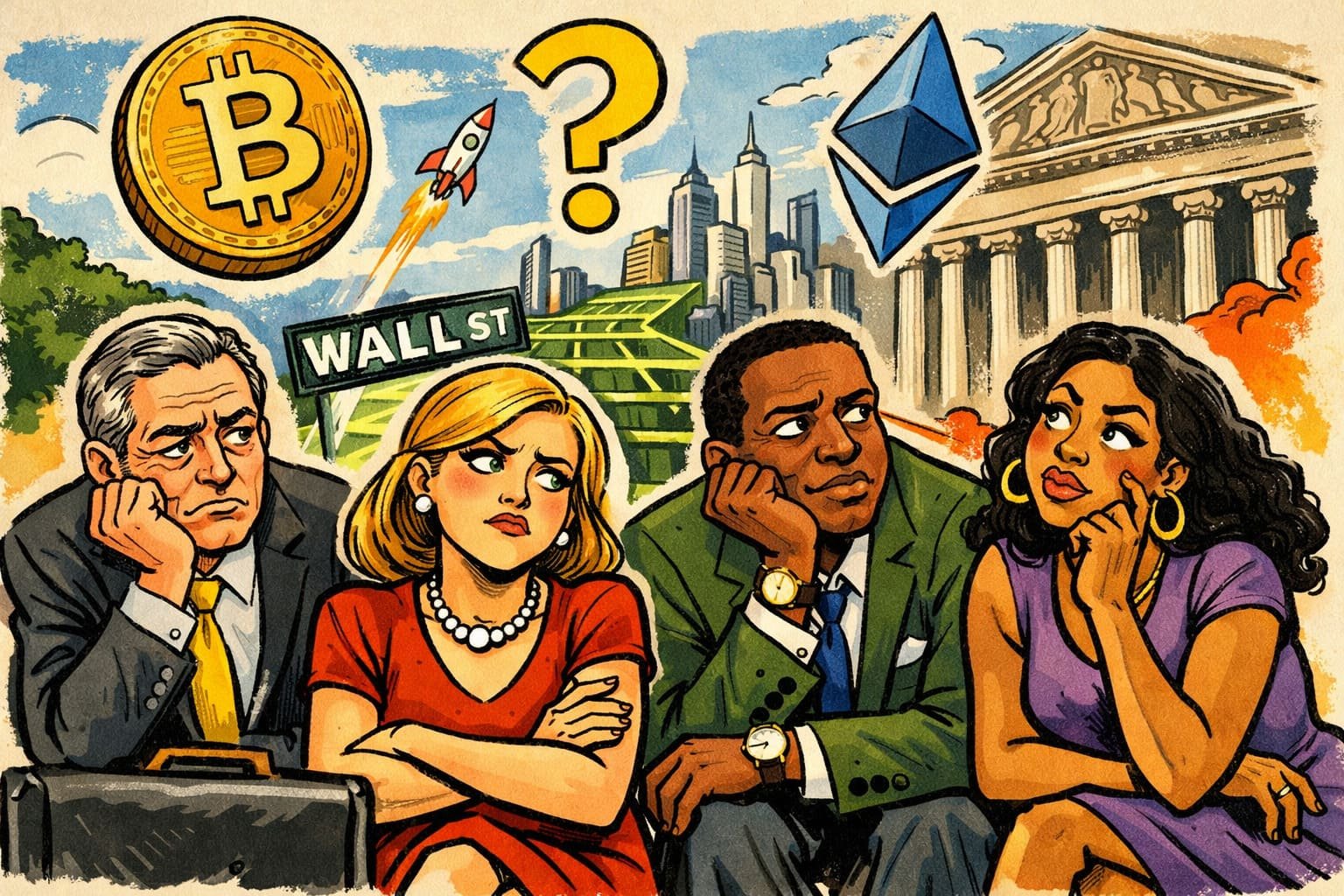
A trading floor rarely sounds dramatic from outside. Screens flicker, coffee cools unnoticed, and conversations flatten into clipped whispers, yet an invisible tension hangs over every decision because nobody knows which rulebook tomorrow will bring. That uncertainty has become one of cryptocurrency’s greatest forces. Prices rise, venture funding returns, developers keep building, but the institutions controlling vast pools of capital continue waiting for one question to receive a durable answer: what exactly will governments allow?
Markets dislike surprises far more than they dislike bad news. Clear regulation can be expensive, restrictive, or politically unpopular, yet investors often welcome certainty because capital can finally calculate risk instead of guessing it. That explains why cryptocurrency has reached an unusual moment. Technology keeps advancing while regulation struggles to keep pace. Banks, pension funds, and insurance companies possess enormous financial firepower, but compliance departments refuse to move before policymakers define where digital assets belong within existing financial systems.
Consider BlackRock’s entrance into digital assets. Its growing participation signaled confidence that institutional demand exists, yet every expansion still travels alongside legal reviews and regulatory interpretation. A smaller fintech founder named Mara experienced the same dilemma from another angle. Her payments startup secured enthusiastic customers using blockchain infrastructure, only for potential banking partners to hesitate during final negotiations because compliance teams feared future rule changes. Business momentum existed. Regulatory confidence did not. One missing policy framework became more influential than every successful product demonstration.
History suggests this pattern is hardly unique. Financial innovation almost always outruns regulation before eventually settling into a workable balance. Exchange traded funds, electronic trading platforms, peer to peer lending, and even online banking all experienced periods when investors hesitated because legal certainty lagged technological possibility. Economist Hyman Minsky argued that financial systems evolve through cycles where innovation repeatedly stretches institutional boundaries. Cryptocurrency simply represents another chapter, though perhaps a faster and more globally visible one because software ignores national borders while regulation rarely does.
Critics often describe regulation as a brake on innovation. That picture feels incomplete. Strong financial rules frequently act more like bridges than barriers, allowing cautious capital to cross rivers that speculation alone cannot. Wall Street’s largest investors are rarely searching for excitement. They seek predictability, audit trails, accounting standards, tax clarity, custody protections, and governance structures capable of surviving political change. Those requirements may appear boring beside viral token launches, yet boring infrastructure often determines whether revolutionary technologies become permanent industries.
Across another trading desk, monitors continue flashing green and red while conversations remain strangely restrained. Traders understand that markets often move before headlines explain why. Policymakers, meanwhile, are writing decisions that may shape digital finance for decades without ever touching a trading terminal themselves. Gridlock feels frustrating because opportunity appears so close, almost visible through the fog. Yet patience has always been another form of investment. The biggest winners may not be those who moved first, but those who recognized precisely when uncertainty finally stopped being the market’s most valuable asset.
