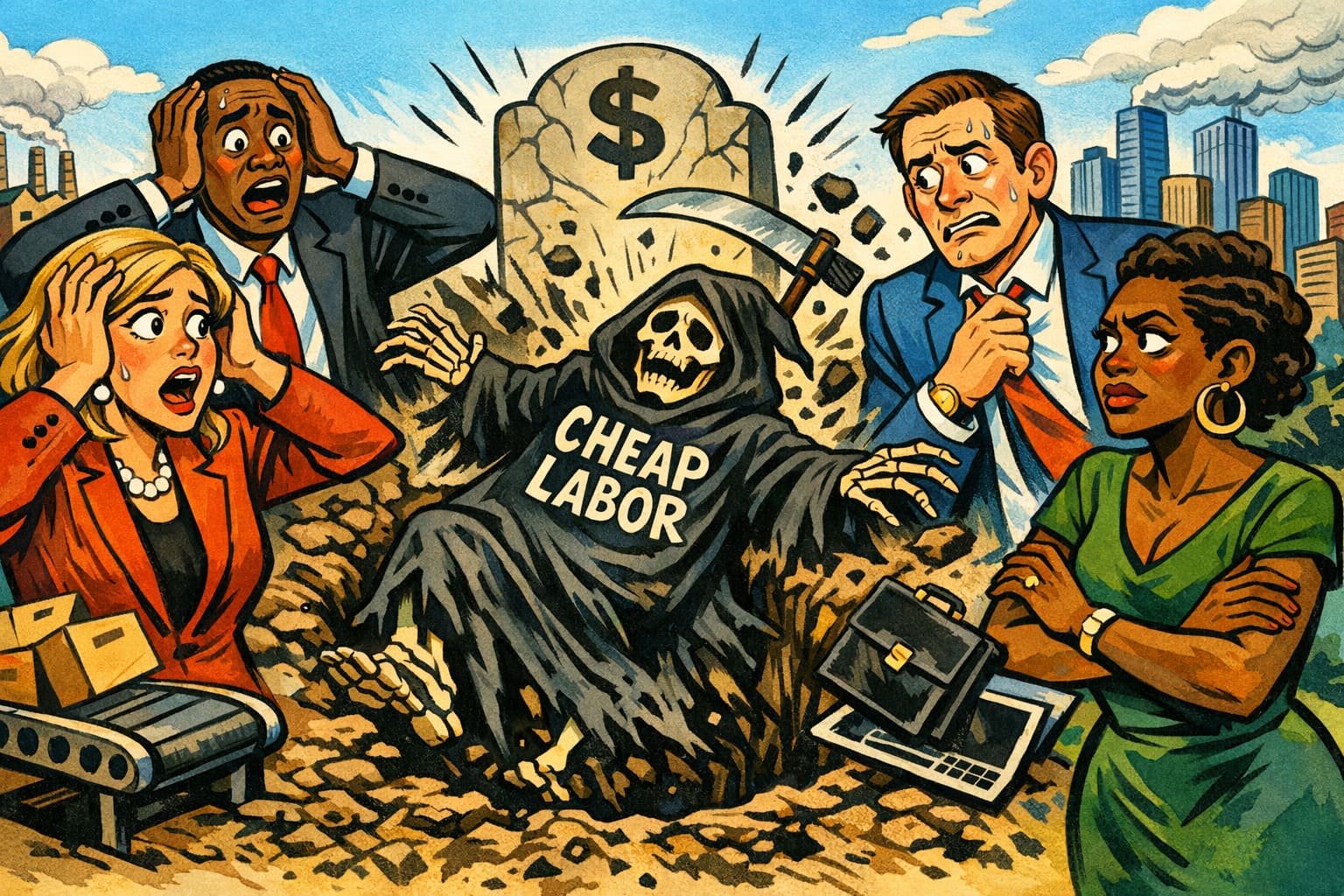
Empty sewing stations tell stories long before quarterly reports do. A buyer walks through a factory where familiar rhythms have changed, hearing fewer hurried footsteps and more automated machinery humming with quiet confidence. Price tags still hang from finished products, but every number now carries years of shifting economics. Businesses built on endless supplies of inexpensive labor suddenly confront an uncomfortable reality. Cost advantages once treated as permanent have begun dissolving, forcing leaders to question assumptions that shaped entire industries for generations.
Corporate strategy often treats labor as another variable inside a spreadsheet, yet labor markets evolve because societies evolve. Better education, urbanization, demographic shifts, and rising living standards naturally increase wage expectations. That progression challenges business models relying almost entirely on low production costs. Profitability can no longer depend exclusively on finding cheaper workers somewhere else. Competitive advantage increasingly comes from innovation, operational excellence, product differentiation, and stronger customer relationships that competitors struggle to replicate regardless of payroll expenses.
Nike offers an instructive example. Manufacturing partners across Asia gradually encountered higher wages as local economies matured, encouraging greater investment in productivity improvements and diversified sourcing rather than endless relocation. A smaller illustration emerged through Mateo, who operated a regional packaging company supplying food producers. Payroll costs climbed each year, leaving him frustrated until redesigned production workflows reduced waste and shortened delivery times. Customers valued reliability more than tiny price differences, allowing healthier margins despite increased compensation across his workforce.
Financial statements reveal why this shift matters. Rising labor costs pressure gross margins immediately, yet businesses responding through efficiency rather than panic often strengthen long-term resilience. Costco has consistently demonstrated that paying employees better can improve retention, customer service, and operational stability. Lower turnover reduces recruitment expenses while experienced staff contribute higher productivity. Accounting records eventually capture these gains, although impatient investors sometimes focus only on near-term payroll increases instead of broader economic value creation unfolding underneath.
Another lesson surfaced inside a growing furniture workshop owned by Hana. Competitors complained endlessly about expensive craftsmen and shrinking profits, chasing cheaper suppliers across multiple countries. She made a different choice. Premium craftsmanship became her marketing strategy rather than an unavoidable expense. Customers waited months because quality justified patience. Stronger pricing power replaced dependence on bargain wages, proving that businesses often escape cost pressure by creating products people genuinely struggle to replace rather than racing toward another discount.
Lanterns glow outside a manufacturing district where generations once measured success by producing more for less. That formula built remarkable prosperity, yet every economic era eventually rewrites its own rules. Cheap labor was never a permanent competitive advantage. It was simply a temporary chapter inside a much longer commercial story. Organizations embracing creativity, productivity, and human capability will discover fresh opportunities while others continue searching for yesterday’s disappearing bargains. Markets reward adaptation long after nostalgia stops paying dividends.
