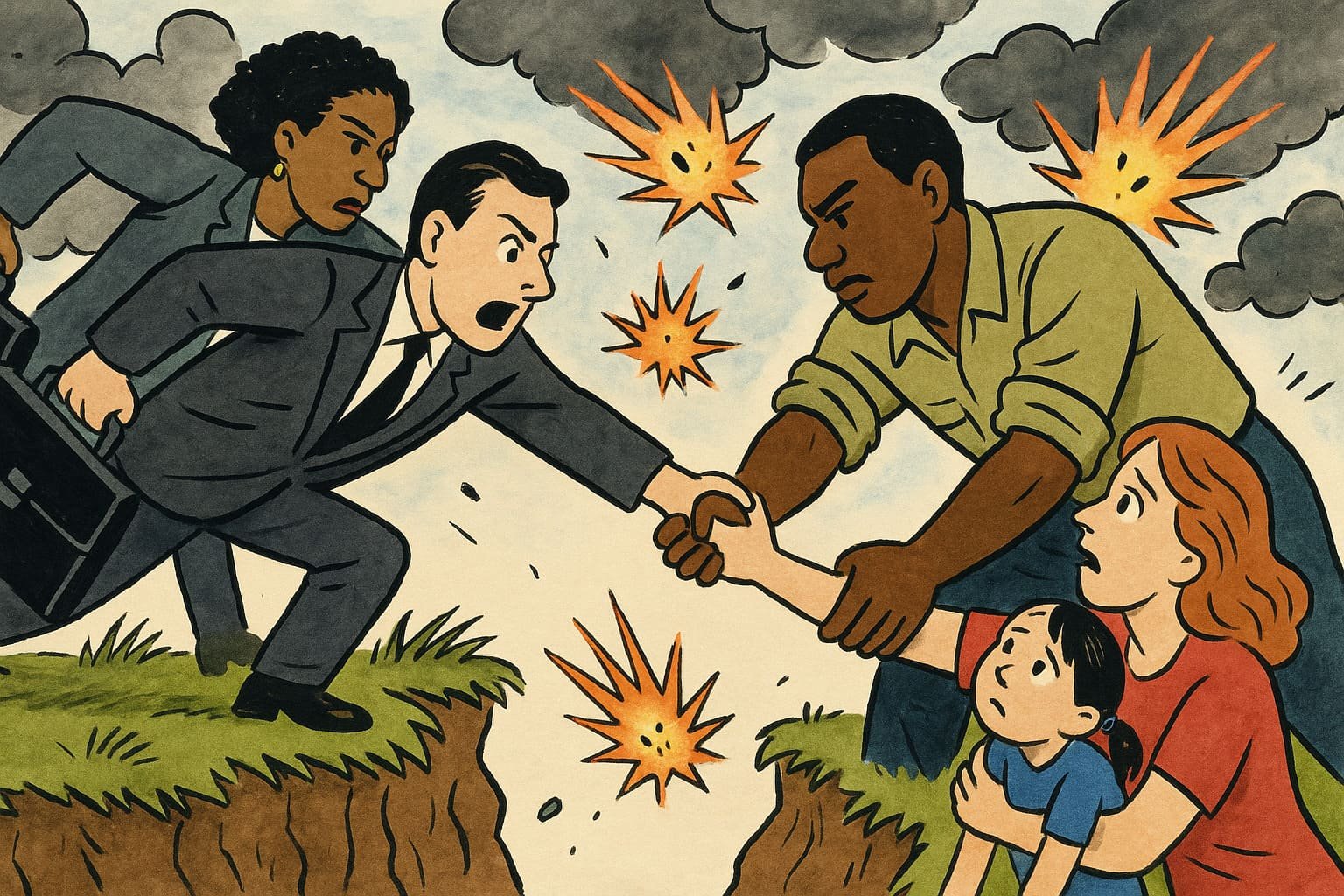
The most expensive business failure rarely appears on a balance sheet. It walks through the front door after another late meeting, carrying a laptop instead of a conversation. Families learn to recognize the glow of a phone screen more quickly than a smile, while ambitious professionals convince themselves that one more email will finally create enough success to earn peace. The irony is brutal. Many people work tirelessly to build a better life while quietly sacrificing the very life they hoped to improve.
Modern business celebrates productivity almost as a religion. Calendars overflow with meetings, notifications compete for attention, and “busy” has become a badge of honor. Yet busyness is not the same as effectiveness. Peter Drucker famously argued that there is nothing so useless as doing efficiently what should not be done at all. Organizations that confuse activity with progress eventually lose direction. Individuals suffer the same fate when every waking hour becomes another transaction instead of a meaningful investment in relationships.
Healthy leadership begins with personal boundaries. A manager who never disconnects unintentionally teaches employees that exhaustion is the price of commitment. Over time, creativity fades because tired minds stop asking bold questions. The strongest organizations understand that sustainable performance depends on recovery as much as execution. Rest is not the opposite of productivity. It is one of its foundations. Businesses that protect the well-being of their people often discover higher engagement, stronger collaboration, and more thoughtful decision-making.
Daniel built a fast-growing software consultancy that looked impressive from the outside. Clients praised the service, revenue climbed steadily, and industry awards filled the office shelves. One evening his daughter asked whether he actually lived at home or simply visited between meetings. The question landed harder than any financial setback. Daniel began protecting evenings with the same determination he once reserved for board presentations. Unexpectedly, client satisfaction improved because a rested leader made clearer decisions and delegated with greater confidence.
Some of the world’s most respected companies have learned that culture cannot be manufactured through mission statements alone. It is built through everyday behavior. Leaders who encourage flexibility, trust, and thoughtful priorities often create teams capable of extraordinary performance without chronic burnout. Employees notice actions more than speeches. A leader who genuinely values family time gives others permission to do the same. That simple shift creates loyalty that expensive incentives often fail to achieve.
The conflict between career and home is often presented as an impossible choice. Reality is more complicated. Balance is rarely perfect, and certain seasons demand greater sacrifice than others. What matters is intentional adjustment rather than permanent neglect. Picture the taste of reheated coffee after another interrupted morning or the silence that settles around a dinner table where everyone is staring at separate screens. Those moments quietly reveal whether success is expanding life or shrinking it.
Perspective changes when people measure wealth differently. Financial security matters, yet memories carry a value that no quarterly report can calculate. Children rarely remember the extra contract signed on a Tuesday afternoon. They remember the conversation during a weekend walk, the laughter over a simple meal, or the reassuring presence after a difficult day. Businesses also benefit when leaders return with emotional clarity instead of constant fatigue. Strong homes often create stronger organizations because resilient people make wiser decisions.
Somewhere tonight, another ambitious professional will close a laptop a little earlier than usual. The world will continue turning, emails will still be waiting tomorrow, and surprisingly little will collapse. A family conversation will replace another unnecessary notification, and a relationship will quietly grow stronger without announcing its importance. That unseen exchange may become the greatest investment of an entire career. Build a life that your achievements are proud to return home to, not one they quietly replace.
