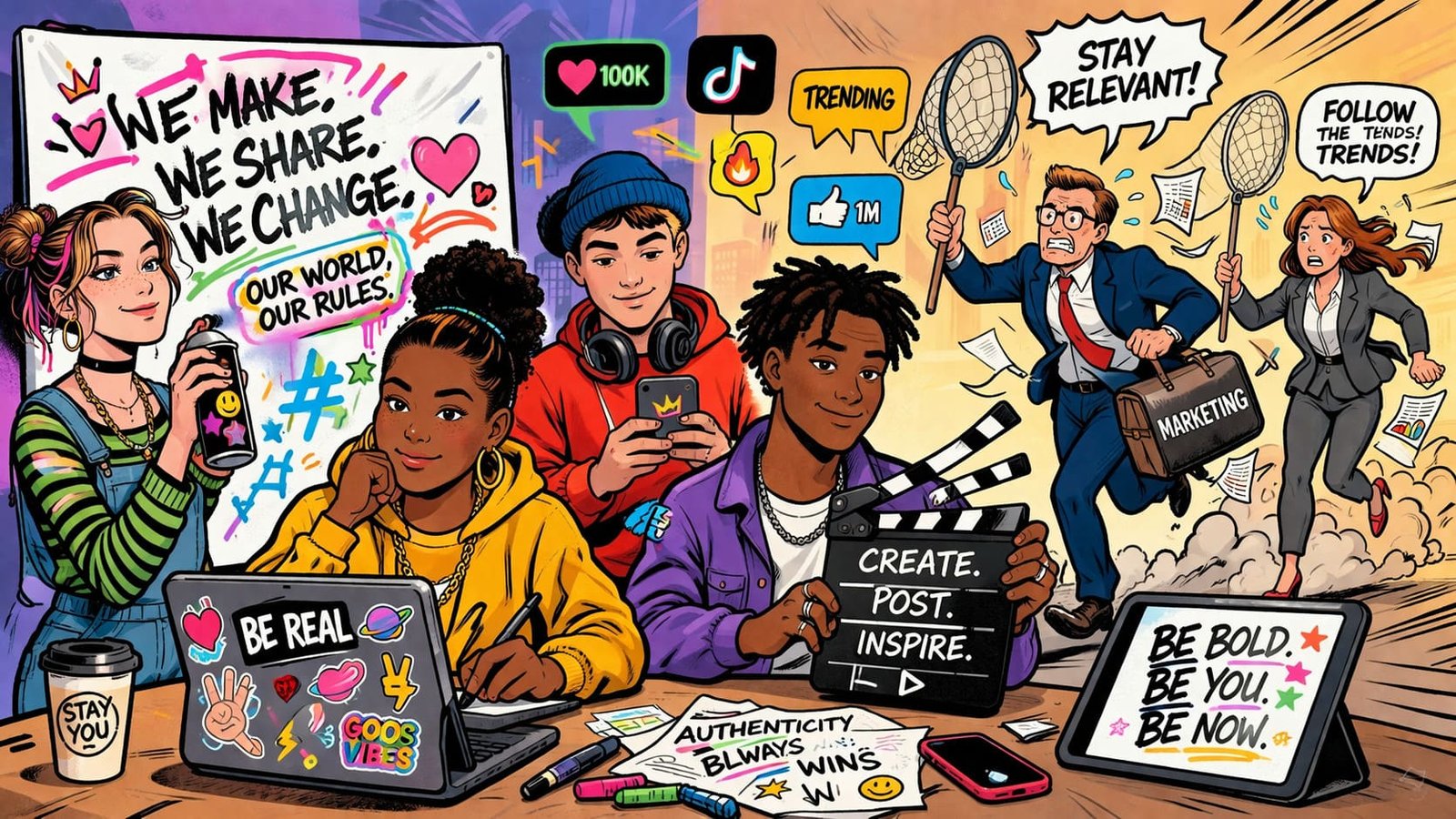
Bass vibrated through a converted warehouse where dozens of creators filmed tiny moments that would disappear into endless scrolling before midnight. Laughter echoed between ring lights while brands hovered nearby, eager to borrow the language, humor, and confidence filling every corner. One awkward sentence could expose an entire campaign as an outsider pretending to belong. Marketing has reached a curious crossroads. Relevance now expires so quickly that many companies chase culture only to discover they are already arriving late.
Generational marketing once relied on age brackets, household income, and predictable buying habits. Those categories still matter, but they explain far less than shared digital behavior, online communities, and cultural identity. Gen Z rarely separates entertainment, shopping, learning, and conversation because all four happen inside the same digital spaces. Duolingo recognized this shift by embracing playful social media content that reflected internet culture instead of polished corporate messaging. Personality became strategy. Audiences rewarded brands willing to sound unmistakably human rather than relentlessly professional.
Layla joined a heritage furniture company hoping to attract younger buyers without abandoning decades of craftsmanship. Executives approved trendy slang, viral dance references, and memes copied from successful competitors. Comments arrived immediately, though not in celebration. Younger viewers described the campaign as painfully forced because every joke felt borrowed. Layla persuaded leadership to spotlight apprentice woodworkers sharing honest stories about learning traditional skills. Interest grew naturally, proving authenticity still travels faster than imitation, even inside the fastest digital conversations.
An odd contradiction shapes almost every discussion about younger consumers. They embrace rapid cultural change while becoming remarkably skilled at detecting performance disguised as sincerity. Behavioral research suggests people trust signals that involve genuine commitment rather than effortless imitation. TikTok creators succeed because audiences recognize consistent personalities, imperfections included. CeraVe demonstrated this beautifully by blending humor with community participation instead of interrupting conversations from above. Cultural relevance cannot simply be purchased. It must be earned through repeated participation over time.
Crocs experienced an unexpected renaissance after collaborating with artists, musicians, and creators who genuinely connected with existing communities instead of manufacturing artificial coolness. Ethan managed marketing for an independent sportswear brand convinced celebrity endorsements would unlock younger audiences overnight. A local skateboarding collective proposed designing limited collections themselves while documenting every disagreement and creative breakthrough along the way. Those imperfect videos attracted more loyal customers than polished advertising because viewers witnessed collaboration instead of choreography. Shared ownership quietly replaced passive consumption.
Street murals fade, playlists change, and yesterday’s viral sensation slips beneath tomorrow’s endless stream without asking permission. Culture keeps moving because young audiences value participation more than polished perfection, conversation more than performance, and honesty more than flawless branding. Artificial intelligence will help marketers identify emerging trends with extraordinary speed, yet no predictive model can replace genuine cultural curiosity. Before asking how to market to Gen Z, consider a far more revealing question: is your brand prepared to listen before trying to be heard?
