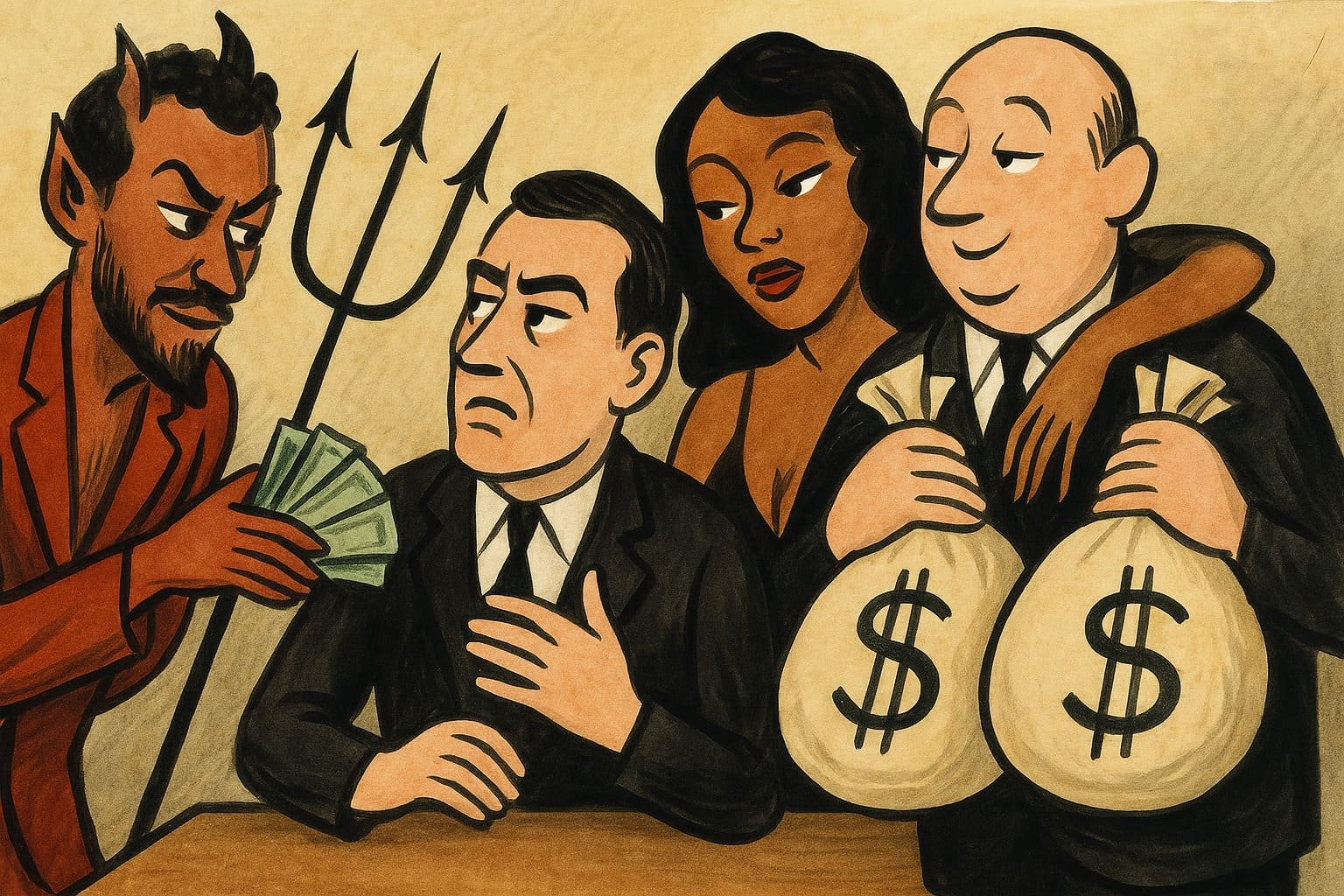
A polished conference room can hide remarkable contradictions. Warm smiles drift across the table, polished mission statements decorate the walls, and executives speak passionately about changing the world for the better. Yet beneath the elegant language, another conversation quietly unfolds. It revolves around quarterly targets, market dominance, and personal rewards that never appear in glossy sustainability reports. That invisible conflict has shaped commerce since the earliest marketplaces. Every successful business eventually confronts the same uncomfortable question: does profit serve morality, or has morality become another product for sale?
Profit itself is not the villain. Businesses exist because they solve problems, create employment, reward innovation, and generate economic growth. Trouble begins when financial ambition quietly transforms into an obsession that overshadows every other responsibility. Small compromises rarely announce themselves as ethical failures. They arrive disguised as practical decisions. A supplier receives unfair treatment. Employees shoulder impossible workloads. Customers encounter misleading marketing. Each decision appears manageable in isolation. Together they reshape an organization’s character until short-term gains quietly replace long-term trust as the company’s defining currency.
Business leaders often discover that ethical choices become most difficult precisely when success seems closest. Investors demand faster growth. Competitors slash prices. Headlines celebrate aggressive expansion. The temptation to stretch principles becomes stronger with every ambitious target. Behavioral economists describe this as moral rationalization, the habit of convincing ourselves that questionable actions are necessary because extraordinary goals justify extraordinary methods. Unfortunately, markets rarely forgive broken trust. Customers remember disappointment longer than clever advertising, and reputations often collapse far faster than they were carefully constructed over decades.
Consider the story of Maya, founder of a rapidly growing organic cosmetics company. Demand exploded after several influential creators praised her products online. Production struggled to keep pace, and distributors urged cheaper ingredient substitutions. The financial case looked irresistible. Margins would improve overnight. Maya visited her factory, held the alternative ingredients in her hands, and quietly rejected the proposal after speaking with workers who proudly crafted the original formulas. Growth slowed for a season. Customer loyalty deepened instead. Years later, competitors disappeared while her reputation continued attracting devoted buyers.
History repeatedly rewards organizations that recognize trust as a strategic asset rather than a marketing slogan. Companies such as Patagonia built lasting influence because environmental responsibility remained connected to business decisions instead of promotional campaigns. The message felt believable because actions consistently matched public promises. Customers notice those details. Employees notice them even faster. Authentic leadership creates cultures where people willingly contribute ideas because they believe values guide decisions even when nobody outside the organization is watching. That confidence becomes remarkably difficult for competitors to imitate through advertising alone.
The deepest ethical challenge rarely involves obvious scandals. It appears during ordinary meetings where nobody expects history to remember the discussion. A finance director questions an optimistic forecast. A junior marketer hesitates before approving exaggerated claims. A warehouse supervisor worries about employee exhaustion before a major holiday rush. Those quiet moments shape corporate identity far more than dramatic speeches delivered at annual conferences. Moral courage usually whispers. It rarely arrives carrying applause. Yet those seemingly small choices determine whether an organization becomes respected or merely profitable.
Business philosopher Edward Freeman argued that companies succeed when they create value for every stakeholder rather than treating shareholders as the only audience that matters. That perspective sounds idealistic until viewed through experience. Organizations built upon trust recover from crises more effectively because customers, employees, suppliers, and communities remain willing to stand beside them. Financial performance follows healthy relationships more often than ruthless efficiency alone. Sustainable competitive advantage frequently emerges from character before it emerges from technology, branding, or operational brilliance. Ethics, surprisingly, becomes practical strategy.
A quiet office eventually empties after another demanding day. Computer screens fade into darkness while unfinished conversations linger in the silence. Balance sheets may celebrate remarkable profits, yet another ledger always exists beyond accounting software. It records promises honored, people respected, and decisions made when nobody expected recognition. That invisible record shapes legacies more deeply than market valuations ever could. Businesses rise through ambition, but they endure through integrity. Ask yourself this: when success finally arrives, what part of your character will still be standing beside it?
