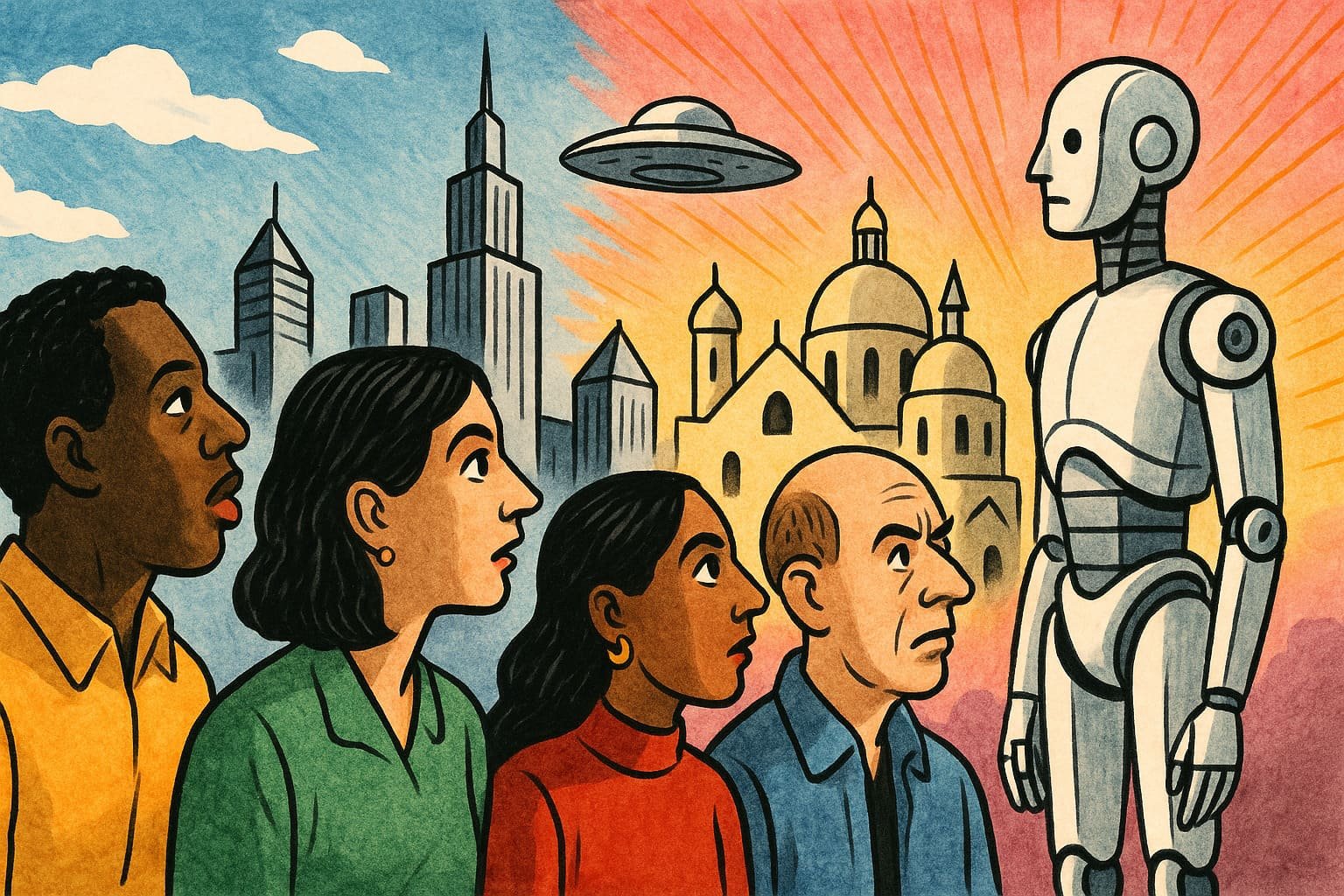
Under the flickering blue light of an abandoned showroom, prototypes lie like sleeping creatures; half-born ideas wrapped in polished steel and silicone. The air hums with electricity, not from machines, but from anticipation. Somewhere between illusion and intention, a designer sketches a line that could alter how billions will live. The future does not arrive as thunder or prophecy; it leaks quietly through the hands of those who imagine before they build. In this twilight between today and tomorrow, art becomes foresight, and design becomes destiny.
Every age has its prophets, but in this century, they wield pencils instead of scrolls. From the architects bending light into glass towers that breathe, to digital artists who code emotions into pixels, the new oracles no longer speak in riddles; they prototype them. Each new product, interface, and environment is not a response to the present but an argument with the future. The pace of creation feels almost manic, as if humanity is sprinting to catch up with its own imagination.
Behind every viral design trend hides a quiet act of rebellion. The minimalist desk lamp, the curved smartphone edge, the adaptive sneaker; they are not just conveniences. They are signals. Each design choice tells us what kind of world we are willing to believe in. When Apple removes a port or Tesla deletes a button, they are not simplifying; they are rewriting human behavior. The future, it seems, is always negotiated through aesthetics long before it becomes reality.
In the studios of Tokyo, Nairobi, and San Francisco, teams gather in the dim glow of prototype screens. They test the feel of new materials, the rhythm of interaction, the emotional temperature of color. They are not designing products; they are designing worlds; complete systems of experience where the familiar dissolves into the possible. “We’re shaping habits that don’t exist yet,” says Aya Komatsu, a speculative designer who believes that “the most dangerous design is the one that feels too comfortable.”
This is the new age of design prophecy, where creativity is no longer about what works, but what awakens. The designer’s sketchbook has become a time machine, translating fear, hope, and fantasy into tangible form. The future shock we feel is not chaos; it’s the pulse of new beauty forming in real time. To watch design evolve today is to witness humanity’s reflection folding in on itself, rewriting the mirror with each stroke.
Quick Notes
- Design is the New Forecast: Forget spreadsheets and prediction models; the real oracles sit at drafting tables. Every new material, shape, or layout is a weather report from the future. When Dyson redesigns airflow or IKEA reinvents modular living, they’re not guessing trends; they’re shaping how people will breathe, sit, and love tomorrow.
- Beauty Is a Political Act: The curve of a chair or the glow of a screen is never neutral. Design directs behavior, frames emotion, and encodes power. The minimalist aesthetic that once whispered calm now screams control; think of Silicon Valley’s white rooms and invisible interfaces that erase individuality under the promise of “seamless experience.”
- Emotion Is the New Interface: In an era when algorithms anticipate desires, design has become the mediator between soul and system. Your smartwatch doesn’t just measure heartbeats; it listens to your anxieties. The next wave of design will not only react to you; it will feel you, turning empathy into architecture.
- Chaos Is the Canvas: Perfection is overrated. The new generation of creators is obsessed with imperfection; raw edges, asymmetric lines, digital glitches that feel human. Beauty is no longer smooth; it’s fractured, alive, unpredictable. Designers are learning to choreograph chaos, not eliminate it.
- The Designer as Prophet: Once dismissed as dreamers, designers are now decision-makers in how civilization evolves. They stand at the intersection of data and destiny, tasked with translating complexity into clarity. The real question is not what they will make next, but how long the world can keep up.
The Imagination Industry
In a glass studio high above Seoul, a young designer named Min-joon adjusts a holographic projection of a shoe that doesn’t exist yet. He’s not making footwear; he’s sculpting emotion, embedding memory into texture. Every pixel he moves is a prediction of desire. His task is not to design what people *want*, but what they will *learn* to want. Design has quietly become a form of mass hypnosis; one that sells comfort disguised as progress. What once was art has turned into an algorithm for anticipation.
Today’s design studios operate more like laboratories than ateliers. Data streams from social media trends, biometric sensors, and behavioral analytics inform everything from packaging colors to font kerning. The designer has become part scientist, part storyteller, decoding the psyche of modern life. When Netflix A/B tests thumbnail images to determine which emotional tone drives clicks, it is design not psychology mapping the inner geography of human impulse. Each choice, though seemingly small, reshapes cultural behavior at scale.
What’s fascinating is that the industry still calls it “creative work,” when in truth it’s closer to predictive engineering. Consider how UX designers test reactions to subtle haptic feedback on smartphones. The buzz when you unlock your device isn’t arbitrary; it’s designed to reward your brain with a dopamine echo. This is not decoration; it’s persuasion wrapped in interface. Designers now build realities that anticipate your emotions before you feel them, creating experiences so intuitive they blur the line between freedom and manipulation.
Yet within this tension lies the true beauty of modern design. The designer isn’t a puppet master but a translator between chaos and clarity. By giving form to the unknown, they teach society how to make sense of its own inventions. In the hands of a visionary, design becomes both prophecy and poetry; a bridge between what exists and what should exist. It’s why products like the iPhone or Tesla Model S didn’t just succeed commercially; they redefined what *normal* looked like for everyone else.
Still, this rise of predictive aesthetics poses a haunting question: if design predicts our future behaviors, then who designs the designers? The invisible frameworks guiding taste, morality, and ambition are themselves designed by systems; corporate, cultural, political. Perhaps the future shock we feel isn’t about speed or change but about realizing how deeply our imagination has been outsourced.
Beauty as Code
Somewhere in a dimly lit loft in Berlin, a team of interaction designers debates whether a pixel should fade in 0.2 or 0.3 seconds. To outsiders, it seems trivial. To them, it’s choreography; digital ballet performed in milliseconds. The fade determines emotion. Too fast, and it feels aggressive; too slow, and it drags. This is how beauty now operates: through code, rhythm, and timing. The designers of tomorrow are less like sculptors and more like conductors, orchestrating emotional symphonies made of light.
Beauty has always been political. When brutalist architecture dominated post-war Europe, it wasn’t just concrete; it was ideology. Today’s equivalent is minimalism, that religion of white space and soft shadows championed by Big Tech. It signals purity, calm, control but behind the glass walls and rounded corners, the same design language conceals complex data infrastructures tracking every tap. Beauty has become camouflage, used to make systems appear humane while hiding their machinery.
Yet, rebellion brews in the corners of the internet. Independent designers reject perfection for imperfection embracing distortion, saturation, and the messy chaos of analog nostalgia. Websites like *Are.na* or the resurgence of brutalist web design celebrate rawness, refusing the sterile cleanliness of corporate UX. Their message is simple: beauty should reveal truth, not obscure it. In a sense, these anti-design movements are the punk rock of modern aesthetics; loud, flawed, and human.
The paradox is that even chaos gets commodified. Once anti-establishment aesthetics catch fire, corporations adopt them for credibility. Brands now simulate imperfection because imperfection sells authenticity. The handmade becomes a marketing asset. The cracked ceramic mug at a $15 café is not an accident; it’s strategy. This is the genius and tragedy of modern design: even resistance gets designed.
Still, some designers insist on purity of intention. Paula Scher, the iconic graphic designer, once said, “It’s through mistakes that you actually can grow.” That single statement captures the new aesthetic frontier: a future where beauty is not flawless but alive. When design embraces error, it mirrors humanity itself. In that reflection, the digital world remembers it has a pulse.
The New Human Factory
Inside a design sprint at Meta, teams argue over what “connection” means. One group wants intimacy; another wants efficiency. The truth? Both are products. The world’s most influential companies are not factories of metal but factories of feeling. They manufacture belonging, wonder, and convenience, packaging emotion as service. Designers now occupy the role priests once held; curating rituals that govern daily life. Instead of hymns, they use notifications; instead of altars, they design feeds.
This evolution changes the designer’s moral responsibility. When a layout decision determines how long someone scrolls before bed, or a tone of blue affects mental health, ethics stop being theoretical. Design now shapes mood, behavior, and even biology. A poorly placed button can cause stress; an empathetic interface can calm anxiety. What used to be art is now social engineering. And yet, the industry rarely pauses to reflect on the weight of that influence.
At the same time, the democratization of design tools has made everyone a potential creator. With AI-driven platforms like Canva or Midjourney, the barriers to entry collapse. Design literacy becomes universal but so does design fatigue. When every ad, app, and feed is beautifully optimized, beauty loses its edge. The next revolution in design may not come from software at all but from silence; the absence of design. In a hyper-stimulated world, restraint becomes radical.
A micro-case study comes from Kenya’s design collective *Morph*, which turned Nairobi’s power outages into a feature, not a flaw. They created solar-powered street lamps that dim softly instead of going dark; a poetic response to chaos. Their design was not about perfection but resilience, proof that design grounded in human context transcends technology. True innovation emerges not from abundance, but from constraint.
If the world feels designed to exhaustion, it’s because it is. Everything from your morning coffee lid to your meditation app has been optimized. Perhaps the next great act of design will be to un-design; to restore friction, mystery, and imperfection to a world that has become too smooth to feel real.
Designing Time Itself
Designers have always manipulated space; now they manipulate time. Interfaces collapse waiting, supply chains erase patience, and automation kills anticipation. The world has been redesigned to eliminate the pause. But in doing so, it has lost rhythm. The new luxury is slowness. Just as slow food rebelled against fast food, slow design emerges as a counter-movement; crafting moments that force you to breathe, linger, and remember you exist.
Look at Muji’s stores: calm, neutral, restrained. Every product is designed not to shout but to disappear. Their quietness feels almost spiritual, like stepping into a pause between heartbeats. Muji’s minimalism isn’t about selling less; it’s about selling serenity. The company intuitively understands that in a chaotic century, peace has become a product category.
Contrast that with the algorithmic urgency of TikTok or Amazon Prime. The future feels impatient. Designers are now caught between efficiency and empathy; between the machine’s tempo and the body’s rhythm. Some have started embedding deliberate slowness into their designs, like meditation apps that open only at certain times of day, or devices that limit screen brightness after sunset. Time, once a fixed measure, has become an experience that can be shaped.
In Milan, designer Sofia Agresti experiments with “temporal furniture” chairs that change color depending on how long someone sits. Her work exposes the absurdity of constant use, reminding people that wear is a story, not a flaw. “We treat objects as immortal,” she says, “but beauty is in decay.” It’s a poetic reminder that design can slow down consumption by restoring awareness to presence.
Perhaps the future shock isn’t acceleration, but amnesia. When everything happens instantly, nothing feels important. Designers who learn to stretch time to make people wait, feel, reflect will not only shape products but restore meaning to life itself.
The Design of Destiny
Every civilization has its storytellers; ours design the interface. What mythology was to the ancient world, design is to the digital one: a shared fiction that gives chaos coherence. From city layouts to smartphone screens, design encodes values that outlast politics. The next generation of designers will decide not only how we live but what we believe about living. They are scripting morality through typography, shaping empathy through color, teaching patience through layout.
Take the example of *Neri Oxman*, who designs materials that grow like organisms. Her work dissolves the boundary between nature and technology. “We don’t design objects,” she once said, “we design relationships.” That line captures the philosophical shift defining this century. The goal is no longer to impose form on matter but to collaborate with it. This mindset transforms design from domination to dialogue.
Corporations, too, are catching up. Patagonia’s design ethos; repair, reuse, respect; turned sustainability into style. Their jackets aren’t just clothing; they’re protest statements stitched in fabric. When design aligns with moral intention, it transcends commerce and becomes culture. This is where design reveals its prophetic power: not in predicting markets, but in shaping meaning.
Still, with great influence comes temptation. The rise of “dark patterns” interfaces built to deceive shows how easily design can betray trust. From fake countdown timers to hidden subscriptions, manipulation hides in plain sight. The challenge now is to ensure the future is not engineered by cynicism. Ethical design is not a luxury; it’s a survival strategy.
In the end, designers are not predicting worlds; they are *building* them. Each sketch, interface, and object carries the DNA of belief. And belief, once multiplied across billions of users, becomes reality. The future won’t just happen; it will be designed, pixel by pixel, principle by principle, heartbeat by heartbeat.
When Tomorrow Looks Back
In an empty exhibition hall at dawn, the lights flicker to life, revealing the remnants of a design expo. Stray pamphlets lie scattered on the polished floor, half-folded posters whisper of futures that never arrived. A lone installation stands untouched: a mirror framed in steel, reflecting nothing but quiet dust. It was meant to display augmented possibilities, but now it simply shows the designer’s absence; a poetic mistake turned masterpiece. The curator once called it “the most honest exhibit in the room,” because it revealed a truth others avoided: every prediction becomes a relic the moment it is realized.
Outside, the world hums with the rhythm of progress. Screens glow like miniature suns, illuminating faces that no longer look up. Design has won its war against chaos, but at a cost. The cities are smarter, the homes are quieter, and yet, somewhere beneath the harmony of interfaces, humanity aches for friction; for imperfection, for surprise. The more seamless life becomes, the less it feels alive. Perhaps the future shock Alvin Toffler once warned of was not technological at all, but emotional; the pain of losing texture in exchange for control.
A designer named Rafael once told his students, “Design is not about making things better; it’s about making them *matter*.” His words linger in this hall like a haunting melody. Every line drawn in pursuit of perfection risks erasing the fingerprints that make life worth touching. The greatest designs have always carried imperfection as their soul: the brushstroke that trembles, the button that creaks, the chair that remembers who sat in it. In those flaws, the future remains human.
Far away, in a desert outside Dubai, autonomous robots assemble shelters that adjust to wind and heat. They are efficient, elegant, intelligent but their creator programmed them to leave one deliberate flaw: a single asymmetrical panel on every structure. When asked why, she smiled and said, “So people know a human cared.” That small choice feels like a whisper of rebellion against a machine-made destiny; a signature of imperfection, reminding us that empathy still leaves its trace in code.
The future does not arrive with fanfare. It sneaks in quietly through every pixel, curve, and color we choose. When tomorrow finally looks back, it will not judge us by what we invented, but by what we remembered: that behind every perfect interface should live a pulse, behind every prediction, a question, and behind every world we design, a conscience.
So ask yourself: are you designing a world that feels alive or one that simply works?
