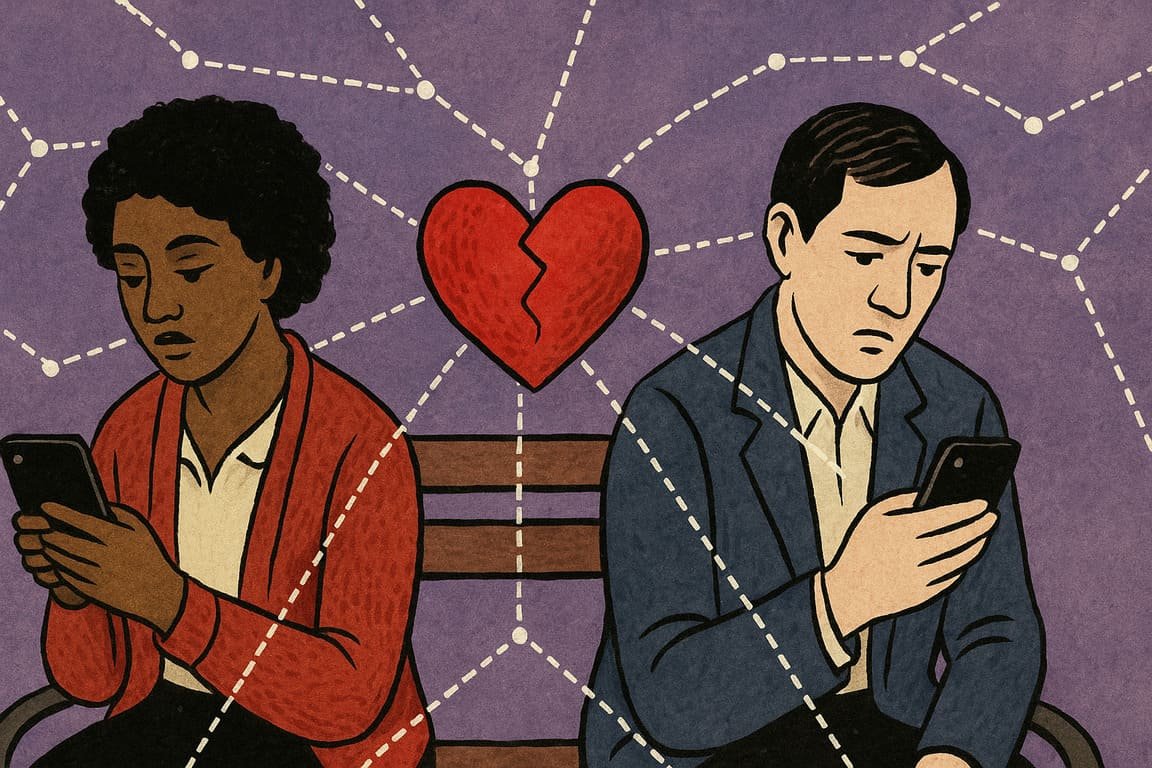
Crowds drifted through a glowing railway terminal where every face bowed toward a screen, yet every expression carried a quiet absence that no notification could interrupt. Laughter escaped from tiny speakers while real conversations dissolved into hurried glances, making companionship feel strangely outsourced. A traveler reached hundreds of contacts without finding one person to share delayed coffee beside a rain-streaked window. Digital loneliness rarely begins with isolation, it begins when connection becomes effortless and presence becomes expensive.
Modern life rewards constant availability, yet meaningful relationships demand qualities that software cannot automate. Speed, convenience, and endless communication create remarkable opportunities, but they also reshape expectations about friendship, family, leadership, and trust. Every message arrives instantly while understanding often arrives late. That hidden mismatch explains why countless people feel emotionally overlooked despite spending entire days surrounded by digital conversations, group chats, collaborative platforms, and social feeds that never appear to sleep.
Consider Microsoft, where hybrid collaboration tools transformed global teamwork by making distance almost irrelevant while forcing managers to rethink how belonging is created across distributed teams. Compare that with Nintendo, whose games often encourage shared experiences inside living rooms rather than only individual competition, reminding designers that memorable technology frequently strengthens existing relationships instead of replacing them. Maya accepted every virtual meeting invitation because declining felt risky. Months later her calendar overflowed, yet her closest friend quietly admitted, “I miss talking to you without a schedule.”
Researchers studying human behavior have repeatedly shown that relationships thrive through repeated moments of attention rather than constant streams of communication. Digital platforms excel at distributing information, although they struggle to reproduce eye contact, pauses, shared silence, and countless subtle signals that build lasting confidence between people. Ethan launched a promising startup with colleagues scattered across continents. Revenue climbed, investors celebrated, yet the team only rediscovered genuine trust after meeting around one ordinary dinner table where difficult conversations finally unfolded without microphones or webcams.
A revealing lesson emerged inside GitLab, whose fully remote culture succeeded because deliberate rituals, transparent documentation, and intentional social practices accompanied sophisticated collaboration software. Technology alone never carried the organization. Culture carried technology. Digital transformation reaches its highest value when systems amplify empathy instead of replacing it, creating environments where efficiency supports relationships rather than quietly consuming them through endless notifications, fragmented attention, and perpetual availability disguised as productivity.
Candles flickered across an old neighborhood café after an unexpected internet outage gathered strangers into conversations they never planned to have. Voices became warmer with every exchanged story, and unfamiliar faces slowly transformed into recognizable neighbors whose names would outlive forgotten usernames. Progress has never demanded choosing between humanity and innovation. Ask yourself whether every digital connection strengthens a relationship, or merely creates another glowing window that keeps genuine companionship waiting just outside your reach.
