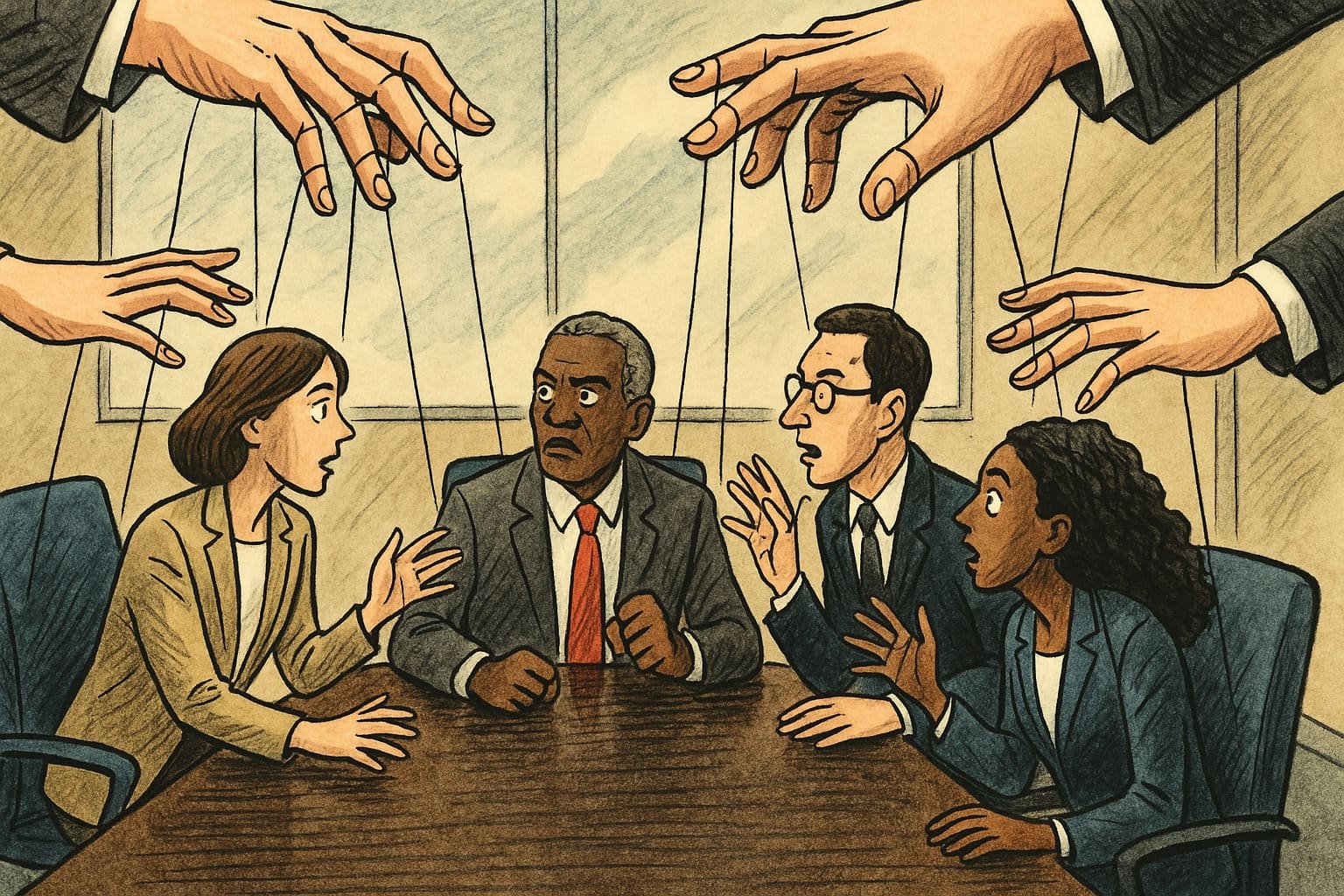
The meeting looked perfectly ordinary. Coffee steamed beside polished notebooks, polished shoes crossed polished floors, and every smile suggested complete agreement. Nothing appeared dramatic. Yet beneath the calm rhythm of polite conversation, invisible contests unfolded with remarkable precision. Every pause carried meaning. Every carefully chosen phrase shifted influence from one side of the table to another. The public often imagines business victories are won by brilliant products alone. Reality tells a different story. Many defining moments emerge quietly inside boardrooms where power moves silently before markets ever notice.
Corporate governance is designed to balance competing interests, yet every boardroom contains personalities with different ambitions, fears, and priorities. Investors seek returns. Executives pursue strategic freedom. Independent directors protect long-term stability. Employees hope leadership values people alongside performance. Those priorities naturally collide. Conflict itself is not dangerous. Hidden agendas are. When conversations become political instead of transparent, organizations spend more energy managing internal battles than solving customer problems. The strongest companies recognize that healthy disagreement creates stronger decisions, while secret alliances quietly weaken strategic clarity.
Power rarely announces itself through loud voices. It often appears through timing, access to information, and control over narratives. An executive who shapes the agenda before a meeting already influences the outcome. A director who quietly builds consensus over informal dinners often carries greater authority than someone delivering dramatic presentations. Experienced leaders understand that perception shapes decision-making as much as evidence. That reality makes integrity even more valuable. Influence gained through trust survives difficult periods. Influence gained through manipulation usually disappears when pressure exposes hidden motives.
A consumer electronics company once recruited Sofia to serve as its youngest independent director after years of stagnant growth. During her first months she noticed that important decisions had already been settled before formal meetings began. Junior executives hesitated to challenge senior figures despite possessing stronger market insights. Rather than confronting the culture publicly, Sofia met directors individually, encouraged broader discussion, and insisted every proposal include opposing viewpoints. Debate became livelier. Better ideas surfaced. Product launches improved because thoughtful disagreement replaced carefully protected silence.
History offers striking reminders that governance shapes corporate destiny. The collapse of Enron exposed how weak oversight, unchecked executive influence, and compromised accountability created conditions where financial deception flourished for years. By contrast, companies with engaged, independent boards often navigate uncertainty more effectively because difficult questions receive genuine attention before becoming public crises. Strong governance rarely creates headlines during prosperous periods. Its greatest achievements remain invisible because thoughtful oversight prevents disasters that never happen. Prevention seldom receives applause, yet it represents exceptional leadership.
Popular films often portray boardrooms as arenas where ruthless ambition always defeats integrity. The reality proves more complicated and, in many ways, more encouraging. Organizations consistently outperform when directors create environments where expertise outweighs hierarchy. Great governance resembles an experienced orchestra rather than a battlefield. Every participant contributes a distinct perspective while respecting the shared objective. Ego still appears. Ambition certainly exists. The difference lies in whether those forces serve collective success or merely individual influence at everyone else’s expense.
Management scholar Amy Edmondson argues that psychological safety allows people to speak honestly without fearing punishment. That principle extends beyond operational teams into the highest levels of governance. Boards that welcome respectful challenge make better strategic decisions because blind spots become visible before competitors exploit them. Courage in governance often means asking uncomfortable questions when optimism dominates the room. The quiet director requesting one more explanation sometimes protects millions in shareholder value through simple curiosity rather than dramatic intervention or charismatic speeches.
The lights eventually dim across another executive floor. Expensive suits disappear into elevators, confidential presentations close, and polished tables return to silence. What remains cannot be photographed. It is the culture shaped by conversations nobody outside the room will ever witness. Every organization carries the fingerprints of those unseen choices. Some create enduring institutions built on accountability. Others slowly surrender to politics disguised as strategy. The most powerful hand in any boardroom is not the one demanding control. It is the one willing to protect truth when silence feels easier.
