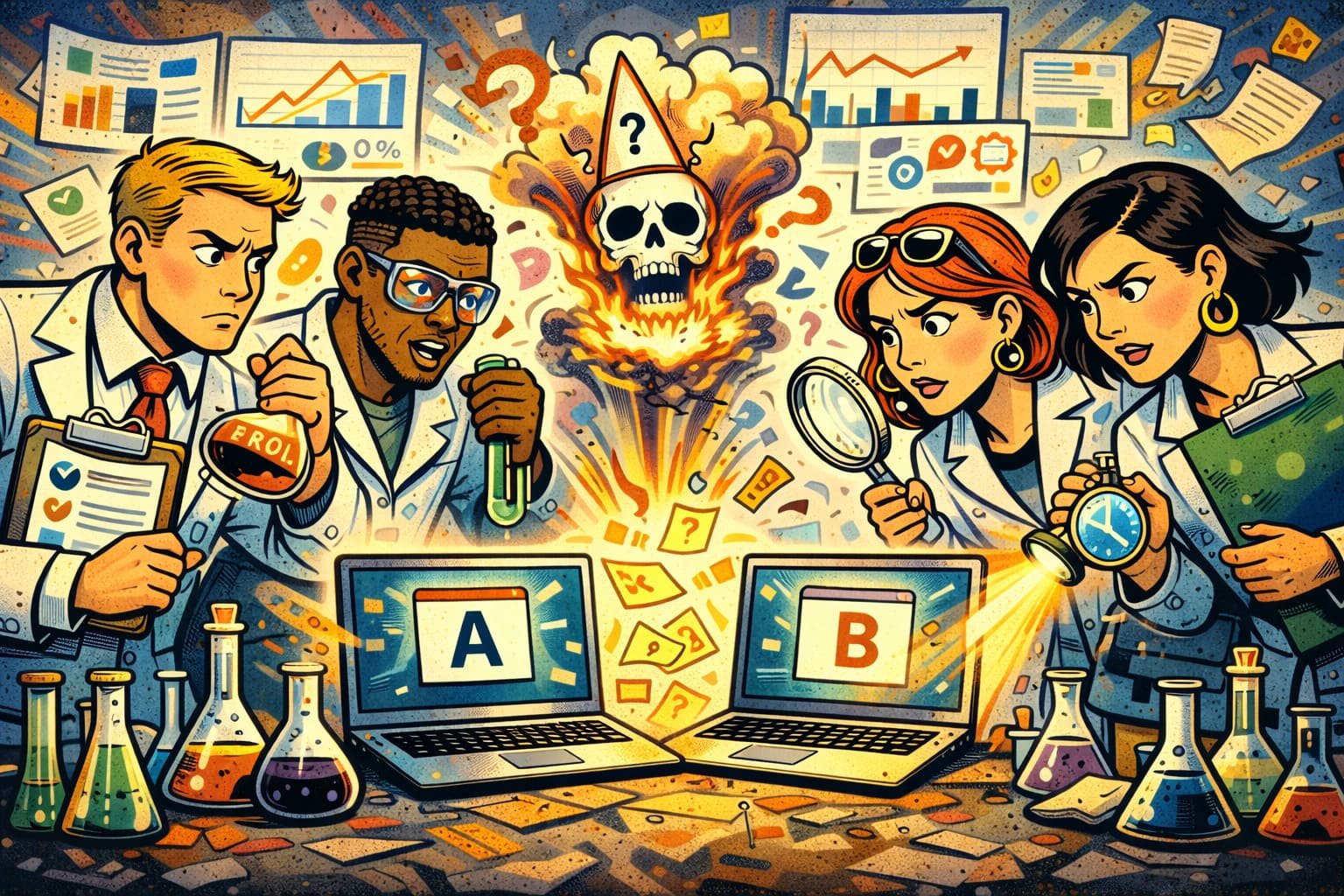
Steel doors slid open inside a quiet engineering lab where half-built prototypes rested beside discarded failures that nobody outside the company would ever see. Those abandoned experiments carried surprising value. Every rejected idea had quietly eliminated a costly mistake before reaching customers. That hidden discipline separates exceptional organizations from hopeful imitators. Winning businesses rarely possess supernatural instincts. They simply replace confident assumptions with relentless testing until evidence becomes impossible to ignore.
Guesswork feels efficient because certainty is emotionally comforting. Testing feels uncomfortable because it exposes cherished beliefs to reality. Netflix understands this tension better than most companies. Nearly every interface change begins as an experiment measured against real user behavior rather than executive preference. Booking.com follows a similar philosophy, running continuous experiments that refine customer experiences through countless incremental improvements. Neither company assumes brilliance. Both assume curiosity deserves stronger authority than confidence.
Leo managed digital campaigns for a regional travel company convinced that brighter website colors would increase bookings. Weeks of internal debate produced passionate opinions without meaningful progress. Instead of choosing the loudest voice, his small team launched two simple versions and observed customer behavior. The quieter design unexpectedly generated stronger engagement because travelers found planning less overwhelming. Personal conviction lost gracefully to measurable evidence, saving months of unnecessary redesign and endless conference room arguments.
Scientific thinking belongs far beyond research laboratories. Businesses thrive when hypotheses replace hunches and learning outranks ego. Amazon has built an enduring culture around experimentation because small discoveries often compound into transformative competitive advantages. Smaller organizations can embrace exactly the same mindset without massive budgets or sophisticated technology. Testing headlines, onboarding experiences, pricing structures, email timing, or product descriptions gradually uncovers patterns invisible to instinct alone. Every experiment sharpens future decisions while reducing expensive uncertainty.
Human psychology explains why testing matters so deeply. Confirmation bias encourages people to seek evidence supporting existing beliefs while quietly ignoring conflicting signals. Marketing teams are not immune. Neither are founders, executives, or consultants. Controlled experiments interrupt that tendency by allowing customers to reveal preferences through actions instead of opinions. Behavioral insight emerges from observed choices rather than confident predictions. Real growth systems therefore celebrate surprising outcomes because unexpected results usually teach more than anticipated victories.
Dust gathered across shelves holding forgotten prototypes that never reached store windows, yet each abandoned version quietly protected the next breakthrough from repeating familiar mistakes. Failure, examined honestly, becomes remarkably inexpensive compared with certainty defended blindly. Businesses that test relentlessly build resilience one experiment at a time until competitors mistake disciplined learning for extraordinary intuition. Before approving another strategy based on instinct alone, ask whether confidence is leading the conversation, or whether evidence has finally earned the final word.
