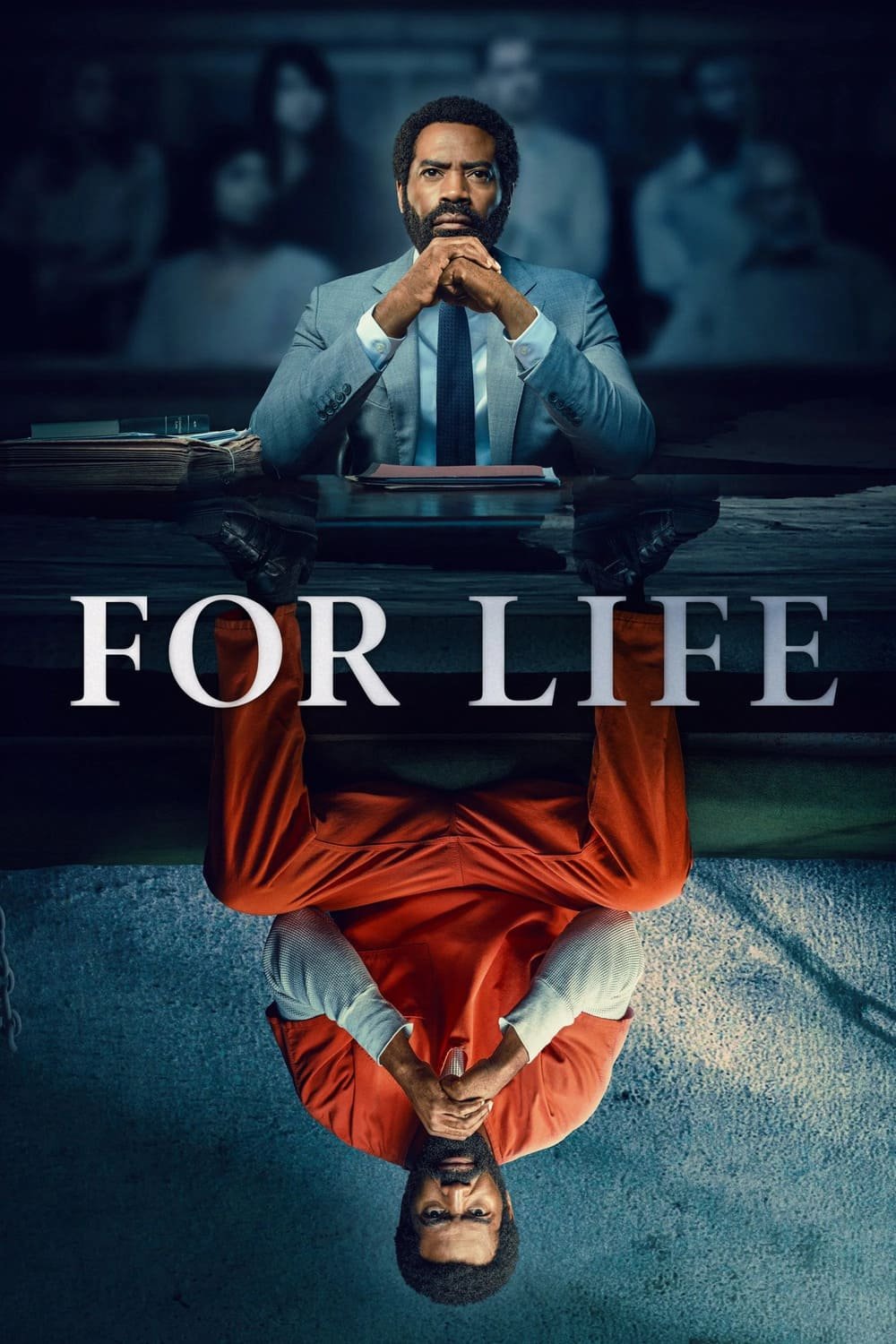
Television rarely offers a story that cuts this deep into the human spirit while making legal drama feel both harrowing and fiercely personal. For Life does not wait for permission to seize your curiosity. This ABC series, inspired by the extraordinary real-life journey of Isaac Wright Jr., unchains the viewer from comfortable expectations and drags them straight into the grittiest corners of justice, resilience, and hope. By the end of the first ten minutes, it becomes obvious that this is no ordinary courtroom saga. Every frame vibrates with a raw urgency: the stakes are immediate, the conflicts bite, and the lead character’s sense of injustice burns through the screen.
There’s a rush of adrenaline from watching a man, wrongfully convicted, transform himself into a legal force from behind bars. Aaron Wallace, the show’s protagonist, crafts a survival strategy rooted in brains, loyalty, and defiance. Watching him evolve from an ordinary club owner into a formidable prison lawyer pulls the audience into a moral and emotional whirlwind. Each decision Aaron makes is not just about his own freedom, but a chess move that could change the fate of everyone trapped within the same system. The viewer is constantly prompted to ask: What would I do with everything stacked against me?
The emotional power in For Life doesn’t just come from the drama inside the courtroom or prison yard. The series refuses to shy away from the personal toll of injustice, revealing how wrongful imprisonment fractures families, challenges friendships, and tests the boundaries of faith. Flashbacks and quiet moments inject every episode with a heavy pulse of humanity. These glimpses into Aaron’s life before incarceration remind us that, beneath the headlines and legal jargon, real lives are torn apart when the system fails.
The show’s writing crackles with conviction and wit, but it’s the lived-in performances that deliver the knockouts. Nicholas Pinnock inhabits Aaron’s character with every muscle tensed, his eyes telegraphing both pain and resolve. Supporting roles, especially Indira Varma as prison warden Safiya Masry and Joy Bryant as Aaron’s estranged wife Marie, add dimension and unpredictability. Their stories intersect, collide, and reconfigure with the messy truth of actual relationships. Here, no character is wasted: every person has something at stake.
For Life is not just a plea for empathy. It’s a challenge to confront the cracks in the system and the realities many would rather ignore. This show isn’t content to play nice or hide behind easy resolutions. Instead, it digs into difficult questions about redemption, power, and the cost of fighting for your rights when all the odds seem insurmountable. For viewers hungry for more than just entertainment, this series delivers a mind-opening, addictive ride that lingers long after the credits roll.

Quick Notes
- Inspired by a True Story: Loosely based on Isaac Wright Jr., the real-life attorney who overturned his wrongful conviction from inside prison.
- Explores Legal Injustice: Dives deep into the cracks and flaws of the criminal justice system in America.
- Transformative Character Arc: Chronicles Aaron Wallace’s evolution from convicted man to brilliant self-taught legal champion.
- Humanizes the Incarcerated: Challenges stereotypes by giving voice and depth to those often silenced in society.
- Tense, Emotional Storytelling: Balances courtroom showdowns, family drama, and prison survival with relentless pace.
Chasing Light Behind Bars: A Deep-Dive Summary of ‘For Life’
Aaron Wallace enters the series already convicted, separated from his family, and battling the crushing reality of life in a maximum-security prison. He stands out from the crowd—not because he’s innocent, but because he refuses to be broken by the system that failed him. As the story unfolds, viewers discover that Aaron was once a club owner, a husband, and a devoted father. That life is shattered by a wrongful drug conviction, a result of manipulation by prosecutors and law enforcement. Aaron’s resolve only hardens after losing his freedom, setting the stage for a unique redemption journey.
While serving his sentence, Aaron refuses to become just another statistic. He spends years studying law in the prison library, using every scrap of information to build a case not only for his own release, but for the men and women imprisoned alongside him. Every new legal triumph is a small rebellion—a statement that dignity can survive even in the harshest environments. The prison itself is more than a backdrop. It is a crucible where alliances form, betrayals sting, and hope feels dangerously scarce. Relationships with fellow inmates, guards, and the warden, Safiya Masry, reveal the many layers of power and survival that define prison life.
Aaron’s commitment to justice extends beyond his cellblock. The drama outside is just as intense as the battles inside. His wife Marie struggles with her own pain, raising their daughter and forging a new path while clinging to the memory of the man she once loved. These scenes ripple with heartbreak, guilt, and a quiet determination to keep hope alive. As Aaron wins cases for other inmates, his profile grows, attracting both powerful allies and dangerous enemies. Political ambitions, media scrutiny, and corrupt prosecutors all swirl together, threatening every fragile victory.
The narrative rarely pauses for breath. Each episode builds momentum, layering victories with setbacks, celebrations with new threats. Aaron’s legal work is a lifeline for those inside and out, but every step forward risks new consequences. The ethical dilemmas pile up: Should he take a risky case if it means jeopardizing his own appeal? Can he protect his family from retaliation? How far can he push the boundaries of the law from within the walls designed to contain him?
Real-life case studies echo through the fictional universe of For Life. Take the example of Rubin “Hurricane” Carter, whose wrongful imprisonment sparked a global outcry and inspired countless advocates. Or consider Kalief Browder, who languished for years without trial, triggering reforms and nationwide debate. For Life nods to these stories, weaving a tapestry of legal injustice and individual resilience that is both timely and timeless. Watching Aaron’s journey feels like a window into a larger social struggle, one that continues to unfold offscreen every day.
Unlocking the Chains: Lessons and Insights From ‘For Life’
Freedom can be snatched away in an instant, but the will to reclaim it burns for years. The series highlights how injustice doesn’t just destroy one person’s dreams—it ripples through families and entire communities. Aaron’s determination to study law is more than an act of self-preservation; it’s a message that knowledge is the ultimate weapon against oppression. Every page turned in the prison library is a step toward rewriting fate, a powerful reminder that even in isolation, education offers a path forward.
Redemption emerges as a recurring theme, but it doesn’t arrive gift-wrapped. Aaron must win trust not only from hardened inmates and skeptical lawyers, but also from those he loves most. Rebuilding relationships is a battle that unfolds alongside his legal cases. Trust is earned in slow increments, with setbacks that sting as much as courtroom defeats. The show refuses to offer simple solutions, instead suggesting that healing, forgiveness, and justice require relentless effort.
Courage in the face of systemic power comes alive through every legal motion and courtroom confrontation. The show underscores that justice often favors the powerful unless someone decides to push back. Aaron’s fight is not just for himself, but for everyone whose voice gets drowned by bureaucracy and prejudice. The series places a spotlight on those moments when one person’s boldness sparks change far beyond their own story.
At its heart, For Life is a call for empathy. By giving inmates agency and complexity, the series forces viewers to reckon with stereotypes and confront their own assumptions. Each backstory, each choice, each failure is a plea for understanding that breaks down the walls of “us versus them.” It’s a humanizing force, one that reminds audiences that lives do not become less valuable because they are lived in the shadow of prison walls.
There’s a wider resonance in Aaron’s struggle: institutions built to protect can sometimes become engines of harm. The series holds up a mirror to society, daring viewers to question where accountability truly lies. Just as Aaron fights to expose prosecutorial misconduct, real-life whistleblowers and advocates challenge broken systems in our own neighborhoods and nations. For Life turns entertainment into a rallying cry for change, reminding everyone that freedom, fairness, and dignity are never guaranteed—they must be fought for, every single day.
After the Verdict: Why ‘For Life’ Leaves You Wanting More
The final credits of each episode don’t offer closure, but instead open up even more urgent questions about justice, family, and survival. There’s a magnetic pull in Aaron’s journey that keeps viewers invested, episode after episode. You root for him, even when he makes risky choices. You flinch at every new obstacle, feeling the weight of every small victory and every devastating setback. It’s the kind of storytelling that lingers in your mind, echoing in quiet moments long after you’ve walked away from the screen.
Beyond pure drama, For Life is an education—one that’s as practical as it is profound. The show sheds light on a flawed system in a way that’s accessible, gripping, and sometimes uncomfortably honest. It inspires reflection: Would you have the grit to fight the same battle? How many innocent people remain unheard, their stories unwritten? By highlighting these questions, the series transforms from a simple TV show into a social lesson disguised as entertainment.
What makes the experience even more rewarding is how it draws on real legal battles and headlines. The emotional journey of Aaron Wallace, paired with the show’s commitment to exposing the intricacies of wrongful convictions, ensures each hour feels purposeful. For Life manages to keep the audience on the edge of their seats while delivering practical insights about hope, tenacity, and the pursuit of justice against overwhelming odds.
Case studies from across the world reinforce the show’s central arguments. Consider the story of Steven Avery, whose saga became the global phenomenon Making a Murderer. Or the Innocence Project, which has used DNA evidence to overturn hundreds of wrongful convictions. These stories, along with Aaron’s fictional fight, prove that one determined individual can ignite reform and hope for countless others. Watching For Life is both a privilege and a challenge: it pushes you to care, to act, to question what justice truly means.
Ultimately, For Life succeeds because it refuses to settle for easy victories or clear-cut heroes. Every choice comes with consequences, every truth with a cost. By the time the last scene fades, the viewer is left with a sense of unfinished business—a hunger to see justice done, both on screen and in the world outside. That’s the magic of this series: it entertains, it educates, and it leaves you craving more.
Disclaimer
It’s also critical to remember that whether the TV show is either a work of fiction or a real-life depiction, it must be emphasized that the actions depicted within are not encouraged in reality and shouldn’t be imitated.
