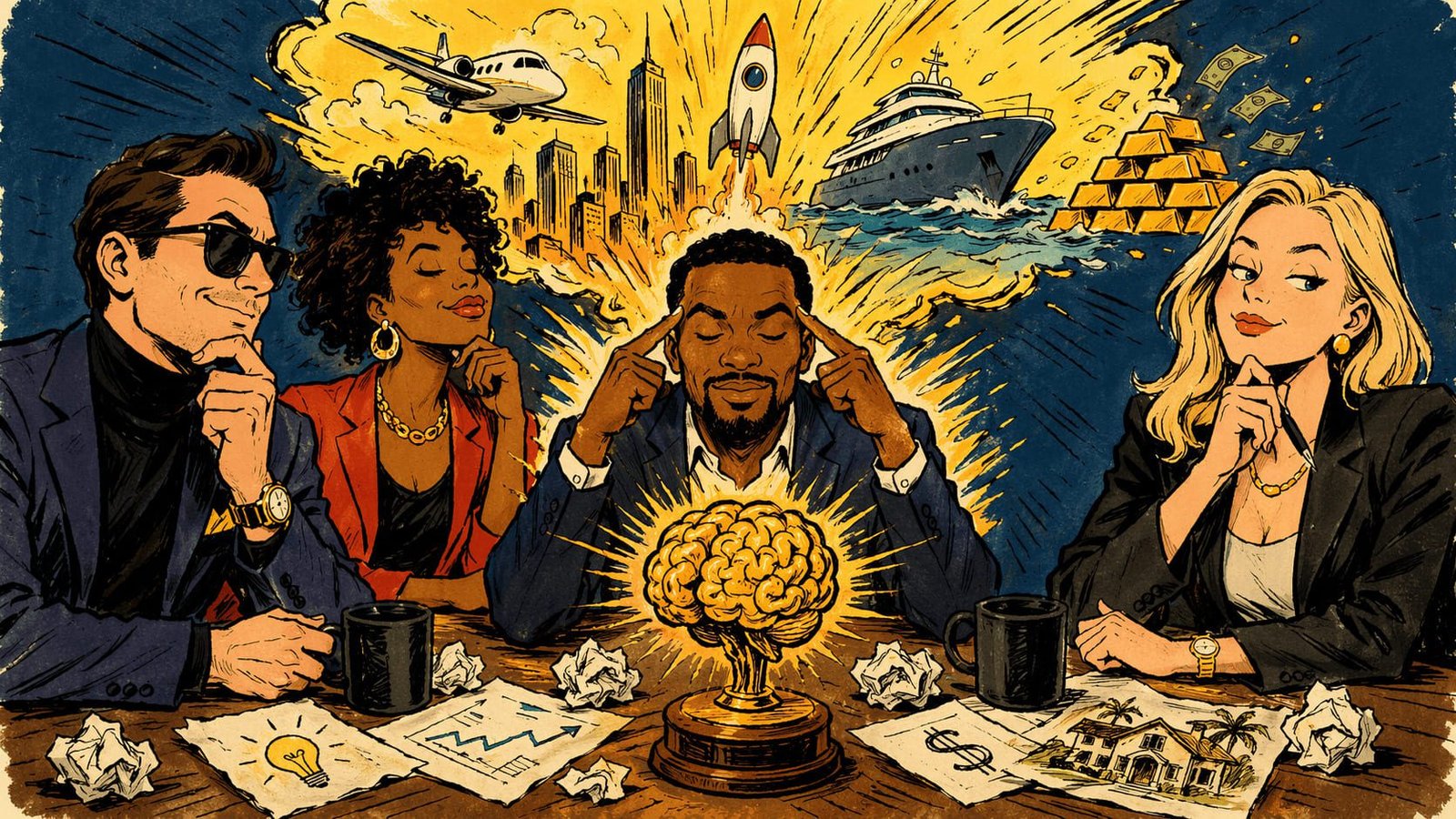
Rust gathered around an abandoned observatory where enormous lenses still pointed toward distant galaxies, waiting for discoveries that never came. Visitors admired the machinery yet overlooked its purpose. Businesses fall into the same trap. Entrepreneurs often obsess over visible success, private jets, funding rounds, magazine covers, while ignoring the invisible habit that produced them. Wealthy founders rarely begin with extraordinary resources. They begin with extraordinary ways of interpreting uncertainty, turning confusion into opportunity while everyone else waits for certainty that never arrives.
Popular culture loves the myth of the fearless billionaire. Reality tells a quieter story. Jeff Bezos built Amazon by treating experimentation as a discipline rather than a gamble, accepting that many ideas would fail before one transformed an industry. Sara Blakely approached rejection similarly while building Spanx, viewing every “no” as useful information instead of personal defeat. Exceptional entrepreneurs do not possess magical confidence. They develop mental systems that prevent temporary setbacks from becoming permanent identities.
Rahim spent years designing agricultural sensors that investors repeatedly dismissed as too niche for meaningful growth. Friends encouraged safer opportunities with predictable salaries, yet he kept interviewing farmers instead of chasing fashionable technology trends. One conversation revealed that growers valued reliability far more than advanced features, completely reshaping his product. Orders gradually increased because he solved a practical frustration instead of pursuing applause. His breakthrough arrived quietly, hidden inside patient listening rather than dramatic inspiration.
Psychologist Carol Dweck’s research on growth mindset explains why adaptable thinking repeatedly outperforms fixed beliefs across demanding environments. Billionaires often demonstrate this principle through relentless learning instead of flawless prediction. Reed Hastings transformed Netflix more than once because changing reality mattered more than protecting old assumptions. Warren Buffett reads constantly, not because information guarantees perfect decisions, but because thoughtful judgment compounds through accumulated understanding. Minds become competitive advantages long before businesses dominate markets.
A chessboard abandoned inside a neighborhood park reveals an unusual truth about entrepreneurship. Several pieces remain standing despite an unfinished match, inviting endless speculation about who held the stronger position. Business decisions often resemble those silent pieces. Outsiders celebrate winning moves after results become obvious, forgetting countless invisible calculations beforehand. During one strategy retreat, founder Helena quietly remarked, “Our biggest advantage wasn’t intelligence. We simply changed our minds faster.” That sentence carried more value than any motivational slogan.
Footprints faded across a windswept shoreline while distant waves erased every trace of earlier travelers without apology. Lasting entrepreneurs understand that markets behave much the same way. Yesterday’s victories earn admiration but never guarantee tomorrow’s relevance. Mindset remains the only asset competitors cannot purchase outright because it evolves through discipline, curiosity, resilience, and uncomfortable honesty. Build a business by strengthening the thinking behind every decision, and success becomes less about luck than the quality of choices repeated over time.
