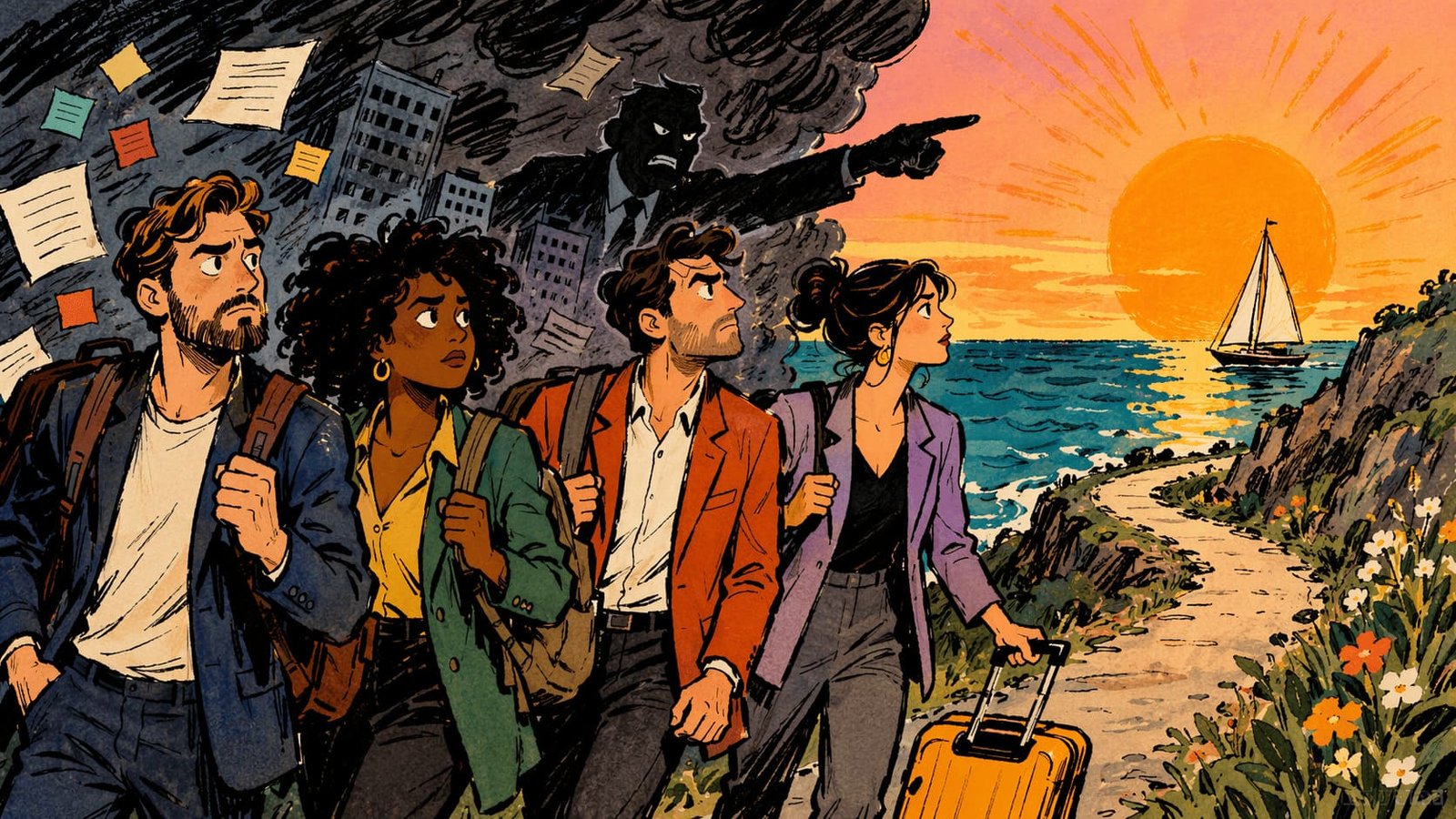
Dust spiraled across an abandoned train platform where departure boards still flashed destinations long after the final carriage had disappeared. Every delayed traveler stared hopefully at empty tracks, convinced another chance would arrive. Business can become equally hypnotic. Founders often confuse persistence with wisdom, staying loyal to fading markets, broken products, or exhausted strategies simply because walking away feels like betrayal. Sometimes the bravest entrepreneurial move is not fighting harder. It is recognizing when survival demands leaving familiar ground before comfort quietly becomes a prison.
Startup mythology celebrates relentless perseverance, yet history tells a more balanced story. Slack began after Tiny Speck abandoned its struggling online game and redirected internal communication software into a standalone product. That decision looked like surrender from a distance. It became strategic reinvention. PayPal also shifted focus repeatedly before discovering product-market fit. Great entrepreneurs understand that abandoning a failing path is not abandoning ambition. They protect the mission by refusing to become emotionally attached to one imperfect method.
Leila spent years building software for boutique travel agencies until booking habits changed faster than her roadmap. Revenue shrank while loyal customers apologized instead of renewing contracts. During a difficult weekend, she mapped every client conversation across her kitchen wall using handwritten notes. One pattern appeared repeatedly. Agencies wanted workflow automation more than booking software. She rebuilt around that insight, and the business slowly recovered because she escaped a declining category before competitors accepted reality.
Management thinker Rita McGrath argues that durable advantage has become increasingly temporary because industries evolve faster than organizational habits. That observation explains why successful companies regularly leave profitable products behind before markets force painful decisions. Adobe transformed its business by embracing subscriptions despite predictable criticism from existing customers. Netflix abandoned mailed DVDs while that business still generated healthy revenue. Organizations willing to disrupt themselves often avoid becoming casualties of somebody else’s disruption. Strategic exits frequently create stronger beginnings.
An aging orchard offers an unexpected lesson about entrepreneurial courage. Farmers occasionally remove healthy-looking trees because disease has reached roots invisible from the surface. Visitors question the decision until healthier growth appears seasons later. During one investor meeting, founder Darius quietly admitted, “Keeping our first idea nearly destroyed our second chance.” Nobody applauded. Everyone understood. Businesses rarely collapse because leaders change direction. They collapse because leaders refuse to acknowledge that yesterday’s victories may already belong to another era.
Wind swept across an open valley where migrating birds lifted together without debating whether familiar skies deserved another season. Nature rarely apologizes for adaptation. Neither do enduring businesses. Entrepreneurs remembered for lasting impact seldom cling to fading opportunities out of pride or nostalgia. They carry lessons forward while leaving obsolete assumptions behind with remarkable discipline. Every exit writes the opening paragraph of another possibility. Ask yourself one difficult question: are you protecting a dream, or protecting the path that already abandoned it?
